Overstock cashmere clothing and sweaters clearance: A Market Analysis of Secondary Retail Channels and Premium Knitwear Liquidation
The Logistics of Premium Knitwear Liquidation
The global secondary apparel market relies heavily on the seasonal liquidation of luxury textiles, particularly through channels dedicated to overstock cashmere clothing and sweaters clearance. This mechanism allows high-end knitwear to transition from primary retail boutiques to digital outlet platforms, offering structured pathways for inventory management. The dynamics of cashmere liquidation require a detailed understanding of fabric grades, retail distribution channels, and seasonal cycles to navigate effectively.
Many traditional brands employ semi-annual sales events to manage excess stock, such as J.Crew offering significant price reductions on select cashmere items 1. Concurrently, physical pop-up venues, including specialized outlets like The Cashmere Sale, leverage limited-time structures to distribute luxury pieces like oversized mockneck sweaters without diluting original brand value 2. These distinct distribution models illustrate how premium manufacturers balance initial retail margins with secondary market recovery.
Secondary Market Platforms and Rebranding Shifts
The online landscape for overstock catalog management has seen significant structural changes in recent years. Most notably, the e-commerce platform Overstock rebranded and consolidated its clearance operations under the Bed Bath and Beyond digital portal 3 4. This consolidation shifted how consumers locate overstock apparel, moving clothing lines and domestic luxury textiles into integrated digital clearance hubs. This corporate pivot reflects a broader retail trend of platform mergers designed to streamline inventory management and optimize secondary market supply chains.
In addition to single-brand migrations, third-party off-price retailers such as TJ Maxx and Marshalls consistently acquire surplus inventory from high-end designers 5. These secondary retailers act as critical clearinghouses, enabling fashion brands to maintain liquidity while freeing warehouse capacity for incoming seasonal styles. The resulting retail ecosystem provides a year-round availability of discounted high-grade knitwear across various digital and brick-and-mortar storefronts, creating a stable secondary distribution tier for premium garments.
Material Composition and Quality Grading Metrics
Understanding the technical specifications of cashmere is essential when evaluating clearance inventory. Premium knitwear is evaluated based on fiber length, micron thickness, and gauge. For instance, high-grade Mongolian cashmere typically features a fiber length of 34 to 36 millimeters and a micron thickness between 15.8 and 16.2, which yields a highly soft hand feel 6. Lower-gauge knits, such as 7-gauge sweaters, offer a heavier, more substantial weight 7, while 12-gauge knits provide a lighter, transitional fabric suitable for layering 6.
Consumers analyzing overstock listings must distinguish between pure 100 percent cashmere and blended options. Manufacturers frequently blend cashmere with fine merino wool, often using an 80 percent merino and 20 percent cashmere ratio to enhance structural durability and reduce production costs 8. Other manufacturers utilize a 60 percent cashmere and 40 percent wool blend to achieve a balanced, breathable knit 9. Evaluating these fiber ratios helps explain variations in weight, longevity, and thermal efficiency across different inventory tiers.
Seasonal Inventory Cycles and Market Timing
The availability of luxury knitwear clearances follows strict seasonal patterns driven by retail calendar cycles. Primary retailers typically experience inventory surpluses at two distinct times of the year: late winter, typically February to March, and late summer, typically August to September 10. During these transition windows, brands must rapidly clear floor space for spring and fall collections, leading to increased allocations to overstock channels.
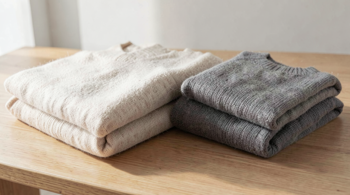
Statistical analysis of retail pricing indicates that off-season procurement yields the highest density of product variety. As regional temperatures shift, the consumer demand for heavy-insulated garments drops dramatically, prompting retailers to adjust pricing to accelerate asset turnover and maintain optimal cash flow. Consumers who monitor these cyclical periods are far more likely to find complete size ranges and classic colorways before the remaining inventory is sold to third-party bulk liquidators or transferred to specialized outlet events.
Wholesale and Alternative Sustainable Sourcing
The clearance apparel ecosystem also features wholesale liquidation networks that cater directly to secondary sellers and micro-retailers. Platforms like Boutique by the Box distribute bulk lots of brand-new, overstocked garments, such as 20-piece boxes of Mongolian cashmere zip-ups 11. These bulk options are commonly redistributed on popular consumer resale platforms like Poshmark, eBay, and Mercari, illustrating a highly active micro-economy built around liquidated high-end inventory.
Beside commercial bulk channels, sustainable initiatives have introduced upcycled and reclaimed cashmere into the clearance market. Independent fiber artists and specialty boutiques, such as Karen Allen Fiber Arts, acquire reclaimed cashmere to produce hand-dyed, one-of-a-kind cardigans and pullovers 12. This sector of the market provides an alternative for consumers who prioritize environmental sustainability and artisanal craftsmanship over mass-produced luxury garments.
Comparative Analysis of Cashmere Retail Specifications
This table provides an objective comparison of the structural, material, and distribution models found across different cashmere secondary channels. It highlights key differences in composition, knitting gauge, and sourcing origins.
| Retailer / Model | Material Composition | Technical Specifications | Distribution Channel |
|---|---|---|---|
| Quince Crewneck 6 | 100% Grade-A Mongolian Cashmere | 15.8-16.2 microns, 12 Gauge, 34-36mm fibers | Direct-to-Consumer / App Exclusive |
| WoolOvers Pure Sweater 13 | 100% Cashmere (SFA Certified) | 2-Ply Yarn, 12 Gauge | Online Specialty Retailer |
| Fernache Sweater 9 | 60% Cashmere, 40% Fine Wool | Lightweight Blend Knit | Independent Boutique |
| The Cashmere Sale 2 | 100% Cashmere | Oversized Mockneck, Medium Weight | Limited-Time Pop-Up |
Consumer Risk Factors and Care Requirements
Purchasing liquidated or overstock cashmere involves several inherent consumer risks and friction points. Clearance and closeout inventories are frequently designated as final sale, meaning returns or exchanges are highly restricted. Furthermore, size and color availability is often extremely limited, and garment measurements may vary slightly due to the natural behavior of cashmere fibers under tension 2. Minor manufacturing flaws or packaging irregularities are also common in wholesale liquidation lots 11.
Proper maintenance is required to preserve the longevity of these delicate garments. Expert care instructions recommend gentle cold hand washing or professional dry cleaning to protect the delicate fibers from shrinkage and distortion 9. Additionally, air drying flat is crucial, as hanging wet cashmere can stretch out the shoulders and warp the overall silhouette 9. For those seeking low-impact alternatives, undyed cashmere options skip the chemical dyeing process entirely, highlighting the natural organic variations of the fiber while reducing environmental strain 14.
Sources
- Town and Country Magazine
- The Cashmere Sale
- CNN Business
- Bed Bath & Beyond
- TJ Maxx
- Quince
- Quince Oversized
- WoolOvers US
- Fernache
- USA Today
- Boutique by the Box
- Karen Allen Fiber Arts
- WoolOvers US (Pure Cashmere)
- Quince Undyed