7-day all-inclusive Egypt package with meals included: An Analysis of Itinerary Structures and Market Inclusions
A 7-day all-inclusive Egypt package with meals included functions as a highly structured travel arrangement designed to consolidate historical exploration with standardized hospitality logistics. These itineraries typically aggregate diverse elements such as high-tier accommodations, domestic flights, and guided sessions at major archaeological landmarks into a single service fee 1. By centralizing the management of meals and transportation, these packages aim to mitigate the logistical complexities often encountered when navigating the Nile Valley and the Greater Cairo metropolis 2. Research indicates that such bundles are increasingly utilized by international travelers seeking a predictable cost structure while exploring the remnants of ancient Egyptian civilization 3.
Foundational Components of All-Inclusive Itineraries
The standard framework for comprehensive Egypt travel involves a 7-day and 6-night duration, which is considered the optimal timeframe to cover the country's primary historical corridors 4. These packages generally prioritize a blend of urban exploration in Cairo and river-based travel in Upper Egypt. Data from market operators shows that costs for these all-inclusive arrangements typically range from $1,200 to $2,500 per person, depending on the star rating of the selected hotels and the specific scope of the included activities 5. High-value packages frequently incorporate round-trip international airfare, particularly for travelers originating from North America or Europe, to ensure a seamless transition from arrival to the first day of sightseeing 6.
Standard inclusions within the all-inclusive label often encompass private air-conditioned transportation for all transfers, dedicated professional Egyptologist guides, and domestic flights between major hubs like Cairo, Luxor, and Aswan 7. These elements are designed to facilitate efficient movement through high-traffic tourist zones while maintaining a consistent level of safety and comfort. Furthermore, group-based arrangements consisting of eight or more travelers may benefit from economies of scale, with historical data suggesting price reductions of 10% to 15% compared to individual or small-group bookings 8.
Core Geographical Destinations and Landmark Coverage
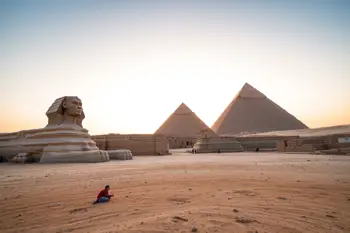
The primary focus of most seven-day packages centers on the Giza Plateau, where visitors engage with the Great Pyramids and the Great Sphinx 9. In the capital city of Cairo, itineraries typically feature the Egyptian Museum of Antiquities, which houses the artifacts of Tutankhamun and other significant pharaonic collections 10. Many programs also extend their reach to the Mediterranean coast, specifically Alexandria, to include Greco-Roman sites such as the Catacombs of Kom El Shoqafa and the modern Bibliotheca Alexandrina 11. This multi-city approach provides a broader cultural context, contrasting the desert-based monuments of the north with the maritime history of the coast 12.
In Upper Egypt, the focus shifts to the open-air monuments located in Luxor and Aswan. These regions are usually explored via a three-night or four-night Nile cruise, which acts as a floating hotel providing continuous access to riverfront temples 13. Key sites in these southern sectors include the Valley of the Kings, the Temple of Queen Hatshepsut, and the massive Karnak Temple complex 14. Advanced itineraries may also include the Philae Temple and the High Dam in Aswan, as well as optional excursions to the remote Abu Simbel temples near the Sudanese border 15.
Analysis of Meal Inclusions and Boarding Tiers
The classification of meals within a 7-day all-inclusive Egypt package with meals included varies significantly based on the boarding tier selected at the time of booking. While the term all-inclusive implies full coverage, travelers must distinguish between breakfast-only, half-board, and full-board structures 16. On Nile cruises, full-board is the industry standard, where breakfast, lunch, and dinner are served daily in a buffet format 17. However, city-based segments in Cairo or Alexandria might offer set menus at local restaurants, providing a fixed selection rather than unlimited dining options 18.
| Meal Plan Tier | Daily Coverage | Typical Venue Type |
|---|---|---|
| Full Board | Breakfast, Lunch, Dinner | Cruise Buffet / Hotel Restaurant |
| Half Board | Breakfast, Dinner | Hotel Dining Room |
| All-Inclusive (Resort) | Meals + Soft Drinks/Snacks | Red Sea Beach Resorts |
| B&B | Breakfast Only | City Hotels |
In addition to solid food service, the inclusion of beverages is a critical factor in the total value proposition. Standard all-inclusive packages often cover mineral water and soft drinks during guided tours and at designated meal times 19. Resort-based extensions in locations like Hurghada or Sharm El Sheikh often adopt the soft all-inclusive model, which excludes alcoholic beverages but provides 24-hour access to snacks and non-alcoholic drinks 20. Travelers are encouraged to verify the specific meal count listed in their day-by-day itinerary to avoid unexpected out-of-pocket expenses for lunch or evening social activities 21.
Logistics, Domestic Transportation, and Guided Services
Efficient movement across the vast Egyptian landscape is maintained through a combination of private road transport and domestic aviation. Most reputable seven-day packages utilize private air-conditioned vans or VIP buses to ferry passengers between airports, hotels, and historical sites 22. For travel between Cairo and the southern cities of Luxor or Aswan, domestic flights are the preferred method, as they significantly reduce transit time compared to overnight trains or long-distance bus routes 23. These flight arrangements are typically managed by the tour operator to ensure alignment with the overarching sightseeing schedule 24.
The role of the Egyptologist guide is central to the educational value of the package. These professionals are required to be licensed by the Egyptian Ministry of Tourism and often hold advanced degrees in history or archaeology 25. Their services include the provision of historical context at sites like the Valley of the Kings and assistance with local language barriers in markets such as Khan El Khalili 26. In an all-inclusive setting, the costs for these expert services are pre-paid, ensuring that visitors have access to accurate information throughout the duration of their week-long excursion 27.
Pricing Metrics and Seasonal Market Fluctuations
Egypt's travel market is characterized by significant seasonal shifts that directly impact the pricing of all-inclusive packages. The peak season, which runs from November through February, coincides with cooler weather that is ideal for desert exploration 28. During this period, package prices often increase by 20% to 30% due to high demand for Nile cruises and premium hotel rooms in Cairo 29. Conversely, the shoulder seasons of spring and autumn offer a moderate price point, while the summer months (June to August) see the lowest rates due to extreme heat in Upper Egypt 30.
Travelers should also account for mandatory non-inclusive costs that are rarely covered in the base package price. For example, while entry fees to major sites like the Giza Pyramids are often included, entrance to the interior chambers of the pyramids or the tomb of Tutankhamun typically requires a separate ticket 31. Furthermore, travel insurance is a standard recommendation for all international visitors, providing coverage for potential medical needs or trip cancellations 32. Understanding these underlying economic factors allows for a more accurate assessment of the total investment required for a comprehensive seven-day visit 33.
Regulatory Requirements and Visitor Eligibility Standards
Entry into Egypt for international tourism is governed by specific regulatory standards that all package participants must meet. For citizens of the United States and many European nations, a tourist visa is required, which can currently be obtained through an online e-visa portal or upon arrival at major international airports 34. The cost for a single-entry tourist visa is typically between $25 and $30 35. It is mandatory that a visitor's passport remains valid for at least six months beyond the date of entry to the country 36.
Furthermore, eligibility for certain all-inclusive packages may be subject to the tour operator's internal policies regarding health and mobility. Due to the uneven terrain at archaeological sites like the Valley of the Kings and the requirements for boarding Nile cruise vessels, travelers with mobility challenges are encouraged to confirm the availability of handicap-accessible transport and lodging in advance 37. Compliance with local customs and regulations, including photography permits and security screenings at historical venues, is strictly enforced by the Egyptian Tourism Police to ensure the safety of all visitors 38.
Sources
- Egypt United Tours
- Vacations in Egypt
- Egypt United Tours (Trips to Egypt)
- Egypt United Tours (USA Package)
- Fayyaz Travels (Cairo and Hurghada)
- Egypt United Tours (Luxury Tour)
- Fayyaz Travels (Sharm El Sheikh)
- Fayyaz Travels (Valley of the Kings Express)
- Egypt United Tours (Family Vacations)
- Egypt United Tours (Hurghada Package)
- Egypt Tours VIP
- Fayyaz Travels (Culture and Coast)
- Discovery Tours Egypt
- One Nation Travel
- Vacations in Egypt (Overland Adventure)
- TourRadar (Egypt Tour Pro)
- Vacations in Egypt (Abu Simbel Guide)
- Touritos
- Love Egypt Tours
- Kenzly
- Vacations in Egypt (Cairo and Nile Cruise)
- TourRadar (Golden Egypt)
- Egypt Tia Tour
- TourRadar (World Skyway)
- TourRadar (Itaca Holiday)
- Egypt United Tours (6-Day Trip)
- Vacations in Egypt (Dahab Package)
- Egypt United Tours (UK Package)
- Egypt United Tours (9-Day USA)
- Egypt United Tours (10-Day All Inclusive)
- Intrepid Travel
- Viator
- TravelSmith
- Globus Tours
- Touropia
- Egypt Tourism Authority
- US Department of State Travel Guidelines
- International Travel Health Research