Hiking Experiences Across 6 Destinations with Group Size Details
Travelers researching hiking experiences across 6 destinations with group size details will find a landscape of options that range from intimate eight-person alpine circuits in Switzerland to larger expeditions of up to 50 climbers on Kilimanjaro. Group size is not simply a logistical footnote; it directly shapes trail impact, guide attention, pace management, and the social texture of the journey. The six destinations examined below represent some of the most well-documented guided hiking programs available, drawing on verified tour data, regulatory frameworks from national park authorities, and established best practices from the broader outdoor sector.
1. The Dolomites, Italy: Multiple Formats, Consistent Excellence
The Dolomites rank among the most documented hiking destinations in the world, and the range of structured tour formats reflects genuine demand diversity. The 8-day Dolomites hut-to-hut adventure offered through 57hours operates with a maximum group size of up to 10 people, starting in Bolzano and linking rifugios including Gampenalm, Genova, Gardenacia, Passo Sella, Alpes di Tires, and Stella Alpina across a season running August through September. 1 A separate 6-day Alpe di Siusi and Rosengarten hut-to-hut format from the same platform caps groups at 12 people, spending 2 nights at a 3-star hotel in Val Gardena and 3 nights in rifugio dormitories, with a season window of June through September. 2
A third Dolomites product from Right Path Adventures structures groups at 6 to 12 guests for a 5-night hotel-based walking tour operating across Val Gardena, Alta Badia, and the Cinque Torri areas, with trails graded easy to moderate and averaging approximately 8 miles per day with 1,000 feet of ascent and descent. 3 The Bio Bio Expeditions 9-day tour, arriving in Venice and covering Tre Cime, Cinque Torri, and Piz Boe, is priced from $7,300 and describes a moderate-to-strenuous activity level, though its group ceiling is not explicitly published. 4 Prospective participants should verify current group caps directly with operators, as these figures can change by season.
2. Icelandic Highlands: Remote Routes with Varying Group Scales
Iceland supports two structurally different guided hiking formats with notably different group parameters. The 57hours 6-day highlands tour, running from Landmannalaugar toward Eldgja through volcanic canyons and rhyolite mountains, accommodates up to 18 people per departure and is classified as challenging, requiring fitness sufficient for days covering up to 27 km with an 8 to 10 kg pack. 5 Accommodation consists of simple shared dormitory huts deep in the highlands interior, far from road access, and the season runs June through July.
By contrast, the 6-day Laugavegur and Fimmvorduhals Trek via Arctic Adventures, bookable through TourRadar, sets a group size window of 1 to 16 participants, operates as a fully guided English-language tour at medium intensity, and is open to ages 15 and above. 6 This trek starts and ends in Reykjavik and carries a per-person reference price of approximately $2,786 USD. The divergence between an 18-person highland expedition and a 16-person Laugavegur group illustrates how Iceland's trail management approach differs from parks in other regions that impose hard regulatory caps.
3. Swiss Alps: Small Groups on High-Altitude Circuits
The 5-day Val de Bagnes hut-to-hut tour in Switzerland represents one of the more deliberately intimate formats in European alpine hiking. With a maximum of 8 people per departure, the itinerary passes beneath the Grand Combin, Velan, and Mont Blanc massifs, beginning at the Cabane du Mont Fort at 2,457 meters above Verbier before descending to the Hotel de Mauvoisin at 1,948 meters beside the Mauvoisin Dam. 7 The season covers July through August, with departures available in both all-women and co-ed configurations.
The deliberately capped group size of 8 in this Swiss context aligns with broader alpine guiding conventions. The Leave No Trace Center for Outdoor Ethics, which publishes the seven principles widely adopted by hiking programs internationally, identifies group size reduction as one of the primary tools for minimizing physical and social impacts on sensitive high-altitude terrain. 8 Switzerland's trail infrastructure, while robust, crosses glacially carved terrain where larger groups introduce meaningful erosion and safety coordination challenges during river crossings and steep descent sections.
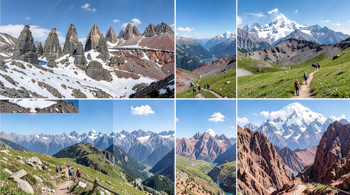
4. Spain: Picos de Europa Hut-to-Hut at Level 5 Difficulty
The 6-night hut-to-hut trek through Spain's Picos de Europa, offered by Much Better Adventures, caps groups at 14 participants and is rated at difficulty Level 5, the highest in that operator's grading scale. The route summits Jario at 6,276 feet, Cotalba at 6,647 feet, and La Padiorna at 7,608 feet, with Day 2 alone covering 8 miles, 3,281 feet of ascent, and 1,804 feet of descent over approximately 7 hours. 9 Accommodation across the 6 nights is split between 4 nights in mountain refuges and 2 nights in rural guesthouses, with 6 breakfasts and 6 dinners included.
The Picos de Europa range sits in northern Spain's Asturias and Cantabria regions and is frequently described as one of Europe's quietest significant mountain ranges, a condition that a 14-person cap helps preserve. The tour is specifically described as solo-friendly and designed for like-minded, active participants, which reflects a growing segment of the guided hiking market where social compatibility is treated as a product feature alongside physical challenge. Trekking poles are provided for those who need them, and the itinerary begins from Bilbao Airport.
5. Annapurna Base Camp, Nepal: High-Altitude Group Trekking on a Budget
The 7-day group trek from Pokhara to Annapurna Base Camp represents a structurally different category of guided hiking, oriented toward accessibility across a wide fitness range. The itinerary moves from Ghandruk through Chhomrong, Bamboo, Dovan, Himalaya, Deurali, and Machhapuchhre Base Camp before reaching Annapurna Base Camp on Day 4, with a multi-day descent back to Pokhara. 10 At a reference price of approximately $267 per person, the format involves shared accommodations and basic lodges throughout, making it one of the most cost-accessible multi-day Himalayan experiences with a professional guide.
A separate 6-day Rainbow Mountain and Ausangate Trek operating out of Cusco, Peru, offers a comparable philosophy at a maximum of 8 people per group, with an English and Spanish-speaking guide, transport, camps, gear support, and meals built into the package at a starting price of $1,050. 11 Participants reach passes up to 5,130 meters, including Palomani Pass on Day 4, and the route includes recovery elements such as hot springs at Upis. These Andean and Himalayan formats together demonstrate how small-group capping in high-altitude environments serves safety functions as much as experience-quality functions.
6. U.S. National Parks: Regulatory Frameworks and Group Norms
Across U.S. national parks, group size parameters for hiking are governed by a combination of federal regulation and commercial operator practice. Zion National Park enforces a maximum of 12 participants on shuttle-access trail permits to manage trail impact. 12 Colorado's Rocky Mountain National Park administers group hiking permits for both day hikes and multi-day backpacking, with guided groups running up to 15 people. 13 Acadia National Park in Maine recommends 8 to 12 hikers for optimal experiences on its carriage roads and mountain trails, while Great Smoky Mountains National Park imposes no mandatory group size limit for self-guided hiking, though commercial operators typically stay under 12 participants. 14
Olympic National Park's guided backpacking program from Olympic Hiking Co. operates under the park's advanced permit system, with a 3-day Shi Shi to Ozette coastal route covering 15.3 miles and 1,126 feet of elevation gain, rated 2 out of 5 for activity level, and priced at $1,500 per person. 15 Moab, Utah technical slot canyon hikes typically cap at 4 to 8 participants due to narrow terrain constraints, while Sedona, Arizona trail tours range from 8 to 20 participants depending on selected trail difficulty. 16 The National Park Service publishes permit requirements and backcountry guidance that applies across all these parks and should be reviewed before any group booking is finalized, as requirements vary substantially by destination and season. 17
Sources
- 57hours.com - Hiking the Dolomites Hut to Hut: 8-Day Adventure
- 57hours.com - Alpe di Siusi Guided Hiking Tour, Dolomites
- rightpathadventures.com - Dolomites Walking Tour: Summer 2026
- bbxrafting.com - Dolomites Hiking Tour: Tre Cime, Cinque Torri & Piz Boe Guided Trek
- 57hours.com - Iceland Highlands Hiking Tour: 6 Days in the Wild
- tourradar.com - 6 Day Laugavegur & Fimmvorduhals Trek - Huts by Arctic Adventures
- 57hours.com - 5-Day Hut-to-Hut Switzerland Hiking: Val de Bagnes Tour
- lnt.org - Leave No Trace Center for Outdoor Ethics: 7 Principles
- muchbetteradventures.com - Hut-to-Hut Trekking Adventure in Spain's Picos de Europa
- world-tourism.org - From Pokhara: 7 Days Budget Backpackers Group ABC Trek
- go2cusco.com - 6 Day Rainbow Mountain x Ausangate Trek - FlashpackerConnect
- nps.gov - Zion National Park Permits and Group Size Information
- nps.gov - Rocky Mountain National Park Group Hiking Information
- nps.gov - Great Smoky Mountains National Park Hiking Guidance
- hikeolympic.com - 2026 Group Backpacking Trips: Olympic Hiking Co.
- moabadventurecenter.com - Moab Adventure Center Small Group Slot Canyon Hikes
- nps.gov - National Park Service Wilderness Permit Requirements