Police impound offers SUVs for auction: A National Analysis of Municipal Liquidation Trends
The operational landscape of municipal asset management reveals a steady stream of public auctions where a local police impound offers SUVs for auction as a method to liquidate unclaimed, abandoned, or forfeited property. Across various metropolitan areas, law enforcement departments regularly clear municipal tow yards through structured bidding procedures, allowing the public to acquire these heavy-duty platforms. Understanding the regulatory framework, vehicle conditions, and bidding protocols is essential for analysts and prospective buyers studying these public inventory liquidations.
Municipal Tow Lot Operations and Inventory Sources
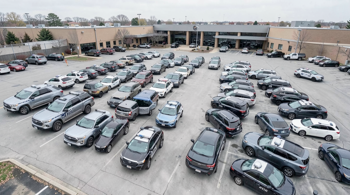
Municipal law enforcement agencies manage considerable volumes of vehicles that enter local storage yards due to traffic enforcement, asset forfeitures, or abandonment. For instance, in Boston, the local government has the statutory authority to take possession of vehicles parked on public streets for more than 72 hours, subsequently liquidating unclaimed property via public sale 1. These events often consolidate dozens of diverse models, with larger utility vehicles representing a significant portion of the cataloged lots 2.
To maintain facility capacity and recover municipal towing costs, departments establish regular liquidation cycles. Some locations, such as the Kansas City police yard, hold bi-weekly online bidding events managed by authorized auctioneers to process these accumulated assets 3. The background of these vehicles varies, including units involved in minor traffic collisions, municipal impoundments, or those abandoned on public thoroughfares due to administrative oversight by the original owners 4.
Assessing Mechanical Condition and the Reality of As-Is Transactions
A primary characteristic of municipal liquidation events is that almost all vehicles are sold strictly as-is with no warranty expressed or implied. Buyers are required to perform all preliminary research, as physical inspections are typically restricted to predetermined viewing windows before the close of bidding 5. In many instances, the physical keys are missing, and auction organizers do not verify whether the engine runs or if the transmission functions 3 6.
Because of these mechanical uncertainties, market analysts advise utilizing comprehensive vehicle history platforms like Carfax or AutoCheck prior to committing capital 5. While some SUVs may have entered the facility in operational condition, others might require extensive mechanical restoration or serve solely as donor platforms for parts recovery 6. This operational reality means the purchaser assumes complete financial risk upon the fall of the auctioneer's gavel 3.
The Legal Process of Title Clearance and Forfeiture
Before an impounded sport utility vehicle can be legally transitioned to a new private owner, the municipal agency must navigate strict legal steps to clear the existing title 7. This process involves conducting a thorough search for any outstanding financial liens held by banking institutions or lending entities 7. State statutes mandate that official notices must be sent to the last registered owner, providing a specific grace period to settle outstanding municipal fees 7.
If the previous owner fails to take action within the designated legal timeframe, the municipal department initiates the formal forfeiture pipeline 7. The vehicle is then issued an administrative title, which in many jurisdictions takes the form of a salvage title or certificate of destruction, particularly if the vehicle was involved in a collision 4. Buyers must review state-specific registration requirements, as registering a salvaged vehicle for road use often requires a comprehensive safety inspection 4.
Comparative Framework of Public Impound Auctions
The structural execution of impound auctions differs widely based on local municipal codes, payment policies, and processing networks. The table below outlines key operational parameters observed in various municipal auctions across the United States.
| Location & Agency | Average Lot Size | Starting Bids & Fees | Payment Protocol |
|---|---|---|---|
| Suffolk County Police Department (NY) 10 11 | Approximately 90 to 100 lots 10 | $500 minimum bid; sold as-is 10 | In-person cash or certified terms 10 |
| Kansas City Tow Lot (MO) 3 6 | 160 to 400+ vehicles 2 6 | $25 admin fee + 10% buyer premium 6 | Cash or wire transfer by next day 6 |
| Columbus Division of Police (OH) 4 | Approximately 120 vehicles 4 | As-is; mostly salvage titles 4 | Cash preferred; bank-certified check 4 |
While local municipal yards manage localized sales, nationwide online platforms also aggregate seized and repossessed utility vehicles. Large vehicle disposal sites and digital portals regularly display extensive catalogs of SUVs available to certified bidders 8 9. These channels allow participants to bid across regions, though they require close attention to transport logistics 8.
Navigating Registration, Bidding Procedures, and Financial Commitments
Participating in these events requires strict registration and security deposit procedures to filter out non-serious participants. In online-only formats, such as those in Missouri, bidders must submit a refundable deposit of $300 6. Failure to fulfill a winning bid results in the immediate forfeiture of this deposit, accompanied by a permanent ban from future municipal auctions 3.
Financial protocols are rigorously enforced with zero tolerance for late or partial payments. For example, municipal auctions in Columbus require full payment by 1:00 PM on the day of the sale, and buyers must arrange for vehicle removal within a strict four-day window to avoid storage fees 4. Similarly, in Boston, buyers must pay the entire amount in cash to the police at the time of the sale, demonstrating the transactional friction common to these public proceedings 1.
Strategic Considerations and Risk Mitigation for Buyers
For individuals evaluating these inventories, proper risk mitigation involves extensive preparation during the designated public viewing hours. Many agencies permit prospective buyers to inspect the physical condition of the vehicles on-site for one to two days preceding the auction 10 11. Utilizing these viewing periods to check for structural integrity, visible engine wear, and odometer readings can prevent costly bidding mistakes 3.
Additionally, buyers must account for post-sale logistics, such as towing costs, since the majority of impounded vehicles cannot be driven directly off the lot due to lack of registration or keys 3 6. Overlooking these ancillary fees, including administrative surcharges, regional taxes, and daily storage penalties, can significantly alter the net cost of the acquisition 6 12 13.
Sources
- City of Boston - Abandoned and Impounded Vehicles (https://www.boston.gov/departments/transportation/abandoned-and-impounded-vehicles)
- OAI Auctions - Kansas City Tow Lot March 2026 (https://bids.oaikc.com/auctions/45682-2026-03-03-kc-tow-lot)
- Woolsey Auction - Kansas City Police Tow Lot Auction (https://www.woolseyauction.com/auction/kansas-city-tow-lot-2026-07-21-82589/details)
- Columbus Dispatch - Columbus Police Impounded Vehicle Auction (https://www.dispatch.com/story/news/local/2026/05/26/columbus-police-hosting-auction-of-about-120-impounded-vehicles-june-6/90198729007/)
- Auction757 - Norfolk Police Auction (https://auction757.com/auction_listings/norfolk-police-auction-5-7-2026/)
- OAI Auctions - Kansas City Police Auction February 2026 (https://bids.oaikc.com/auctions/45404-2026-02-03-kc-tow-lot)
- MentalFloss - Police Impounded SUVs: How These Vehicles Make Their Way to Auction (https://search.mentalfloss.com/cars/police-impounded-suvs-how-these-vehicles-make-their-way-to-auction-t50x)
- GovDeals - Government Surplus Vehicle Auctions (https://www.govdeals.com)
- Public Surplus - Online Government Surplus Auctions (https://www.publicsurplus.com)
- RiverheadLOCAL - Suffolk Police Vehicle Auction (https://riverheadlocal.com/2026/06/08/suffolk-police-to-hold-vehicle-auction-saturday-10/)
- Patch - Westhampton Vehicle Auction (https://patch.com/new-york/westhampton-hamptonbays/vehicle-auction-hosted-suffolk-county-police-department-set-unfold)
- Capital Auto Auction - Newark Car Auctions (https://www.capitalautoauction.com/locations/delaware/newark)
- Powell Auction & Realty - Police Seizure & Equipment Auction (https://www.powellauction.com/events/police-seizure-and-equipment-auction-may-30-2026/)