Sophisticated lace garment design trends: Analytical Review of Modern Textile Shifts and Runway Innovations
As global runways and street-style circuits embrace a dramatic shift toward rich textures, sophisticated lace garment design trends have emerged as a dominant force in contemporary fashion. Far from nostalgic iterations, modern lace is defined by structural intentionality, high-contrast pairings, and advanced textile engineering. This report explores how fashion houses are reimagining this historically delicate textile into a versatile styling tool, illustrating how both luxury couture and daily wear are integrating structural lace elements to reflect a fresh, bold vision of modern apparel design.
The Modern Runway and Celebrity Adoption
High-fashion collections for the Spring and Summer seasons showcase a massive structural pivot toward lace as a centerpiece rather than an embellishment 1. Creative directors are utilizing the fabric to navigate the intersection of romanticism and structural precision. For instance, at Dior, designers paired delicate lace tops with highly structured tailoring, creating a striking contrast between raw strength and fragility 2.
In parallel, high-profile public events have accelerated the mainstream adoption of these textiles. Hailey Bieber popularized a lilac and silver floral lace gown, showing how satin bases and narrow column silhouettes can elevate lace into a highly architectural eveningwear statement 3. These runway and red-carpet moments prove that modern lace is no longer confined to traditional bridal wear, but is instead acting as an expressive, high-impact tool for daily and formal wear.
Structural and Engineered Textile Innovations
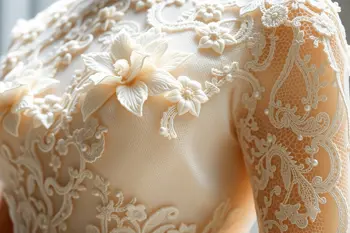
One of the most defining technical developments in contemporary textile manufacturing is the transition from flat print surfaces to highly dimensional, engineered textures 4. Rather than using lace simply as a flat overlay, modern manufacturers are employing structural techniques like 3D flower embroidery, mixed-density weaving, and engineered relief structures to give garments unprecedented tactile depth 5.
The table below outlines the primary lace types dominating current garment development, along with their key structural properties and typical applications in contemporary collections:
| Lace Category | Structural Characteristics | Primary Design Application |
|---|---|---|
| Chantilly Lace | Weightless layers, delicate edges 6 | Fluid evening gowns, romantic sleeves 6 |
| Guipure Lace | Heavy corded motifs, high density 5 | Structured bodices, side paneling 7 |
High-Contrast Styling and Daily Integration
Rather than executing traditional, head-to-toe romantic outfits, designers are encouraging a design language predicated on high-contrast pairings 8. This styling formula successfully strips lace of its vintage, heirloom-like associations by placing it in proximity to heavier, utilitarian materials 8. For example, pairing a delicate lace camisole under structured masculine blazers or styling a sheer lace maxi skirt with relaxed denim jackets creates an intentional aesthetic tension 8.
Search data reflects a major consumer shift, with lace tops reaching historic highs and lace midi skirts reaching a ten-year peak in popularity 9. Consumers are increasingly favoring matching co-ords, such as halterneck lace tops combined with matching lace trousers, which simplify styling while ensuring maximum texture 9. These design decisions move lace out of the niche of formalwear and into everyday casual wardrobes, allowing wearers to integrate high-end texture into normal social settings.
Material Science, Sourcing, and Sustainability Standards
The production of modern lace has shifted to accommodate strict environmental regulations and rigorous certification standards. Major sourcing hubs must now comply with the Global Recycled Standard (GRS) and OEKO-TEX guidelines, which act as mandatory baselines for international market entry 10. This green transition has driven the widespread adoption of eco-luxury fibers, including recycled nylon and bio-certified synthetics, ensuring that structural innovation does not come at the cost of ecological health 5.
Additionally, the classic wholesale manufacturing supply chain is undergoing structural fragmentation 10. Direct-to-consumer fashion brands are eschewing rigid bulk orders in favor of agile, customized micro-runs, allowing designers to create exclusive collections with minimized waste 10. This shift toward specialized production has forced lace manufacturers to optimize their technical strike-offs and design parameters, resulting in faster turnarounds and unprecedented pattern customization 10.
Architectural Evolution in Bridal and Occasion Wear
Traditional bridal wear has also experienced a massive transformation, with lace shifting from a passive decorative trim into an active architectural element 6 7. Renowned bridal couturiers are utilizing heavyweight corded laces and structured guipures to construct sharp lines and sculptural bodices that hold their shape independently 7. This methodology allows the intricate texture of the lace to dictate the overall silhouette of the dress, moving away from soft, formless layers 7.
Conversely, designers are utilizing whisper-light Chantilly laces layered over sheer bases or skin-toned linings to achieve an ethereal, floating effect 7. By balancing structural panels with transparent layers, designers can manipulate visual proportions to create elongating silhouettes. These advanced paneling techniques help streamline the body, proving that sophisticated lace application is as much an exercise in structural engineering as it is in visual artistry.
Technical Maintenance Realities and Material Friction
Despite the immense visual appeal of modern lace garments, integrating these delicate structures into everyday wear presents distinct textile challenges. When lace trims are stitched to rigid fabrics like heavy denim or stiff leather, the joint becomes highly susceptible to wear and tear. The physical friction of daily movement can quickly lead to fiber degradation, requiring manufacturers to develop enhanced tensile strength and specialized stitch engineering to ensure longevity.
Furthermore, maintaining the dimensional stability of these intricate weaves requires rigorous care. Unlike heavy synthetic garments, delicate lace trims require careful washing to prevent pilling, shrinking, or losing colorfastness. Garments featuring 3D embellishments or fine eyelash borders are highly vulnerable to snagging. Consumers must therefore balance the aesthetic advantages of high-texture lace garments with the practical demands of careful maintenance, ensuring that their high-value investments retain their original runway appeal over time.
Sources
- Harpers Bazaar AU
- Azyaamode
- Style Machine
- Meijara Textile
- United Lace
- Apparel Resources
- Together Journal
- Buro 24/7
- OW Collection
- Yituo Lace