A Guide to Experiencing a Christmas Cruise in Norway
Embarking on a journey along the Norwegian coast during the holiday season provides a remarkable perspective on winter travel. A Christmas cruise in Norway blends breathtaking natural scenery with rich local customs, offering an alternative to traditional sun-soaked getaways.
The Magic of a Winter Norway Cruise
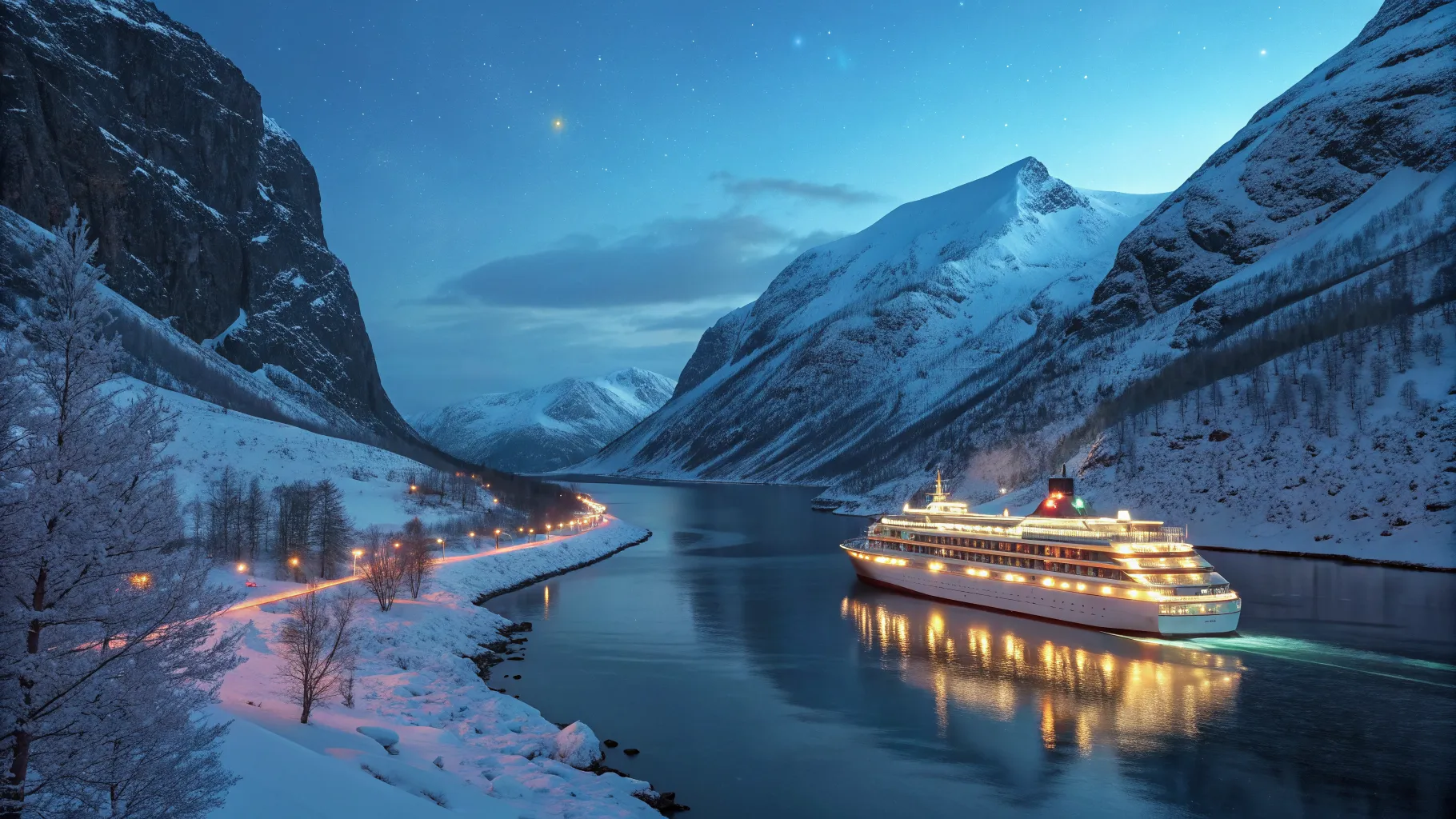
A Norway Christmas cruise offers a unique way to experience the holiday season. The dramatic fjords and coastal mountains are covered in snow, creating a stunning backdrop. It is a quiet and serene environment, far removed from the bustling crowds of traditional holiday destinations.
Passengers on these festive Norway sailings can witness the raw beauty of the Arctic winter. With limited daylight hours, the landscape is bathed in a perpetual twilight that photographers call the blue hour. This atmospheric lighting adds a mystical quality to the towering cliffs and deep waters.
Typical Norwegian Christmas Cruise Routes
Most Norwegian Christmas cruise routes follow the historic coastal express path. Ships typically depart from the southern city of Bergen and sail northbound past the Arctic Circle up to Kirkenes. This journey takes passengers through remote archipelagos and narrow straits that larger vessels cannot navigate.
Along the way, the ships stop at various coastal towns and villages. Major ports of call often include Alesund, Trondheim, and Tromso. These stops allow travelers to disembark and explore local holiday markets, historic wooden churches, and snowy streets illuminated by festive lights.
Onboard Holiday Traditions and Cuisine
A Christmas cruise in Norway is deeply rooted in local traditions. Ships are decorated with tasteful, understated Scandinavian holiday decor. Rather than extravagant light shows, you will find natural pine wreaths, candles, and warm, inviting spaces designed to foster a comforting environment.
The culinary experience focuses heavily on traditional Norwegian holiday fare. Passengers can expect to sample seasonal specialties during their voyage. Common festive dishes include:
- Ribbe, which is roasted pork belly with crispy crackling
- Pinnekjott, consisting of dry-cured lamb ribs traditionally steamed over birch branches
- Lutefisk, a historic Nordic delicacy made from dried whitefish
- Glogg, a traditional mulled wine often served with gingerbread cookies
Chasing the Northern Lights
One of the primary draws of winter Norway cruises is the opportunity to see the aurora borealis. Since these sailings take place during the darkest months of the year, the conditions are often ideal for viewing this natural phenomenon. Ships navigating above the Arctic Circle offer some of the best vantage points away from city light pollution.
Many vessels have a notification system in place to wake passengers if the Northern Lights appear during the night. It is important to remember that the aurora is a natural occurrence dependent on solar activity and clear skies, so sightings are never guaranteed. However, a multi-day coastal voyage significantly increases the chances of witnessing the display.
Excursions and Winter Activities
A festive Norway sailing is not just about scenic cruising; it also includes a variety of shore excursions tailored to the winter season. These activities allow travelers to engage with the Arctic environment and learn about regional history. Excursions vary by port but often highlight the unique aspects of winter life in Northern Europe.
Travelers can choose from several different types of outdoor adventures at various stops. Some of the most common winter excursions include:
- Dog sledding through snow-covered pine forests
- Snowmobile safaris across frozen lakes and open tundra
- Visits to famous snow hotels and ice sculptures
- Guided snowshoeing hikes to scenic overlooks
Weather Expectations and Packing Tips
Preparing for a Norway Christmas cruise requires careful attention to packing due to the harsh Arctic climate. Temperatures along the coast can fluctuate wildly, often dropping well below freezing, especially in the northernmost ports. The wind chill on the open deck can make the air feel significantly colder than the actual temperature.
Dressing in layers is the most effective way to stay comfortable during the trip. A high-quality thermal base layer is essential, followed by insulating mid-layers like fleece or wool. A windproof and waterproof outer shell, along with insulated waterproof boots, thick gloves, and a warm hat, will ensure you can comfortably enjoy the outdoor decks and shore excursions.