A Guide to Cat Trees for Small Apartments
Even in the most compact living situations, providing vertical space is crucial for a cat's well-being. A cat tree offers a dedicated spot for climbing, scratching, and observing the world from a safe height. Finding one that complements a small apartment's layout is easier than ever, with many designs created specifically for limited floor space.
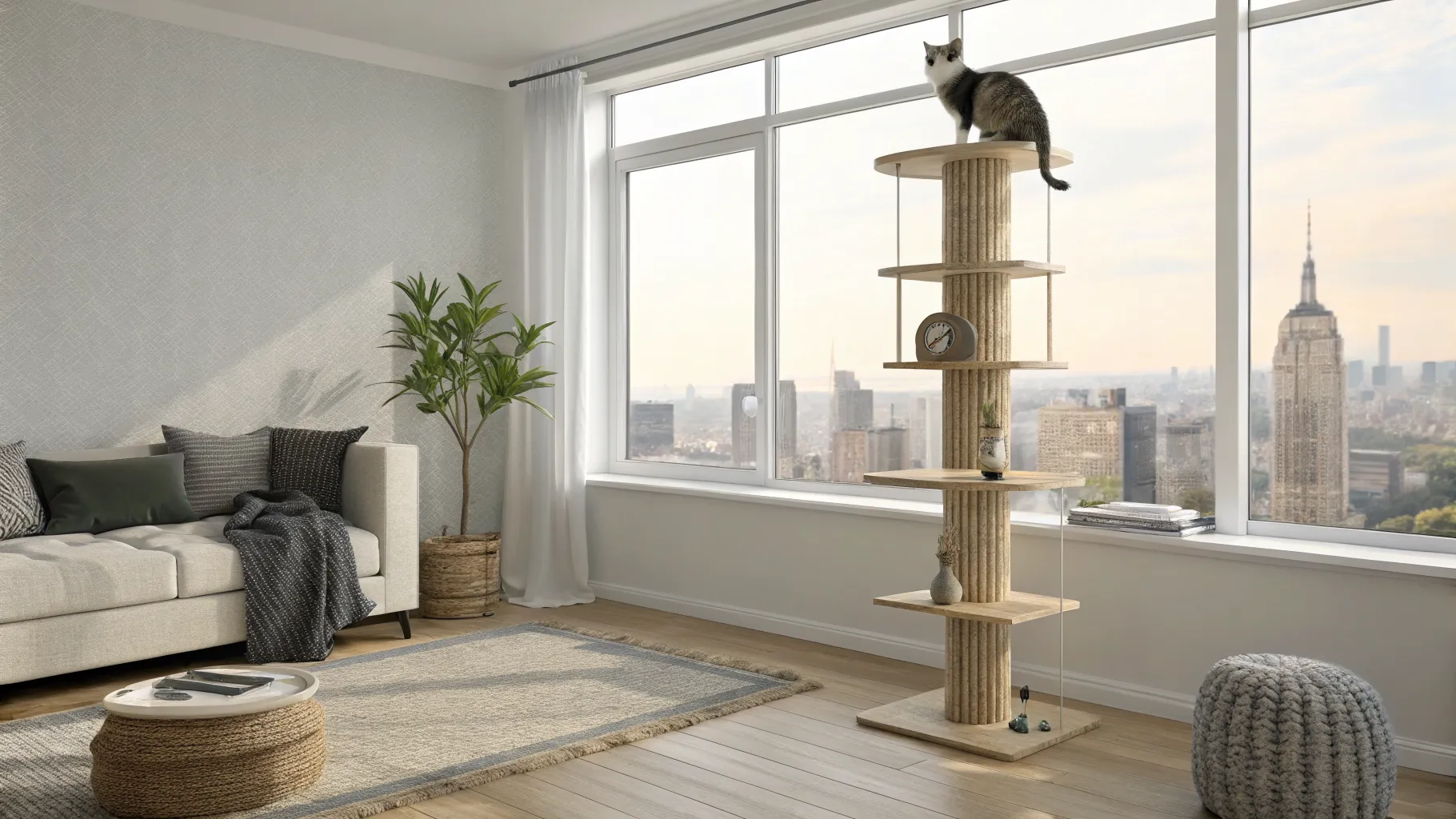
Why Vertical Space is Essential for Cats
Cats are natural climbers with an instinct to seek high vantage points. In the wild, this helps them spot prey and avoid predators. In a domestic setting, vertical space serves several important functions. It provides a sense of security, allowing them to survey their territory from above. It also expands their environment, which is especially important in smaller homes where horizontal space is limited.
A cat tree enriches a cat's life by offering opportunities for exercise and play, reducing boredom and stress. It can help prevent destructive behaviors, such as scratching furniture, by providing an appropriate outlet for this natural instinct. For multi-cat households, a tall tree with multiple perches can also help establish hierarchy and give cats their own personal space, reducing potential conflicts.
Types of Space-Saving Cat Trees
When you're working with limited square footage, the type of cat tree you choose makes all the difference. Many modern designs are created with small apartments in mind, maximizing verticality without taking up a large footprint. Instead of wide, sprawling structures, these focus on height and clever placement.
- Tall, Slim Towers: These are perhaps the most popular option for small spaces. They have a small base but stretch upwards, offering multiple levels for climbing and perching.
- Corner Trees: Designed to fit snugly into a corner, these trees utilize an often-underused part of a room. Their shape makes them stable and unobtrusive.
- Wall-Mounted Shelves and Perches: For those with virtually no floor space to spare, wall-mounted cat furniture is an excellent solution. You can create a custom vertical playground with shelves, steps, and hammocks that attach directly to the wall.
- Window Perches: These attach to a window sill or frame, providing your cat with a prime spot for bird-watching and sunbathing without any floor footprint.
Key Features to Look For
When selecting a cat tree for a small apartment, stability is the most critical feature. A tall, narrow structure must have a wide, heavy base to prevent it from tipping over when your cat jumps on or off. Look for models with a weighted bottom or a design that can be anchored to a wall for extra security. The materials should also be sturdy and safe for your pet.
Beyond stability, consider features that will engage your cat. Most cats love sisal rope scratching posts, as the texture is highly satisfying for their claws. Look for trees that have sisal wrapped around the main support posts. Additionally, consider perches, condos, and hammocks. A high perch gives them the vantage point they crave, while an enclosed condo offers a secure place to nap.
Measuring Your Space and Choosing a Location
Before you start shopping, measure the area where you plan to place the cat tree. Note the available floor space (width and depth) and the ceiling height. This will prevent you from choosing a model that is too large for the room or too tall for your ceiling. Remember to account for the space your cat will need to comfortably jump on and off the structure.
The ideal location for a cat tree is often near a window. This provides mental stimulation as your cat can watch birds, people, and other outdoor activities. Placing it in a common area, like the living room, allows your cat to feel like part of the family's daily activities while still having their own designated space. Avoid high-traffic areas where the tree might be knocked or where your cat might feel insecure.
Materials and Durability
The longevity of a cat tree largely depends on its construction materials. Frames made of solid wood are generally more durable and stable than those made from particleboard or pressed wood, though they may come at a higher price point. If you opt for a particleboard model, check that it is thick and well-constructed to support your cat's weight and activity.
The fabric covering is another important consideration. Standard carpeting is common, but it can be difficult to clean and may encourage cats to scratch household carpets. Faux fur or fleece are soft alternatives that are often easier to spot-clean. For scratching surfaces, natural sisal rope is the gold standard, as it is highly durable and appealing to cats.
Assembly and Maintenance
Most cat trees require some assembly upon arrival. Check to see what tools are included and what you might need to provide. The instructions should be clear, and all parts should fit together securely. It's a good idea to tighten all screws and bolts periodically, as they can loosen over time with use, especially with active cats.
Regular maintenance will keep the cat tree safe and clean. Vacuum the surfaces regularly to remove cat hair and dander. For spot cleaning, use a pet-safe cleaner. Inspect the tree for any signs of wear and tear, such as frayed ropes or wobbly platforms. Replaceable parts, like scratching posts, can often be purchased to extend the life of the entire structure.