A Comprehensive Guide to Outdoor Kitchen Ideas
Creating an outdoor kitchen is an excellent way to extend your living space and enjoy cooking and dining in the fresh air. Whether you envision a simple grill station or a fully equipped culinary hub, planning is key to building a space that is both beautiful and practical. This guide explores various ideas and considerations to help you design the outdoor kitchen that best suits your lifestyle and home.
Defining Your Outdoor Kitchen's Purpose
Before you start browsing designs, consider how you intend to use your outdoor kitchen. Is it primarily for grilling burgers on weekends for your family, or do you plan on hosting large dinner parties with multi-course meals? Your answer will significantly influence the size, layout, and type of appliances you'll need. A simple setup might only require a high-quality grill and a small prep counter, while a more elaborate entertainer's kitchen could include a sink, refrigerator, warming drawers, and extensive storage.
Think about the flow of traffic and how the cooking area will interact with your dining or lounging spaces. A well-designed outdoor kitchen creates distinct 'zones' for cooking, prepping, and socializing. This ensures the cook isn't isolated from the guests and that the space functions efficiently during gatherings. Mapping out your needs first will save you time and help you create a budget that aligns with your true priorities.
Essential Appliances and Features
The grill is often the centerpiece of an outdoor kitchen, but it's just the beginning. Modern outdoor kitchens can accommodate a wide range of appliances designed to withstand the elements. Stainless steel is the most common material choice due to its durability and resistance to rust and corrosion. Beyond the grill, other popular features include outdoor refrigerators for keeping drinks and ingredients cold, sinks for easy cleanup, and dedicated storage cabinets to house tools and serving ware.
For those looking to expand their culinary capabilities, consider these additions:
- Side Burners: Perfect for heating sauces, boiling water, or preparing side dishes without having to run back to your indoor kitchen.
- Pizza Ovens: Wood-fired or gas pizza ovens can be a fun and impressive feature for any backyard gathering.
- Smokers: A dedicated smoker is a must-have for anyone serious about barbecue.
- Ice Makers: An outdoor ice maker ensures you always have a fresh supply for drinks, eliminating trips inside.
Choosing the Right Location
The placement of your outdoor kitchen is a critical decision that impacts its functionality and convenience. Ideally, it should be located relatively close to your indoor kitchen to make transporting food and supplies easier. You should also consider its proximity to your home's utility lines, as you will likely need access to water, electricity, and possibly a natural gas line. The further your kitchen is from these connections, the more complex and costly the installation will be.
Pay attention to environmental factors as well. Note the prevailing wind direction to ensure smoke from the grill doesn't blow back toward your house or into your guests' seating area. Consider sun and shade patterns throughout the day. Positioning the kitchen where it receives some afternoon shade can make cooking more comfortable during hot weather. A location with a solid, level surface like a patio or deck is also essential for a stable and safe installation.
Material Selection for Durability
Outdoor kitchens are exposed to rain, sun, and fluctuating temperatures, so choosing durable, weather-resistant materials is crucial for longevity. For the structure or base of the kitchen, popular choices include natural stone, brick, and concrete blocks, which can be finished with stucco or stone veneer for a custom look. These materials are incredibly tough and require minimal maintenance.
Countertops must also be able to withstand the elements. Granite is a top choice due to its hardness and resistance to heat and stains. Poured concrete offers a modern, industrial aesthetic and is highly durable, while tile can be a more budget-friendly option, provided you use frost-proof tiles and appropriate grout. For appliances and fixtures, marine-grade stainless steel offers the best protection against rust and corrosion, ensuring your investment lasts for years.
Layout and Design Concepts
The layout of your outdoor kitchen should be designed for efficiency and ease of use. Just like an indoor kitchen, common layouts work well for different spaces. A linear or straight-line layout is great for smaller areas, placing all appliances and counters along a single wall. An L-shaped layout offers more counter space and creates a natural corner for a prep or serving area.
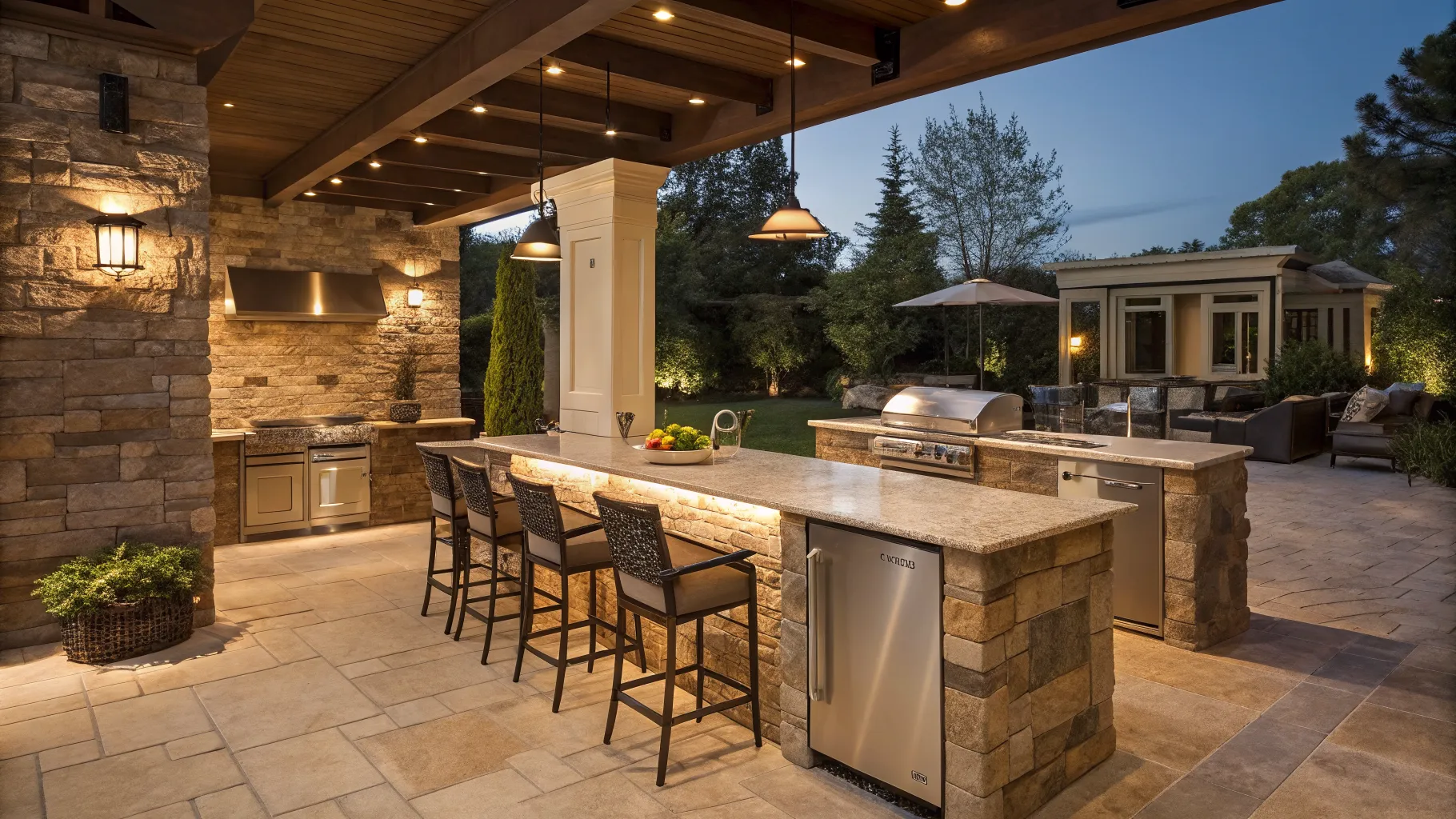
For larger spaces, a U-shaped design provides the most storage and counter space, effectively creating a self-contained kitchen workspace. This layout is ideal for separating the cooking zone from the socializing area. Another popular concept is the 'kitchen island,' which can house the grill or a sink and often includes bar seating, allowing guests to interact with the cook. No matter the shape, ensure there's a logical workflow between the refrigerator, sink, and grill, often referred to as the 'kitchen triangle'.
Lighting and Ambiance
Good lighting is essential for both safety and atmosphere in an outdoor kitchen. You'll need bright, focused task lighting directly above the grill and prep areas so you can see what you're doing after the sun goes down. Under-cabinet or under-counter LED strips are a great way to illuminate workspaces without causing glare.
In addition to task lighting, consider adding ambient lighting to create a warm and inviting mood. String lights, landscape lighting, or wall sconces can soften the space and make it feel like a true outdoor room. Putting your lights on a dimmer switch gives you the flexibility to adjust the brightness based on the occasion, whether you're hosting a lively party or having a quiet family dinner under the stars.