A Complete Guide to 9-Night Sicily and Malta Cruises
A nine night journey through the heart of the Mediterranean offers a unique opportunity to explore two of the most historically rich islands in Europe. Sicily and Malta have long served as crossroads for ancient civilizations, and arriving by sea provides a dramatic perspective on their fortified harbors and volcanic landscapes.
The Appeal of a 9 Night Mediterranean Cruise
Choosing a nine night duration for a Mediterranean sailing strikes an ideal balance between immersive exploration and relaxation. Unlike shorter seven night routes that often feel rushed, an extended itinerary allows for deeper dives into regional cultures and additional ports of call. Travelers can settle into the rhythm of life at sea while still checking off major bucket list destinations.
This specific length also provides a comfortable buffer for sea days. Navigating the waters between the Italian mainland, Sicily, and Malta requires some travel time. A nine night schedule ensures that passengers are not exhausted from daily disembarkations, offering ample time to enjoy the amenities on board while preparing for the next historical site.
Typical Sicily Cruise Itinerary Highlights
When reviewing a Sicily cruise itinerary, passengers will typically find stops at major coastal cities like Palermo, Messina, or Catania. Palermo offers a glimpse into Norman and Arab architectural influences, while Messina serves as the traditional gateway for excursions to the picturesque clifftop town of Taormina. Catania, sitting in the shadow of Mount Etna, provides a spectacular backdrop for incoming vessels.
- Palermo: Known for its bustling street markets and the stunning Monreale Cathedral.
- Messina and Taormina: Offers panoramic views of the Ionian Sea and an ancient Greek theater.
- Catania and Mount Etna: Provides opportunities for wine tasting on volcanic soil and guided crater walks.
- Syracuse: Features the rich archaeological park of Neapolis and the charming island of Ortigia.
Exploring Malta Cruises and Valletta
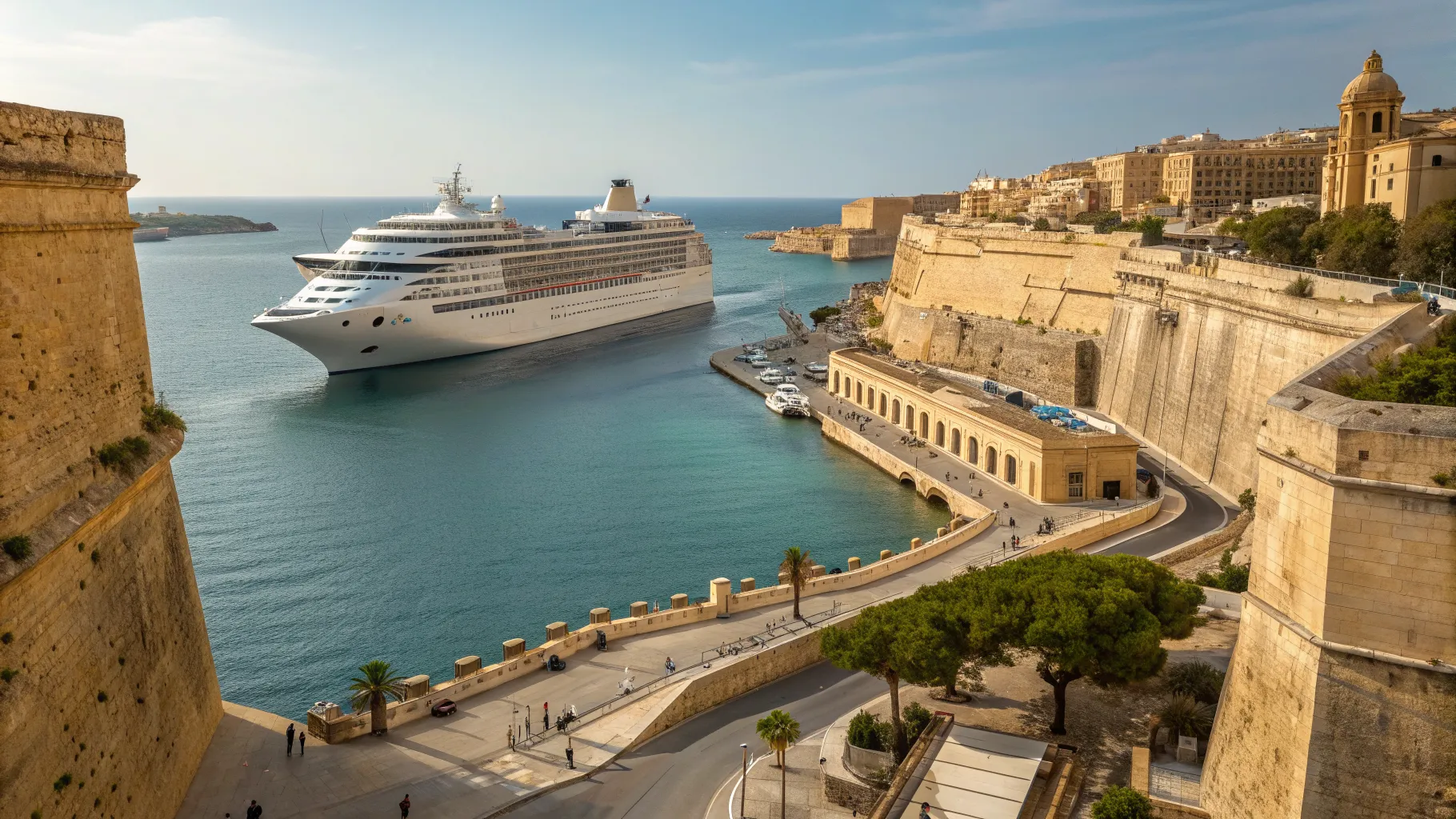
Malta cruises almost universally anchor in Valletta, boasting one of the most stunning natural harbors in the world. As ships glide into the Grand Harbour, passengers are greeted by towering honey colored limestone fortifications built by the Knights of St. John. The arrival is widely considered one of the most breathtaking experiences in Mediterranean cruising.
Once ashore, Valletta is highly walkable, though its steep streets can be a workout. Key sights include St. John's Co-Cathedral, which houses a staggering gold interior and original Caravaggio masterpieces. Many itineraries also offer excursions beyond the capital to Mdina, the silent fortified city, or the prehistoric megalithic temples scattered across the island.
Cultural and Historical Significance
The central location of Sicily and Malta has made them strategic prizes for millennia. A mediterranean cruise guide focused on this region is essentially a timeline of Western civilization. Visitors will see remnants of Phoenician, Greek, Roman, Arab, Norman, and Spanish conquests, often layered directly on top of one another in the same city blocks.
In Sicily, the Valley of the Temples in Agrigento rivals the ruins found in Greece itself. Meanwhile, Malta features some of the oldest freestanding structures on Earth, predating the Egyptian pyramids. Understanding this layered history deeply enriches the experience of walking through these ancient port cities.
Culinary Experiences in Sicily and Malta
Food is a central pillar of the Mediterranean lifestyle, and arriving by ship allows travelers to sample diverse regional cuisines in quick succession. Sicilian street food is legendary, with favorites like crispy arancini, panelle, and fresh cannoli available in nearly every port. The island's rich volcanic soil also produces exceptional ingredients, from blood oranges to robust local wines.
Malta offers a different flavor profile, heavily influenced by its proximity to North Africa and its British colonial past. Traditional Maltese dishes include stuffat tal-fenek, a slow cooked rabbit stew, and pastizzi, which are savory, flaky pastries filled with ricotta or mushy peas. Sampling these local delicacies in a seaside cafe is a highlight for many cruisers.
Best Times to Sail the Region
Timing your sailing can significantly impact the overall experience. The shoulder seasons of spring, from May to June, and autumn, from September to October, are widely considered the optimal times for a sicily and malta cruise. During these months, the temperatures are comfortable for intensive walking tours, and the major historical sites are far less crowded than during peak summer.
Summer sailings in July and August offer guaranteed sunshine and warm waters for swimming, but the heat can be intense, especially when exploring inland archaeological ruins. Additionally, August is a traditional holiday month for Europeans, meaning local beaches and restaurants will be bustling with domestic tourists.
Practical Tips for a Mediterranean Cruise Guide
Preparation is key for maximizing a nine night Mediterranean cruise. Packing should focus on comfortable walking shoes, as both Sicilian and Maltese ports feature uneven cobblestones and steep inclines. Modest clothing that covers shoulders and knees is also strictly required when entering the many magnificent cathedrals and churches in the region.
While the Euro is the official currency in both Italy and Malta, credit cards are widely accepted. However, carrying small amounts of cash is useful for local markets and tipping guides. Finally, while English is an official language in Malta and widely understood in tourist areas of Sicily, learning a few basic Italian phrases will always be appreciated by local vendors.