10 Heat-Tolerant Plants for a Thriving Garden
Gardening in areas with intense summer heat requires a strategic approach, starting with plant selection. While many plants wilt and struggle under the sun's relentless rays, others are uniquely adapted to thrive in such conditions. By choosing plants known for their heat and drought tolerance, you can create a lush, colorful landscape that requires less water and maintenance, allowing you to enjoy your garden instead of constantly tending to it. These resilient species often feature characteristics like waxy leaves, silvery foliage, or deep root systems that help them conserve moisture and reflect sunlight.
Lantana (Lantana camara)
Lantana is a powerhouse in the hot-weather garden, celebrated for its remarkable ability to flourish in full sun and high temperatures. Its clusters of small flowers are not only vibrant but often change color as they age, creating a multi-toned effect on a single plant. You can find varieties in shades of yellow, orange, red, pink, and purple, making them a versatile choice for adding a pop of color to borders, containers, or hanging baskets.
Once established, Lantana is exceptionally drought-tolerant and requires minimal care. It attracts a wide array of pollinators, especially butterflies, bringing life and movement to the garden. It is a fast-growing plant that blooms continuously from summer until the first frost. In some warmer climates, it can be considered invasive, so it is wise to check local recommendations or choose sterile cultivars.
Coneflower (Echinacea)
A native of North American prairies, the coneflower is naturally built to withstand heat, drought, and poor soil. Its classic daisy-like petals surround a prominent, spiny center, giving the flower its distinctive 'cone' shape. While purple is the most traditional color, modern breeding has introduced a spectrum of hues, including white, yellow, orange, and red.
Coneflowers are not just tough; they are also a favorite of bees, butterflies, and other beneficial insects. Their sturdy stems make them excellent for cut flower arrangements, and if the seed heads are left standing in the fall, they provide a valuable food source for birds like goldfinches. For a low-maintenance, long-blooming perennial that returns year after year, coneflower is an excellent choice.
Sedum (Stonecrop)
Sedums, often called stonecrops, are succulents that excel in hot, dry conditions thanks to their ability to store water in their fleshy leaves. This genus includes a vast range of plants, from low-growing groundcovers that are perfect for rock gardens and filling gaps, to tall, upright varieties like the popular 'Autumn Joy' that provide structure and late-season interest.
These plants are incredibly low-maintenance, thriving in well-drained soil and full sun with very little supplemental water once established. Their star-shaped flowers typically appear in late summer or fall, providing a crucial nectar source for pollinators when other blooms have faded. The foliage itself offers year-round texture and color, with shades ranging from bright green and blue-gray to deep burgundy.
Yarrow (Achillea millefolium)
Yarrow is a hardy perennial known for its feathery, fern-like foliage and large, flat-topped clusters of tiny flowers. It is incredibly resilient, tolerating heat, drought, and even poor, infertile soils. This toughness makes it a reliable choice for challenging spots in the garden where other plants might fail. Flower colors include classic white and yellow, as well as modern cultivars in pink, red, and terracotta shades.
Beyond its beauty and resilience, yarrow is a fantastic plant for supporting a healthy garden ecosystem. Its flowers attract beneficial insects like ladybugs and lacewings, which help control garden pests naturally. It has a long bloom period, providing continuous color throughout the summer months with very little fuss.
Zinnia (Zinnia elegans)
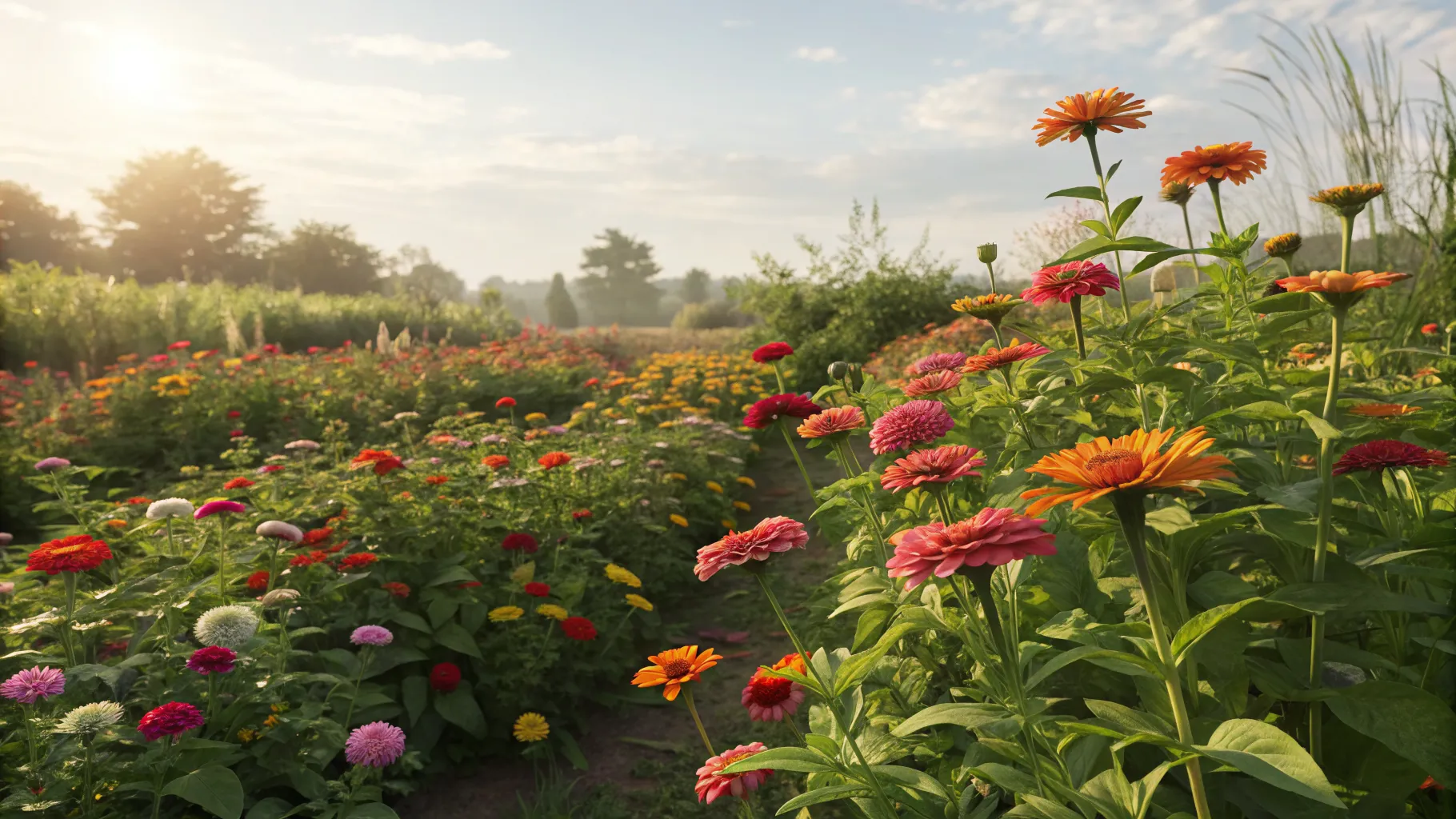
For an explosion of easy, season-long color, few annuals can compete with the zinnia. These plants absolutely love heat and will produce a profusion of flowers from early summer until the first frost. Zinnias come in nearly every color imaginable except true blue, with flower forms ranging from simple, single-petaled daisies to large, showy dahlia-like blooms.
Zinnias are exceptionally easy to grow directly from seed in the garden after the last frost date, making them an economical choice for filling large areas. They perform best in a location with full sun and good air circulation to help prevent powdery mildew. They are a favorite of butterflies and make for cheerful, long-lasting cut flowers.
Gaillardia (Blanket Flower)
Named for its resemblance to the vibrant patterns of traditional blankets, Gaillardia is a North American native that thrives on neglect. Its cheerful, daisy-like flowers typically feature fiery shades of red, orange, and yellow, often in bicolored patterns. This plant loves to be baked in the sun and is extremely tolerant of drought once its root system is established.
Blanket flower has an exceptionally long bloom time, often flowering nonstop from late spring until fall. It requires well-drained soil and does not perform well in heavy clay or overly moist conditions. Regular deadheading can encourage even more blooms, but it's not strictly necessary for a great display. It's a perfect choice for a low-water garden or a sunny border.
Salvia (Salvia spp.)
The Salvia genus is enormous, containing hundreds of species of annuals, perennials, and shrubs that are well-suited to hot climates. Many popular garden salvias, such as Salvia greggii (Autumn Sage) and Salvia leucantha (Mexican Bush Sage), are native to arid regions and are naturally adapted to heat and drought. They are known for their spikes of tubular flowers, which are irresistible to hummingbirds and bees.
Salvias offer a wide range of colors, with blues, purples, reds, and pinks being the most common. Most varieties prefer full sun and well-drained soil to perform their best. Their aromatic foliage can also help deter deer and rabbits from browsing. With so many types available, it is easy to find a salvia to fit any garden size or style.
Verbena (Verbena spp.)
Verbena is another versatile plant that excels in the summer heat, producing continuous clusters of small flowers from spring until fall. There are many different types available, from low-spreading varieties perfect for groundcover or cascading out of containers, to taller, upright species like Verbena bonariensis that add an airy, see-through texture to garden beds.
This plant is a sun-lover and is quite drought-tolerant once established, although consistent flowering is best with occasional watering during the driest periods. Verbena is valued for its long blooming season and its ability to attract butterflies. It's a workhorse plant that provides a lot of color for very little effort.
Marigold (Tagetes)
Marigolds are a classic, time-tested annual for any sunny garden. These cheerful flowers are incredibly easy to grow and are known for their ability to handle hot weather with ease. Available in sunny shades of yellow, orange, and mahogany, they provide reliable color all summer long. There are two main types: the smaller French marigolds and the larger African marigolds, both of which are excellent performers.
Marigolds are not picky about soil and will grow well in average garden conditions. They have a distinctive pungent scent that is thought to deter some common garden pests, making them a popular companion plant in vegetable gardens. For a dependable, low-maintenance splash of warm color, marigolds are a fantastic option.
Russian Sage (Perovskia atriplicifolia)
For a plant that offers a cooling visual effect in a hot landscape, look no further than Russian Sage. Its delicate, lavender-blue flower spires rise above finely textured, silvery-gray foliage, creating a soft, hazy appearance. This perennial is exceptionally tough, thriving in full, blazing sun and tolerating drought and poor soil without complaint.
Russian Sage provides a long season of interest, blooming from mid-summer into the fall. Its aromatic leaves make it resistant to deer and rabbits. It has a woody base and should be cut back in late winter or early spring to encourage fresh, vigorous growth. Its airy structure pairs beautifully with other heat-loving plants like coneflowers and sedums.
Tips for a Thriving Hot-Weather Garden
Beyond choosing the right plants, a few gardening practices can help ensure your heat-tolerant garden thrives. Proper care helps plants establish strong root systems, making them even more resilient to high temperatures and dry spells. Consider these tips for success:
- Mulch Generously: Apply a 2 to 3-inch layer of organic mulch, such as wood chips or shredded bark, around your plants. Mulch helps the soil retain moisture, keeps roots cool, and suppresses weeds that compete for water.
- Water Deeply and Infrequently: Instead of light, frequent watering, provide a deep soaking once or twice a week. This encourages plants to develop deep roots that can access moisture far below the soil surface, making them less dependent on frequent irrigation.
- Water in the Morning: Water your garden early in the day. This minimizes water loss to evaporation and allows the foliage to dry before evening, which can help prevent fungal diseases.
- Improve Your Soil: Amending your soil with compost before planting can improve its structure and water-holding capacity, giving your plants a better foundation for healthy growth.