Top Small Front Yard Landscaping Ideas for Maximum Curb Appeal
Facts:
- A well-landscaped yard can boost property value by 5-12%.
- A key trend for compact yard landscaping is using native, low-maintenance plants.
Transforming Your Compact Curb Appeal: Essential Design Principles
Maximizing the potential of a small front yard can seem daunting, but with the right approach, even the most modest of spaces can be transformed into a stunning and welcoming entryway. The key is to think strategically about every square foot, using clever design tricks to create the illusion of space, depth, and visual interest. This guide offers a wealth of small front yard landscaping ideas to help you unlock the beauty of your property. From vertical gardening to smart plant selection, we will explore practical and inspiring ways to craft a beautiful exterior. Whether you're looking for a complete overhaul or simple updates, these small outdoor space ideas will provide the foundation for creating a landscape you love.
Maximizing Space with Vertical Elements
When ground space is limited, the only way to go is up. Vertical gardening is a cornerstone of effective small front yard design. By drawing the eye upward, you create a sense of grandeur and spaciousness that defies the actual footprint of the yard. Consider installing elegant trellises against the walls of your home for climbing roses, clematis, or ivy. These not only add a lush layer of green but also soften the hard lines of the architecture. Wall-mounted planters and hanging baskets are another excellent option for adding color and life without consuming valuable ground area. For a more modern look, vertical succulent gardens can create a living piece of art. Even your plant choices can contribute; selecting tall, slender plants like Italian Cypress or Sky Pencil Holly can add height and structure, acting as green exclamation points in your overall design, making them perfect small outdoor space ideas.
Layering Plants for Depth and Interest
A common mistake in compact yard landscaping is planting everything in a single, flat row. This can make the space feel even smaller and more one-dimensional. Instead, embrace the technique of layering. Think of your garden beds in terms of a foreground, middle-ground, and background. Start with low-growing ground covers or short perennials at the very front. In the middle layer, introduce medium-height shrubs and flowers with interesting textures and colors. For the background, use taller shrubs or ornamental grasses against the house or fence line. This layering technique creates visual depth, making the yard appear larger and more dynamic. It's a key piece of front yard landscaping inspiration that professionals use to add richness and complexity to any design, no matter the size.
Smart Hardscaping for Small Yards
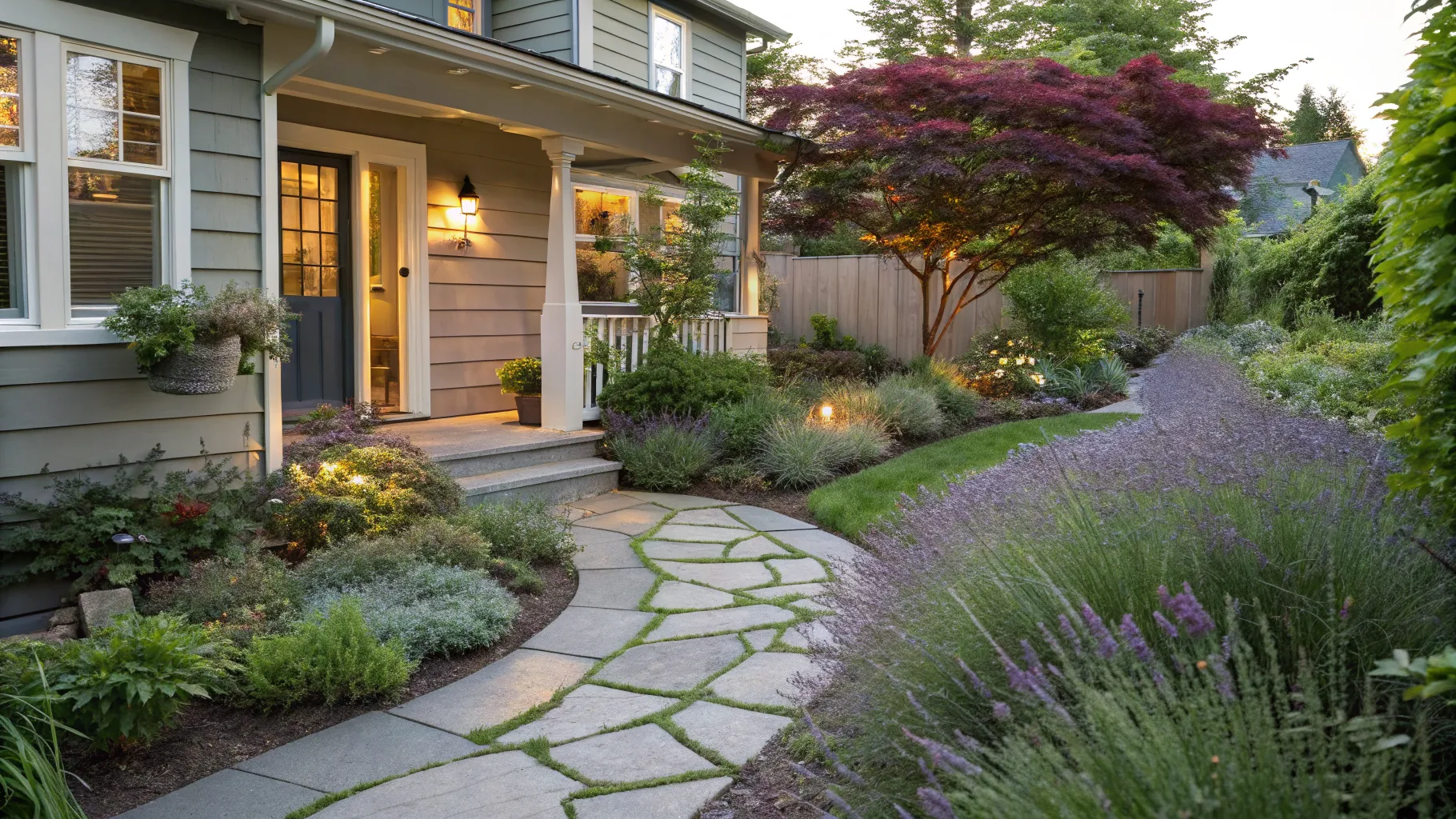
Hardscaping—the non-plant elements of your landscape—plays a crucial role in a successful small front yard design. The right pathway, border, or small patio can define the space and enhance its functionality. Instead of a straight, narrow path that rushes the eye to the front door, consider a gently curving walkway made of pavers or flagstones. The curve forces the eye to slow down and take in the surrounding plantings, making the journey feel longer and the space larger. Raised garden beds, constructed from stone or wood, can also add dimension and make gardening easier. A low retaining wall can solve slope issues while creating another opportunity for planting. These structural elements provide a beautiful contrast to the softness of the plants and are foundational to great small front yard landscaping ideas.
Choosing the Right Plants for Compact Spaces
Plant selection is paramount when dealing with small outdoor space ideas. Large, fast-growing trees or shrubs can quickly overwhelm a small yard, casting too much shade and crowding out other plants. Focus on dwarf or compact varieties of your favorite species. Many popular shrubs, like boxwood, hydrangea, and weigela, are available in smaller cultivars that won't outgrow their welcome. Perennials are also fantastic choices as they provide seasonal color without the massive footprint of larger plants. Consider plants with fine textures, like ferns or grasses, to create a sense of airiness. Container gardening is another powerful tool; large pots and planters can serve as focal points and allow you to grow plants that might not be suitable for your soil, offering endless front yard landscaping inspiration.
Creating Focal Points to Guide the Eye
In any design, a focal point serves to attract attention and anchor the composition. In a compact yard landscaping plan, a well-placed focal point can distract from the yard's small dimensions and create a powerful visual statement. This doesn't need to be something large or expensive. A single, beautifully shaped Japanese maple, a small bubbling fountain, a unique piece of garden sculpture, or an ornamental birdbath can all serve this purpose effectively. The key is to place it strategically where it will draw the eye and create a pleasing destination. By giving the viewer something specific and interesting to look at, the rest of the space feels more organized and intentionally designed, which is a core tenet of impactful small front yard design.
Actionable Steps for Your Small Front Yard Makeover
Embarking on a landscaping project can feel overwhelming, but breaking it down into manageable steps makes it achievable. Here is some practical advice to get you started on your journey to a more beautiful front yard.
- Assess Your Conditions: Before you buy a single plant, understand your yard's specific conditions. Note how much sun different areas receive throughout the day. Is your soil sandy, loamy, or clay-heavy? Choosing plants that will thrive in your specific environment is the first step to a successful and low-maintenance garden.
- Sketch a Plan: You don't need to be a professional artist. Grab a pencil and paper and sketch out your front yard's footprint. Draw in existing features like walkways and driveways. Then, experiment with shapes for garden beds and the placement of key elements. This simple step can save you time and money by helping you visualize the end result.
- Start Small: You don't have to landscape the entire yard at once. Focus on one small area first, such as the planting bed next to your front door. Completing one section successfully will provide a sense of accomplishment and give you the motivation to continue with your small front yard landscaping ideas.
- Prioritize Year-Round Interest: Select a mix of plants that offer visual appeal throughout the seasons. Include evergreens for winter structure, spring-flowering bulbs for early color, vibrant perennials for summer blooms, and shrubs that offer brilliant fall foliage.
Frequently Asked Questions
What is the best way to start a small front yard design?
The best way to start is with a clear plan. Begin by assessing your site's conditions, including sunlight, soil type, and drainage. Then, create a simple sketch of your desired layout, considering elements like pathways, planting beds, and a focal point. Focus on a cohesive theme and a limited color palette to avoid a cluttered look. Prioritize plants that are appropriately sized for the space, such as dwarf shrubs and perennials.
How can I make my compact yard landscaping look bigger?
To make a compact yard look bigger, use several design tricks. Incorporate vertical elements like trellises or tall, narrow plants to draw the eye upward. Create depth by layering plants, placing shorter ones in front and taller ones in the back. Use a curved pathway instead of a straight one to make the journey to the front door feel longer. Finally, stick to a limited color scheme with cool colors like blues and purples, which tend to recede and create a sense of space.
References
- National Association of Landscape Professionals
- University Extension Horticulture Guides
- The American Society of Landscape Architects