Recognizing Skin Cancer Symptoms In Early Stages: A Vital Guide
Facts:
- Over 90% of all skin cancers are caused by sun exposure.
- A rising trend in early detection is linked to increased skin health awareness.
Deciphering the First Clues: What Do Early Skin Cancer Symptoms Look Like?
Understanding and identifying skin cancer symptoms in early stages is one of the most powerful tools you have in safeguarding your health. Early detection dramatically increases the chances of successful treatment. Many people overlook subtle changes, dismissing them as simple blemishes or age spots, but knowing the specific skin cancer warning signs can be life-saving. This guide is designed to boost your skin health awareness and empower you to recognize potential issues promptly. Being proactive about monitoring your skin for any new or changing lesions is the first and most critical step in catching these conditions when they are most treatable. We will delve into the specific visual cues and symptoms associated with the most common types of skin cancer.
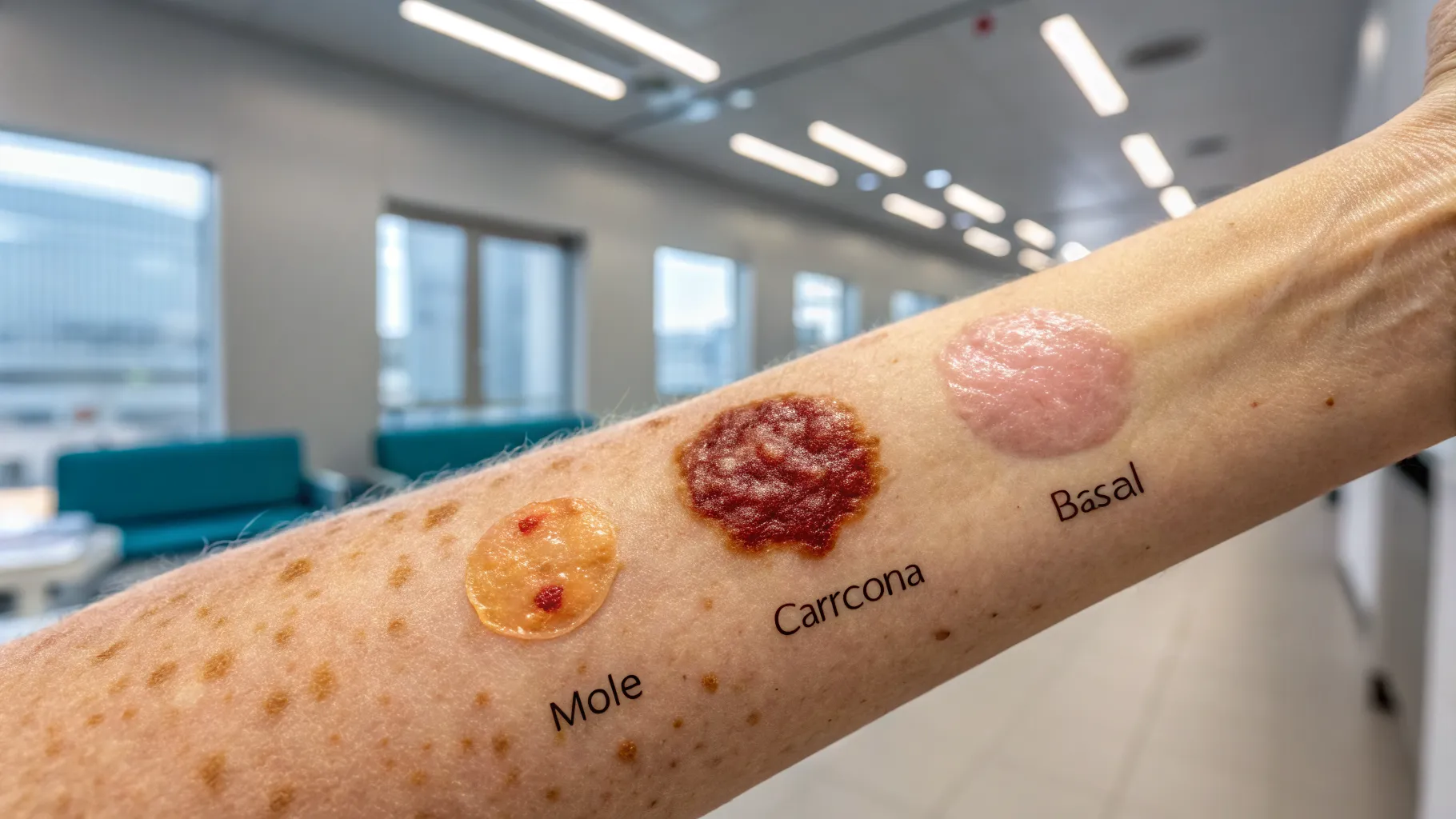
The ABCDEs of Melanoma: Critical Skin Cancer Warning Signs
Melanoma is the most dangerous form of skin cancer, but it is highly curable when detected early. The ABCDE method is a simple yet effective way to remember the key skin cancer warning signs associated with melanoma. Regularly examining your moles and spots for these characteristics is a fundamental aspect of skin health awareness. If you notice one or more of these signs, it is crucial to consult a dermatologist immediately.
A for Asymmetry
One of the first early signs of skin cancer is asymmetry. Imagine drawing a line through the middle of a mole; in a healthy mole, both halves should match. If the two halves are unequal or do not mirror each other, it could be a warning sign for melanoma.
B for Border
Non-cancerous moles typically have smooth, even borders. The borders of an early melanoma are often uneven, scalloped, or notched. This irregularity is a significant red flag among the list of skin cancer symptoms.
C for Color
A mole with a variety of colors is another warning signal. While benign moles are usually a single shade of brown, a melanoma may have different shades of brown, tan, or black. As it grows, colors like red, white, or blue may also appear. This variation is a key indicator when looking for skin cancer symptoms in early stages.
D for Diameter
Melanomas are usually larger in diameter than a pencil eraser (about 6 millimeters or ¼ inch), although they can sometimes be smaller when first detected. It's important to monitor any mole, regardless of size, but be especially wary of larger ones that exhibit other warning signs.
E for Evolving
Any change in an existing mole—in size, shape, color, elevation, or another trait, such as bleeding, itching, or crusting—points to danger. This evolution is one of the most critical skin cancer warning signs because it shows the lesion is actively changing.
Beyond Moles: Recognizing Basal and Squamous Cell Carcinoma
While melanoma gets a lot of attention, Basal Cell Carcinoma (BCC) and Squamous Cell Carcinoma (SCC) are far more common. Recognizing their distinct skin cancer symptoms is equally important for early intervention. These non-melanoma skin cancers tend to develop on sun-exposed areas of the body, like the face, neck, ears, and hands.
Basal Cell Carcinoma often presents as one of the most subtle early signs of skin cancer. It might appear as a pearly or waxy bump, a flat, flesh-colored or brown scar-like lesion, or a bleeding or scabbing sore that heals and then returns. It's the most common type of skin cancer and is highly treatable if caught early. On the other hand, Squamous Cell Carcinoma often manifests as a firm, red nodule or a flat lesion with a scaly, crusted surface. Both of these conditions underscore the importance of paying attention to any new or non-healing spot on your skin as part of your overall skin health awareness routine.
Less Common but Equally Important Skin Cancer Symptoms
While melanoma, BCC, and SCC are the most prevalent, other types of skin cancer exist, and knowing their skin cancer symptoms in early stages is vital. Merkel cell carcinoma, for example, is a rare but aggressive skin cancer that typically appears as a firm, painless lesion or nodule on sun-exposed skin. It often grows quickly and can be red, pink, or purple. Another less common type is Kaposi sarcoma, which causes purplish patches on the skin and is more common in people with weakened immune systems. A comprehensive approach to skin health awareness involves being vigilant for any unusual skin changes, not just the most common ones. Any rapidly growing or changing lesion should be evaluated by a medical professional to rule out these more aggressive, though rarer, conditions.
Proactive Steps for Early Detection and Prevention
Taking an active role in your skin's health is the best defense against skin cancer. This involves both prevention and a commitment to early detection. By incorporating these practices into your routine, you can significantly lower your risk and improve outcomes by catching any skin cancer symptoms in early stages.
- Monthly Self-Exams: Perform a head-to-toe skin check every month. Use mirrors to check hard-to-see areas like your back and scalp. Document any new or changing spots with photos to track their evolution over time. This is a cornerstone of identifying early signs of skin cancer.
- Annual Professional Screenings: See a board-certified dermatologist at least once a year for a professional skin examination. They are trained to spot suspicious lesions that you might miss.
- Sun Protection: The most effective preventive measure is protecting your skin from UV radiation. Always use a broad-spectrum sunscreen with an SPF of 30 or higher, wear protective clothing, and seek shade during peak sun hours (10 a.m. to 4 p.m.). This reduces the risk of developing skin cancer symptoms in the first place.
- Educate Yourself and Others: Continue to learn about skin cancer warning signs and promote skin health awareness among your family and friends. Early detection saves lives, and shared knowledge is a powerful tool.
Frequently Asked Questions
How often should I check my skin for early signs of skin cancer?
It is recommended to perform a thorough self-examination of your skin once a month. Additionally, you should have a professional skin check with a dermatologist annually, or more frequently if you have a higher risk for skin cancer.
Are all skin cancer warning signs painful or itchy?
No, not at all. Many skin cancer symptoms in early stages are purely visual and do not cause any physical sensation like pain or itching. A changing mole or a new, unusual growth is a significant sign, even if it feels like nothing.
Can skin cancer symptoms in early stages appear in areas not exposed to the sun?
Yes. While most skin cancers are linked to sun exposure, they can develop anywhere on the body, including areas that are rarely or never exposed to the sun, such as the palms of the hands, soles of the feet, under the nails, and on the genitals. This makes a full-body check crucial for complete skin health awareness.
References
- Skin Cancer Foundation
- American Academy of Dermatology
- National Cancer Institute
- World Health Organization