Landscape Construction Financing: A Complete Industry Guide to Funding Options, Costs, and Eligibility
Landscape construction financing has evolved into a specialized segment of the broader home improvement and commercial lending market. Whether the goal is a residential hardscape installation costing $10,000 or a commercial landscaping firm seeking $500,000 in working capital, the funding structures, qualification criteria, and repayment mechanics differ substantially depending on the borrower type, project scope, and credit profile involved.
What Landscape Construction Financing Actually Covers
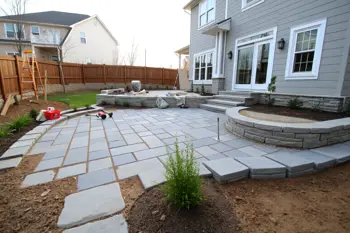
Landscaping today extends well beyond planting shrubs or laying sod. A home improvement loan can cover grading and drainage work, patios, retaining walls, outdoor kitchens, irrigation systems, lighting, and outdoor living structures. 1 For residential borrowers, financing options range from 0% APR store cards for smaller DIY projects to personal loans and home equity products for larger transformations. For projects between $5,000 and $100,000, personal loans are frequently cited as the fastest and most flexible option, requiring no home equity and no appraisal, while offering fixed rates and same-day funding from top-rated lenders. 2
On the commercial side, landscape construction financing encompasses working capital loans, equipment financing, lines of credit, accounts receivable financing, and SBA-backed term loans, all applied to the specific operational needs of landscaping and hardscaping businesses. 3 The average paver patio project runs $10,000 to $25,000, outdoor kitchens can exceed $50,000, retaining wall construction typically falls between $5,000 and $20,000, and fire pit installations range from $3,000 to $12,000. 4
Financing Options for Residential Landscape Projects
Homeowners have several distinct funding paths depending on project size and available collateral. Unsecured personal loans do not require collateral, making them less risky for homeowners but generally carrying higher interest rates compared to equity-backed options. Home equity loans and HELOCs typically carry lower interest rates and longer repayment terms, but they use the home as collateral, introducing risk of property loss in default scenarios. Credit cards are frequently used for smaller landscape projects but often carry higher interest rates compared to specialized home improvement loans or lines of credit. 5
Some lenders and landscape contractors offer structured financing programs with distinct tiers. One example seen in the market is a same-as-cash loan structure offering 0% interest for 12 months with a fixed APR of 19.99% applying after that period, alongside a conventional fixed-rate plan at 8.99% APR over a 60-month term, with loan amounts between $1,000 and $100,000. 6 HFS Financial, another provider active in this space, offers loan amounts up to $300,000, terms up to 30 years, rates ranging from approximately 7.80% to 14.99%, and up to 120% funding for project overages, with an average turnaround of 7 to 10 business days. 7 Government-backed FHA Title I Property Improvement Loans represent an additional avenue, particularly for borrowers with limited home equity. 8
Hardscaping and High-Value Project Financing
Hardscaping is consistently identified as one of the most financially attractive segments within landscape construction. Paver patio margins typically run 35 to 45%, retaining wall construction yields 30 to 40%, and outdoor kitchen installations generate 25 to 35% margins, compared to 15 to 25% for routine lawn maintenance. A maintenance company completing 2,000 or more service visits annually to reach $400,000 in revenue would require a hardscaping operation to complete only 25 to 40 projects to achieve the same revenue figure. 4
Expanding into hardscaping from maintenance requires real capital investment. Equipment alone, including a mini excavator, skid steer, plate compactor, and specialized tools, runs between $75,000 and $150,000 for a full setup. Training and ICPI certification adds $3,000 to $10,000. Working capital for materials deposits and labor during active projects represents an additional ongoing requirement. 4 Financing programs available for hardscaping projects often mirror broader home improvement loan structures, with staged disbursements to builders being a common feature designed to limit financial exposure at any single point in the project timeline. 1
Business Financing for Landscape Contractors
Landscaping businesses face a structural cash flow challenge: revenue surges in spring and summer while truck payments, insurance, and payroll remain year-round obligations. Equipment is expensive, and commercial clients commonly pay on net 30 to 60 terms, creating consistent gaps between earned revenue and available cash. 9 Commercial funding programs for landscape contractors commonly span a wide range. Financing platforms serving this sector report funding amounts from $5,000 up to $5,000,000 depending on qualifications and program type, with minimum criteria typically including at least $10,000 in monthly revenue, a credit score of 500 or above, and at least three months in business. 10
Same-day business loan structures, which underwrite on bank deposit patterns rather than tax returns, allow qualifying landscaping companies to access $15,000 to $500,000 within six hours of a clean morning application. 11 Equipment financing platforms such as KLC Financial have reported recently funded deals including a $510,000 acquisition of a boom truck crane for tree service operations, a $230,000 Mack Grapple Truck for debris fleet expansion, and a $41,000 Trommel Screen for material screening. 12 Equipment purchased through financing may qualify for Section 179 tax deductions, which can meaningfully reduce effective cost depending on the borrower's tax bracket, though tax advisors should be consulted to confirm eligibility. 13
Eligibility, Risk Factors, and Market Friction Points
Both residential and commercial borrowers face meaningful eligibility hurdles. Commercial lenders frequently require a minimum of one year in business, an established EIN, and monthly sales volume of $15,000 or more. Nonprofit organizations are typically ineligible for commercial funding programs. 13 For residential borrowers, interest rates vary significantly based on credit score, loan-to-value ratio, and the chosen financing vehicle. Unsecured personal loans deliver faster approval but carry higher cost of capital than secured options. HELOCs offer flexibility as a revolving line of credit but expose the borrower to home equity loss if repayment obligations are not met. 5
Project scope creep is a documented risk in landscape construction. Small upgrades accumulate quickly, council fees and permits add overhead, and unforeseen site conditions can push costs beyond initial estimates. Borrowers who secure financing without a contingency buffer may face gaps between approved loan amounts and final project costs. Staged disbursement structures, while useful for managing contractor payments, can create timing delays if inspection milestones are not met on schedule. 14 State-level licensing and compliance rules for landscape contractors also vary and can affect eligibility for certain financing products, particularly those tied to contractor-specific programs. 5
Comparing Core Financing Structures for Landscape Construction
Understanding the practical differences between available structures helps borrowers and contractors match the right product to the specific project or operational need. The table below summarizes key attributes of the most commonly used landscape construction financing vehicles based on data gathered across the market.
| Financing Type | Typical Amount Range | Collateral Required | Primary Use Case | Key Consideration |
|---|---|---|---|---|
| Personal / Home Improvement Loan | $5,000 to $100,000 | None (unsecured) | Residential projects, mid-scale hardscaping | Higher rates than equity products; faster approval |
| HELOC | Varies by equity | Home equity | Large renovation projects | Risk of property loss on default |
| Contractor Working Capital Loan | $5,000 to $5,000,000 | Varies by lender | Payroll, materials, seasonal gaps | Requires revenue and time-in-business minimums |
| Equipment Financing | $10,000 to $600,000+ | Equipment itself | Mowers, excavators, trucks, trailers | Section 179 deduction may apply |
| SBA Loan | Up to $5,000,000 | Business assets | Major expansion, real estate | Longer approval timelines; strong documentation required |
| Same-Day Revenue-Based Loan | $15,000 to $500,000 | Bank deposit history | Peak-season emergency capital | Underwritten on deposits, not tax returns |
Interest rates across these structures range from 0% APR promotional periods on point-of-sale financing to double-digit fixed rates on unsecured commercial working capital products. The Section 179 deduction, applicable to equipment financing, can substantially reduce effective monthly costs for qualified business borrowers, though exact benefits depend on individual tax circumstances. 13 Borrowers should evaluate total cost of capital across the full loan term rather than monthly payment alone, since extended terms reduce monthly obligations while increasing total interest paid over time. 7
Sources
- lyonfinancial.net - Landscape Financing
- bestguide.com - Landscape Financing: Best Loan Options for Every Project Size
- crestmontcapital.com - Landscaping Company Loans: The Complete Financing Guide
- liminallending.com - Expanding into Hardscaping and Outdoor Living: A Financing Guide
- mesquitelandscapinginc.com - Smart Landscape Financing in Arizona
- monellolandscape.com - Financing Options, Monello Landscape Industries
- northlandlandscape.com - Home Improvement Financing, Northland Landscape and Construction
- hud.gov - FHA Title I Property Improvement Loans
- 1west.com - Landscaping and Lawn Care Financing
- financingforcontractors.com - Financing for Landscapers
- baystreetlending.com - Same Day Business Loans for Landscaping Companies 2026
- klcfinancial.com - Landscaping and Lawn Care, KLC Financial
- capexresources.com - Landscaping Financing, Fast Funding for Landscapers
- canefinancial.com.au - How Do Construction Loans Work