Infrared Sauna Cabins: A Comprehensive Journalistic Guide to Modern Thermal Therapy Technology
Modern wellness technology has shifted significantly toward at-home thermal therapy, with Infrared Sauna Cabins emerging as a leading category for recovery, muscle relaxation, and cardiovascular support 1 22. Unlike traditional steam rooms that rely on high-humidity ambient heat, these dry-heat cabins leverage light spectrums to warm the body directly without superheating the surrounding air 15 21. This direct absorption enables a deeper sweat response at lower, more tolerable ambient temperatures, typically ranging from 120 degrees Fahrenheit to 150 degrees Fahrenheit, compared to the intense 150 to 195 degrees Fahrenheit heat required by classic Finnish models
As urban professionals, athletes, and biohackers seek structured wellness routines, understanding the engineering variations, power requirements, and safety protocols of these structures is essential 2 3. The market contains a wide variety of configurations, from compact single-person cabins designed for apartment living to larger full-spectrum multi-person units 2 3 17. Making an informed decision requires looking past marketing claims to evaluate structural materials, EMF profiles, and real-world electrical limitations 12.
The Core Technologies: Near, Mid, and Far Infrared Spectrums
Infrared heat is categorized into three primary wavelengths, each interacting with human tissue differently based on its depth of penetration 16. Far-infrared (FIR) is the most common wavelength utilized in commercial and residential cabins 16. Emitted primarily by carbon fiber or ceramic panels, far-infrared waves penetrate deep into muscle tissue to promote relaxation and recovery 16 21. Mid-infrared (MIR) wavelengths target the soft tissue and joints to assist with temporary pain relief and blood circulation, while near-infrared (NIR) wavelengths focus primarily on the skin surface to support aesthetic wellness 1 10.
While many baseline units offer single-source far-infrared heating, premium models leverage full-spectrum technology utilizing multi-zone controls 1 8. For example, advanced systems deliver red light, near, mid, and far infrared through independent controllers rather than a blended wavelength, allowing the user to isolate specific wellness settings 1. Other designs incorporate specialized ruby glass heaters to boost heat density and accelerate warm-up times, targeting specific zones like the back, calves, and feet 2.
Structural Timber and Architecture of Cabin Enclosures
The selection of wood is critical to the longevity, safety, and comfort of an infrared cabin. Because the interior of the cabin experiences repeated heating cycles, the timber must resist warping, manage moisture, and remain structurally stable over years of operation 7. The three most common wood types used in premium manufacturing are:
- Canadian Hemlock: A highly popular choice celebrated for its uniform, light-toned aesthetic, exceptional stability under thermal load, and natural hypoallergenic properties 3 13. Hemlock is highly resistant to warping, making it ideal for double-walled construction 8 13.
- Canadian Red Cedar: Rich in natural phytoncides, Red Cedar offers natural antimicrobial and decay resistance 9 14. It releases a soothing, aromatic scent when heated, though its natural oils may occasionally affect highly sensitive individuals 9.
- Aspen and Nordic Spruce: Often chosen for modern European-style cabins, these woods are dense, resin-free, and remain cool to the touch, providing excellent structural resilience 8 11.
Electrical Infrastructure and Home Power Constraints
A primary point of friction for home buyers is the electrical compatibility of their chosen model 12. Infrared cabins consume between 1.5 and 3 kilowatts of power, which is comparable to standard high-draw household appliances 18. However, a simple standard plug-and-play setup is not guaranteed for every model 12. Smaller single-person cabins with a footprint of roughly 35 inches usually run on standard 120-volt household outlets utilizing low-EMF carbon heaters 3 4.
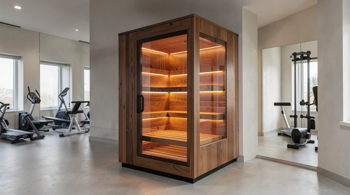
In contrast, higher-intensity, multi-person models or high-watt-density units designed for faster heat times frequently require dedicated electrical installations 2 12. For example, a 2-person cabin built for maximum heat density may run on a dedicated 240-volt circuit with 12-gauge wiring to drive powerful ruby glass emitters 2. Even 120-volt models with enhanced heating arrays can require a dedicated 20-amp or 30-amp circuit, which demands a licensed electrician to install the appropriate non-GFCI breaker to avoid tripping issues during heat cycles 9 12.
Market Pricing and Comparative Categories
The price of an infrared cabin varies widely depending on capacity, timber quality, and integrated technology 17. Buyers must balance upfront costs against structural durability and component warranties, which typically range from 2 to 10 years across established brands 6 19. Below is a structural comparison of typical industry offerings:
| Cabin Category | Capacity Range | Standard Wood Types | Average Price Range (USD) |
|---|---|---|---|
| Entry-Level / Compact | 1 Person | Hemlock Wood | $1,500 – $4,000 17 |
| Mid-Range Full Spectrum | 2 People | Hemlock or Cedar | $2,500 – $6,000 17 |
| Premium / Customized | 3+ People | Selected Cedar / Aspen | $6,000 – $12,000+ 10 11 |
Health, Hydration, and Operational Best Practices
While many users incorporate infrared cabins into post-workout or mindfulness routines, heat therapy carries physiological effects that demand caution 22. The heat causes blood vessels to dilate, raising the heart rate and increasing circulation 22. For most healthy adults, 30 to 45-minute sessions conducted 3 to 4 times per week are considered safe and effective 20. However, users must prioritize hydration to compensate for fluid loss during heavy sweating 22.
Public health institutions like the Centers for Disease Control and Prevention (CDC) emphasize the risks of heat-related illnesses and advise limiting time in hot environments 25. Similarly, the National Institute for Occupational Safety and Health (NIOSH) points out that dehydration and inadequate cooling are major risk factors for heat strain 27. Beginners should start with shorter 10 to 15-minute intervals at lower temperatures and avoid alcohol completely before or during use to prevent dizziness and blood pressure drops 22.
Technical Safety, EMF Mitigation, and Regulatory Warnings
Electromagnetic fields (EMF) are a major focus of modern sauna engineering. High-quality cabins are built with low-EMF or near-zero-EMF carbon crystal panels to minimize user exposure 4 10. High-end manufacturers limit emissions to under 3 milligauss (mG) when measured directly against the heating elements, ensuring a safer biohacking environment 10.
Beyond EMF concerns, thermal safety is vital to prevent burns and localized tissue damage. The American Burn Association notes that heat sources can cause serious burns if skin sensation is reduced or if the heat source stays in contact with a single body area for too long 24. Similarly, the U.S. FDA warns against prolonged use of heating devices and advises against falling asleep inside heat chambers to prevent accidental burns 23. Buyers should ensure their chosen cabin has automatic shut-off timers, integrated safety sensors, and certifications from recognized safety testing laboratories 5 15.
Sources
- https://www.sunlighten.com/saunas/
- https://www.saunaplace.com/products/heritage-lux-ir-noir
- https://www.saunaplace.com/products/heritage-lux-ir-solo
- https://iridescenthome.com/products/dynamic-gracia-1-2-person-low-emf-far-ir-sauna-dyn-6119-01
- https://saunabox.com/products/solara-2-person
- https://saunazen.com/products/ultimate-full-spectrum-infrared-sauna-two-person-free-shipping-in-continental-u-s/
- https://iridescenthome.com/products/maxxus-seattle-2-person-low-emf-far-ir-sauna-mx-j206-01
- https://sauna-becker.de/en/iwk-120-solid-en/
- https://glowcabin.com/products/maxxus-red-cedar-low-emf-far-ir-sauna-3-person
- https://thesaunaheater.com/products/golden-designs-dynamic-cordoba-infrared-sauna
- https://finawellnessstore.eu/en/products/awt-infrared-cabin-e1611c-ir-hemlock-180x180-for-3-4-persons
- https://sunhomesaunas.com/blogs/saunas/best-infrared-sauna-for-apartments
- https://www.hainanenchen.com/canadian-hemlock-2-person-indoor-infrared-sauna_products/
- https://www.hainanenchen.com/premium-luxury-far-infrared-sauna-cabin_products/
- https://www.medicalnewstoday.com/articles/infrared-saunas
- https://www.healthline.com/health/infrared-sauna
- https://www.saunabuzz.com/infrared-sauna-cost
- https://www.consumerreports.org/home-garden/infrared-saunas/
- https://besthomesauna.com/best-infrared-sauna-brands
- https://www.webmd.com/fitness-exercise/what-is-infrared-sauna
- https://www.verywellfit.com/infrared-sauna-benefits-4843886
- https://variety.com/2026/shopping/news/best-home-saunas-buy-online-1235955729/
- https://www.fda.gov/consumers/consumer-updates/fda-warns-about-risks-heat-therapy-devices
- https://www.ameriburn.org/education/heat-burns/
- https://www.cdc.gov/heat-health/heat-related-illness.html
- https://www.osha.gov/heat
- https://www.cdc.gov/niosh/topics/heatstress/