Rollator vs Walker: The Definitive Guide to Choosing Mobility Aids
Facts:
- Walkers offer maximum stability for significant support needs.
- The demand for advanced mobility aids is growing annually.
Navigating Your Options: The Core Differences Between Rollators and Walkers
Choosing the right mobility assistance device is a crucial step towards maintaining independence and safety. Many people find themselves debating the merits of a rollator vs walker, as both are designed to provide support. However, they serve distinct needs and offer different levels of stability and maneuverability. Understanding the fundamental differences in this essential walker comparison is the first step in selecting the ideal tool to enhance your daily life. This guide will delve into a detailed analysis of these two popular mobility support devices, ensuring you have all the information to make an informed decision.
What is a Standard Walker?
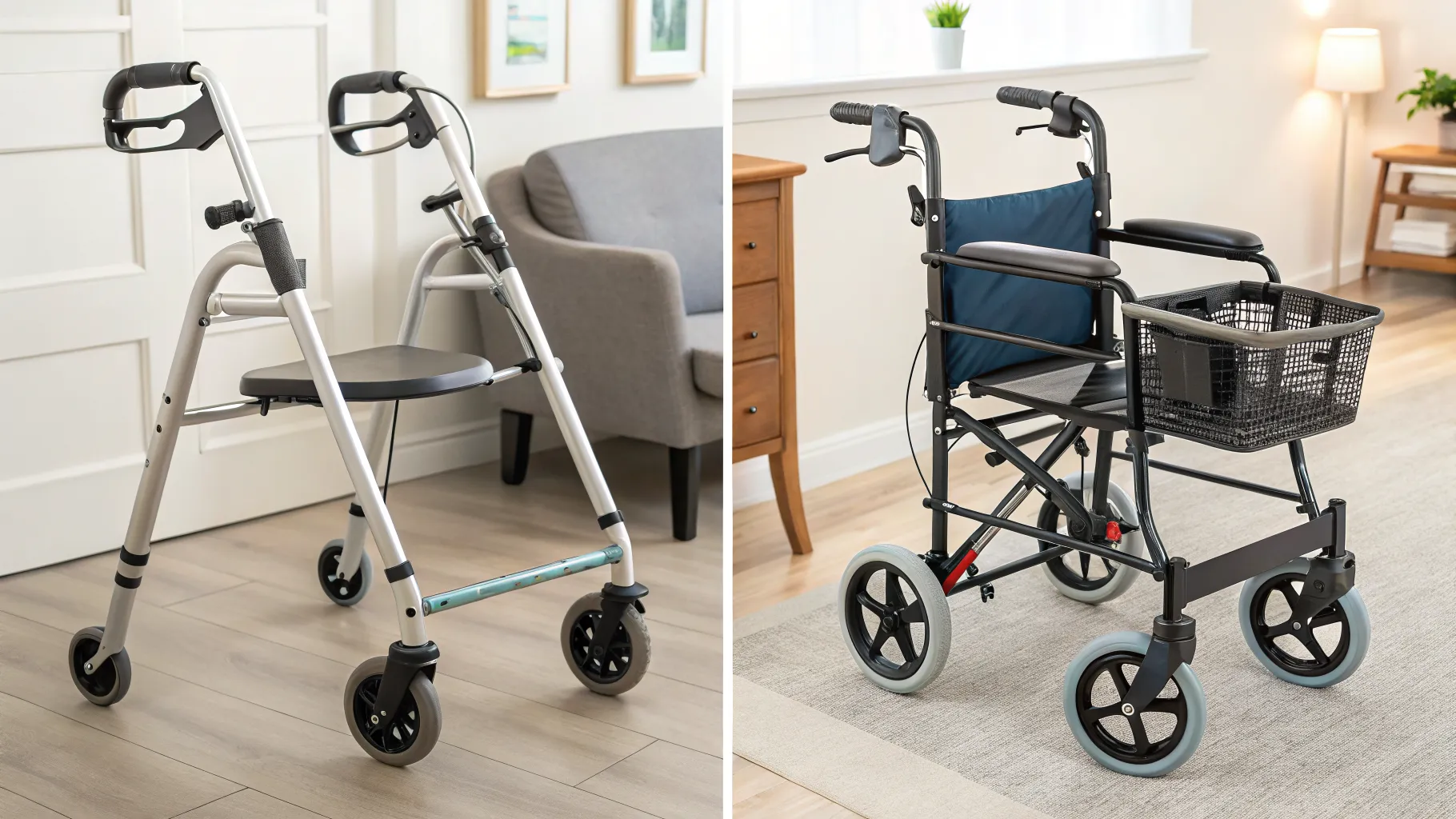
A standard walker, often just called a walker, is a frame with four legs that provides a wide, stable base of support. To move, the user must lift the walker and place it a short distance ahead before stepping forward into it. This type of device is designed for maximum stability and is intended for individuals who have significant balance problems or weakness and need to bear a substantial amount of weight through their arms. Walkers are excellent mobility aids for use indoors, especially after surgery or for individuals with conditions that severely impact their gait. Because they lack wheels (or have them only on the front two legs), they encourage a slower, more deliberate pace, which is critical for preventing falls in high-risk users.
What is a Rollator (Rolling Walker)?
A rollator, sometimes called a rolling walker, is a more advanced mobility device featuring three or four large wheels, a built-in seat, a basket or pouch for personal items, and hand-operated brakes. Unlike a standard walker, a rollator is pushed rather than lifted. This design allows for a more fluid and continuous walking pattern, making it one of the more versatile mobility support devices available. Rollators are best suited for individuals who have decent balance but struggle with stamina or endurance. The seat provides a convenient place to rest, which is invaluable during longer outings. The rollator versus walker decision often comes down to this key difference: a rollator supports a more active lifestyle, whereas a walker prioritizes foundational stability above all else.
Key Differences: A Detailed Rollator Versus Walker Analysis
When conducting a direct walker comparison, several factors stand out. Stability is the most significant differentiator. A standard walker offers unparalleled stability because its static legs provide a firm base that does not move unless lifted. A rollator, with its wheels, is inherently less stable and not designed for users who need to place their full body weight on the device. Speed and maneuverability are where the rollator excels. It allows for a faster, more natural gait and navigates corners more easily. In the ongoing rollator vs walker debate, features are another major point. Rollators come equipped with seats, baskets, and brakes, enhancing convenience for active users. Walkers are simpler, lighter, and often more affordable, focusing purely on the function of support. Understanding this trade-off between the features of various mobility aids and the level of stability required is essential for making the right choice.
Making the Right Choice: A Practical Guide
Selecting the correct device is a personal decision based on individual needs. This guide provides actionable advice to help you decide between these two excellent mobility support devices.
- Assess Your Stability and Balance: Be honest about your needs. If you experience significant balance issues, leg weakness, or are recovering from a major surgery (like a hip replacement), a standard walker's superior stability is non-negotiable. If your balance is generally good but you fatigue easily, a rollator is likely the better option.
- Consider Your Environment: Think about where you will primarily use the device. For indoor use in smaller spaces, a simple walker is often easier to manage. For outdoor use, navigating varied terrain, and covering longer distances, a rollator with larger wheels is far more practical.
- Evaluate Your Physical Strength: A standard walker requires the upper body strength to lift and move it with each step. If this is a challenge, a rollator that can be pushed may be a better fit. Conversely, a rollator requires the cognitive function and hand strength to operate the brakes effectively.
- Think About Your Lifestyle: If you enjoy going out for shopping, walks in the park, or social events, a rollator offers the convenience of a seat for resting and a basket for carrying items. This makes it a superior choice for an active lifestyle compared to a basic walker.
Frequently Asked Questions
What is the main difference in a rollator vs walker debate?
The primary difference lies in stability versus mobility. A standard walker offers maximum stability as it must be lifted for each step, making it ideal for those with significant balance issues. A rollator has wheels and is pushed, offering continuous support for those who are more mobile but need assistance with endurance and a place to rest.
Can I lean on my rollator like I can on a walker?
No, this is a critical safety distinction in the rollator versus walker comparison. Walkers are designed for significant weight-bearing. Rollators are designed for support while walking and are not meant to be leaned on heavily, as they can roll away and cause a fall. Always engage the brakes before sitting on a rollator.
Which of these mobility aids is better for outdoor use?
Rollators, especially those with larger wheels, are generally superior for outdoor use. They handle uneven terrain like sidewalks and grass better than standard walkers. The wheels allow for a more natural walking pace over longer distances, making them excellent mobility support devices for errands or walks in the park.
References
- Journal of Geriatric Physical Therapy
- National Institute on Aging - Mobility Resources
- American Association of Retired Persons (AARP) Health Guides