Investigating the Public Surplus Pipeline: Seized armored security vehicles on sale at police impound
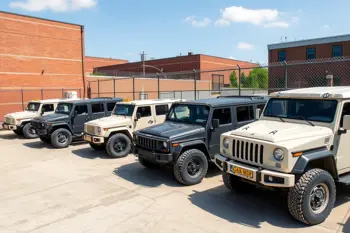
The market for seized armored security vehicles on sale at police impound has generated substantial interest among private security firms, collectors, and logistics entities seeking high-protection fleet additions. These specialized public sales occur when local, state, or federal law enforcement authorities take custody of heavily protected transport units through various legal proceedings 1. Because armored civilian platforms and tactical response vehicles represent significant capital investments, their disposal through municipal impound yards is highly regulated 2.
The Legal Origins of Confiscated Security Fleet Assets
Armored security vehicles enter the police impound pipeline primarily through civil asset forfeiture, criminal conspiracy investigations, or severe municipal tax delinquency 3. When a high-value asset, such as a cash-transit van or an executive bulletproof sedan, is seized during law enforcement operations, it is held in a secure impound facility while courts determine its final legal status 3. If a judge issues a formal forfeiture order, ownership transfers to liquidating agencies 3.
At the federal level, the U.S. Marshals Service or the Department of Justice Asset Forfeiture Program manages the long-term storage and disposal of these highly specialized platforms 3. For vehicles seized under local or state jurisdictions, municipal police departments coordinate with regional auction houses to clear the impound yards 4. This prevents ongoing storage depreciation while converting confiscated property into usable public funding 4.
Regulatory Compliance and Acquisition Standards
Purchasing decommissioned tactical equipment or ballistically rated vehicles requires strict adherence to regional and federal compliance frameworks. Unlike standard consumer automobiles, heavily armored platforms are often subject to end-user verification procedures to ensure that buyers are not legally barred from acquiring restricted defense materials. Furthermore, many specialized models require specific state registrations, and certain high-grade military modifications are restricted to verified security agencies or authorized government contractors.
To comply with public safety regulations, government entities frequently perform extensive decommissioning procedures before transferring ownership. Local police departments and sheriff offices typically remove or demilitarize specialized law enforcement features, including emergency lightbars, sirens, internal computer brackets, and weapon-mounting systems 5. Consequently, the successful bidder receives the structural armored shell but must independently source and install any civilian-compliant security systems, navigation instruments, and auxiliary electronics 5.
Local and Regional Impound Auction Frameworks
Local law enforcement agencies regularly conduct public auctions to manage fleet turnovers and confiscated property. For instance, the Broward Sheriff's Office, the Palm Beach County Sheriff's Office, and the police departments of Margate and Boca Raton coordinate joint vehicle procurement sales in Davie, Florida 6. These municipal auctions require prospective buyers to complete pre-registration and submit a certified refundable deposit, which can be as high as $1,000, to view and bid on the available impound lot inventory 6.
Similarly, other regional entities utilize sealed bid processes or third-party auction groups to liquidate specialized heavy machinery. The Dunklin County Sheriff's Office in Missouri recently managed a sealed bid sale for surplus military Humvees, establishing a strict minimum reserve bid of $12,000 per unit 7. Meanwhile, the Orange County Sheriff's Office in Florida has historically partnered with regional auction platforms in Zephyrhills to run multi-day public bidding events under strict registration requirements 8.
Market Valuations and Pricing Dynamics
The pricing of seized armored vehicles at public auctions is highly variable, reflecting the asset's original retail price, mechanical condition, and historical background. For example, a heavily armored Mercedes-Benz Maybach S650, which originally cost $192,000 when purchased new, was liquidated through a bankruptcy auction for $63,000 9. This transaction highlights the steep depreciation curve associated with specialized luxury armor-plated vehicles when they are processed through court-ordered liquidation systems 9.
In the broader commercial sector, certified pre-owned armored vehicles often represent a significant reduction in cost compared to custom-built models. Industry providers indicate that pre-owned units can reflect a pricing adjustment of 30 to 50 percent lower than new production builds, with immediate shipping 10. However, at public police impound auctions, there are no certified inspections or mechanical guarantees, meaning the initial bidding price is directly tied to the inherent risks of the asset 1.
Physical Conditions and the "As-Is" Reality
The primary hazard of acquiring any vehicle from a police impound or municipal lot is the universal application of "as-is, where-is" purchase terms 11. Government agencies do not offer warranties, and buyers are fully responsible for identifying mechanical issues, fluid leaks, or structural body damage before bidding 11. Some retired or confiscated SUVs, such as former police interceptors, may carry high mileage, worn tires, or significant collision and hail damage 12 13.
Furthermore, many impounded vehicles do not have keys, and buyers are frequently unable to test if the engine starts prior to purchase 14. Once the auction closes, successful bidders must coordinate immediate logistics, as vehicles are rarely permitted to be driven off the municipal lot under their own power 5. Buyers must arrange for professional towing services and comply with tight removal deadlines to prevent the accumulation of daily storage fees 14.
Navigating Administrative Fees and Payment Terms
Participating in police auctions requires a clear understanding of the administrative expenses that accrue beyond the final bid price. Standard municipal sales, such as those conducted at the Kansas City Tow Lot, impose strict buyer's premiums of up to 10 percent alongside flat administrative fees per lot 14. Some private auction houses handling law enforcement seizures require even higher premiums, often reaching 15 percent, which must be factored directly into the buyer's maximum budget 15.
Payment terms are exceptionally rigid, often requiring complete settlement within 24 hours of the auction's closing. Most government agencies accept only certified wire transfers, cashier's checks, or physical cash at the payment window 14. Failure to complete payment within the designated timeframe results in the immediate forfeiture of the asset, loss of registration deposits, and potential suspension from future public procurement opportunities 14.
Sources
- JPost News
- weanable.com
- MentalFloss
- wondermapped.com
- Global Auction Guide
- NoticeRegistry
- Starbridge
- NoticeRegistry
- DNYUZ News
- Alpine Armoring
- Global Auction Guide
- Central Auction Group
- Global Auction Guide
- Kansas City Tow Lot Auction
- Powell Auction & Realty