Police auction pickup trucks with bidder information and vehicle notes: An Analysis of Municipal Surplus Sales
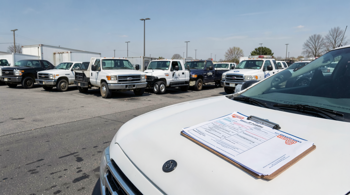
When researching police auction pickup trucks with bidder information and vehicle notes, prospective buyers must navigate a highly structured, legally binding landscape governed by state and local authorities. These public auctions feature retired municipal fleet units and seized assets, requiring participants to understand strict registration policies and precise mechanical disclaimers. Exploring historical auction data reveals the distinct realities of acquisition, from bidding deposits to mandatory vehicle removal timelines.
Bidder Registration and Deposit Requirements
Participating in municipal sales requires formal registration, where identity verification and financial security are paramount. For example, municipal auctions like the Kansas City Police Tow Lot require bidders to submit a payment card that is charged a mandatory $300 deposit upon registration 1. If a bidder does not win, this deposit is refunded within five to ten business days; otherwise, it is applied directly to the final invoice 1.
Furthermore, failure to pay results in a permanent ban from future auctions and the forfeiture of the deposit 2. In other jurisdictions, like the Omaha Police Department, there is no entry fee, but participants must present a valid U.S. driver's license or photo identification to receive a bidder number before entering 4.
Financial Terms and Buyer Premiums
Purchasing a retired vehicle at auction involves several costs beyond the final bid price. Municipalities and their contracted auctioneers regularly assess administrative fees and buyers' premiums. In the Kansas City auctions, all transactions are subject to a flat $25 administrative fee per lot alongside a 10% buyer's premium 1. Similarly, the Omaha Police Department enforces a buyer's fee, which is structured as the greater of $175 or 15% of the purchase price, unless the vehicle sells for $20 or less 4.
These financial dynamics are standard across various municipal and county-level liquidations. For example, Powell Auction and Realty assesses a 15% buyer's premium on police seizure assets 6. To organize these dynamics, the table below outlines typical fee structures found across regional municipal auction formats:
| Location / Agency | Buyer's Premium Rate | Administrative or Flat Fees | Payment Window Constraints |
|---|---|---|---|
| Kansas City Police Tow Lot 1 | 10% of final bid | $25 flat fee per lot | Next business day by 5:00 PM |
| Omaha Police Department 4 | 15% (or $175 minimum) | Key charges added if applicable | Same day by 11:00 AM |
| RTI Municipal Auctions 7 | 15% of final bid | Applicable local sales tax | Varies by auction rules |
Interpreting Vehicle Notes and Condition Assessments
Analyzing the vehicle notes provided in auction catalogs is essential because almost all assets are sold on an as-is basis without warranty 2. For example, in a Chemung County Sheriff auction, a 2018 Chevy Silverado 1500 Crew Cab was documented with 144,358 miles, a fair mechanical condition, and notes indicating that the transmission slips and the vehicle requires a jump start 3. This highlights the necessity of reviewing every catalog entry carefully.
These detailed historical notes highlight that while some vehicles operate, they often possess hidden mechanical wear. In other cases, such as a 2007 Chevrolet Silverado auctioned by the Freer Police Department in Texas, the vehicle notes specifically recorded a Rebuilt Salvage branded title and unverified mileage 5. These disclosures shift the burden of inspection and mechanical verification entirely onto the registering bidder before any bids are cast.
Title Processing and Jurisdictional Regulations
Title documentation for police surplus vehicles varies based on state laws and the vehicle's history. When acquiring a vehicle from the Freer Police Department, local residents receive a Law Enforcement Auction Sales Receipt (Form VTR-71-1) to present to the County Tax Assessor-Collector to obtain a Texas title 5. Out-of-state buyers receive the same receipt but must coordinate with their home state's DMV to secure a bonded title 5.
Conversely, some impound lots do not hand over titles directly at the window. For instance, the Kansas City impound facility typically mails the title or official release paperwork to the buyer following the sale, rather than distributing it on-site 1. Bidders must carefully review these jurisdictional rules before bidding, as attempting to register a retired emergency vehicle or an abandoned asset out of state can present significant administrative hurdles.
Removal Timelines and Late Pick-up Penalties
Once the auction concludes and payment is processed, buyers must adhere to strict deadlines for vehicle removal. Municipal impound lots and auction houses have limited physical space and charge steep storage fees for delayed pickups. The Kansas City Tow Lot dictates that all purchased vehicles must be removed by the Saturday following the sale, with a late storage fee of $30 per day applied to any remaining lots 1.
The Omaha Police Department requires all purchased vehicles to be removed from the auction lot by 8:00 PM on the day of the auction 4. Any vehicles remaining after this deadline are relocated by the City of Omaha at the buyer's expense, incurring a relocation fee of $35 plus daily storage charges of $20 per business day 4. Furthermore, vehicles must be towed off the lot if they are not legally registered 5.
Market Realities and Administrative Friction
While purchasing retired government fleet vehicles can yield reliable work trucks, bidders must prepare for specific operational realities. Many of these vehicles have undergone rigorous service conditions, including high engine idling hours and heavy wear 8. Government agencies regularly cycle out light-duty pickups and utility trucks once they reach 80,000 to 120,000 miles 8. While these trucks are often fleet-maintained, they may also have structural holes where specialized equipment or sirens were removed 3.
Bidders must also comply with legal emergency vehicle disclaimers. In many jurisdictions, any remaining decals, emergency sirens, or lightbars must be completely removed or covered before the vehicle can be legally operated on public roadways 3. This administrative friction, combined with the lack of keys for many abandoned vehicles, requires bidders to budget for locksmith services, towing expenses, and cosmetic adjustments when calculating their maximum bid limits at public auctions 1.
Sources
- Official Auctions Kansas City (bids.oaikc.com)
- Woolsey Auction Company (woolseyauction.com)
- Global Auction Guide - Chemung County (globalauctionguide.com)
- Omaha Police Department (police.cityofomaha.org)
- Global Auction Guide - Freer PD (globalauctionguide.com)
- Powell Auction & Realty (powellauction.com)
- RTI Auctions (rtiauctions.com)
- GovAuctions Guide (govauctions.app)