Public Auctions and Municipal Liquidation: Understanding Impound Flatbed Trailers on Sale
Overview of the Impounded Flatbed Trailer Market
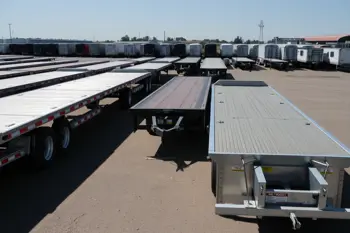
Industry buyers seeking reliable transport solutions often look for public asset liquidations to locate impound flatbed trailers on sale, which are routinely processed through civil, municipal, and law enforcement recovery programs. These public events occur when municipal authorities or law enforcement agencies seize, find abandoned, or process unclaimed property, which frequently includes various towing and hauling equipment 1. This distribution channel provides an alternative source for utility, travel, and heavy-duty commercial haulers, redirecting underutilized assets back into active service.
Because these assets are seized under diverse regulatory and civil conditions, they are almost universally sold on an as-is, where-is basis 1. The operational objective for the processing agency is to clear yard inventory and recover administrative storage costs rather than maximizing retail profits, creating a competitive, neutral buying environment 1. Consequently, participants can evaluate a wide variety of equipment, ranging from smaller landscape flatbeds to massive industrial flatbeds, provided they conduct proper physical and legal research before bidding.
Sourcing Channels and Auction Platforms
Securing these vehicles requires navigating dedicated governmental surplus databases and specialized commercial auction portals. Platforms such as GovDeals regularly aggregate listings of municipal property and seized assets across various regions, including state-specific inventory from Florida 2. Local recovery operators, such as ABC Towing, work closely with municipalities to clear illegally parked or abandoned equipment from public ways, eventually sending unclaimed units to authorized regional auctions 12.
For heavy commercial flatbeds, insurance-based platforms like Insurance Auto Auctions (IAA) and SCA Auctions provide structured inventories of salvage, repairable, and wrecked commercial assets 5 9. These systems catalog critical technical markers, such as damage descriptions, title classifications, and model years, which allows logistics providers to analyze trailer conditions remotely 5. Utilizing these centralized digital marketplaces enables corporate buyers to participate in scheduled weekly auctions with real-time bidding interfaces across the country.
Structural and Engineering Variations of Commercial Flatbeds
Commercial flatbed trailers feature diverse designs tailored for specific load-bearing requirements, heavy hauling, and machinery transport. Heavy equipment haulers, like the Kaufman 53,000 GVWR air brake pintle flatbed, are constructed with 16-inch pierced I-beam mainframes and dual 25,000 lb capacity airbrake axles on Hutchens slipper spring suspensions 3. These massive trailers utilize durable oak flooring and Haldex ABS systems to safely support up to 43,000 lbs of payload, making them suitable for paving and heavy machinery relocation 3.
Lighter yet highly robust configurations are also common, such as the Kaufman 38,000 GVWR heavy-duty flatbed, which features dual 15,000 lb oil-bath electric brake axles and load range H radial tires 4. Meanwhile, large-scale fleet hauling often employs combination models, like the 2027 Dorsey 45-foot combo flatbed, which blends steel crossmembers with aluminum flooring, a spread tandem axle layout, and an 80,000 lb GVWR rating designed to accommodate forklift kits 7. These technical specifications help commercial operators identify the precise trailer geometry needed for their logistical operations.
| Trailer Model | GVWR (lbs) | Axle Configuration | Primary Deck Material |
|---|---|---|---|
| Kaufman Air Brake Pintle | 53,000 | Dual 25K Air Brake Axles | Oak Flooring |
| Kaufman Heavy Duty Deluxe | 38,000 | Dual 15K Electric Brake Axles | Oak / Treated Wood |
| Dorsey Combo Flatbed | 80,000 | Closed Tandem Air Ride | Aluminum with Wood Nailers |
| Lamar Bumper Pull | 25,900 | Dual 12K Electric Brake Axles | Treated Yellow Pine |
Evaluation Metrics and Physical Inspections
Because municipal and law enforcement impound auctions execute sales under strict as-is terms, bidders must implement systematic evaluation protocols 1. Frame alignment is the most critical checkpoint, as severe structural twists can render a trailer permanently unsafe for highway speeds. Buyers must check for underlying structural fatigue, cracks in the welded joints, and corrosion on the crossmembers, particularly on older or salvage-designated units 5.
Mechanical components represent another critical area of financial risk. Axle alignment, suspension wear, whether air ride, spring, or spread axle configurations, and braking system integrity must be checked before transport 6 7 11. High-capacity trailers often require premium tire configurations, such as 22.5-inch steel duals or specialized load range radial tires, meaning that replacing worn rubber can quickly add significant expense to the initial acquisition cost 4 7.
Legal Frameworks, Title Status, and Compliance
Acquiring an impounded or seized trailer involves traversing complex legal procedures to secure proper ownership paperwork. Auctions generally list each item with its current title status, which can range from a clean municipal title to a salvage certificate or a bill of sale only 5. Bidders must verify their local DMV requirements, as some states demand official police release documents or safety inspection certificates before issuing a road-worthy registration 1.
Compliance also extends to the financial terms of the auction platform itself. Successful bidders must account for additional transactional expenses, including buyer premiums, administrative paperwork fees, and state-specific sales tax 3 4. Furthermore, certain platforms limit bidding on heavy commercial trailers to registered dealers, meaning private buyers may need to hire a licensed broker to facilitate the purchase and handle the title transfer legally.
Operational Logistics and Transport Coordination
Once an auction is closed and payment is finalized, operators must immediately manage the physical extraction of the trailer from the yard. Heavy commercial units like the 32-foot Lamar bumper pull or the 34-foot Maxx-D 40K hydraulic tail flatbed represent massive physical footprints that cannot be towed by standard consumer vehicles 10 8. Winning bidders must arrange for heavy-duty tow vehicles or specialized transport setups that comply with combined GCWR legal limits.
If the trailer suffers from compromised brakes, damaged suspension, or expired safety components, it cannot be legally driven on public highways. In these cases, buyers must coordinate with professional towing services equipped with rollback flatbeds or heavy-duty recovery wreckers to transport the unit 12. Ensuring compliance with local hauling permits, weight limits, and cargo securement regulations is necessary to prevent further impoundment during transport.
Sources
- Search Labz
- GovDeals
- Kaufman Trailers (53K)
- Kaufman Trailers (38K)
- Insurance Auto Auctions (IAA)
- Mountain West Utility Trailer
- Reno's Trailer Sales (Dorsey)
- Black River Outdoors (Maxx-D)
- SCA Auction
- Trailer Sales of Indiana (Lamar)
- Reno's Trailer Sales (Wabash)
- ABC Towing