Police Impound Offers: An Analytical Guide to Municipal Vehicle Auctions and Regulatory Frameworks
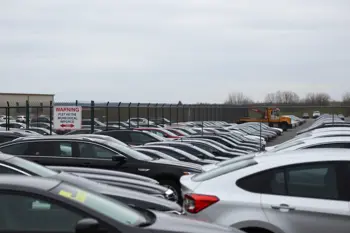
Public interest in police impound offers continues to rise as consumers seek alternative methods to source vehicles at competitive entry points 1. Law enforcement agencies and municipalities utilize these public sales to clear local tow lots of confiscated, abandoned, or unclaimed vehicles while recovering outstanding administrative and storage expenses 2. These liquidations represent a diverse cross-section of inventory, ranging from older salvage units to newer models that have been abandoned or seized under municipal codes 3. Prospective buyers must understand that while these events present opportunities, they operate under strict municipal and state guidelines that protect the interests of both the government and previous owners.
It is critical to differentiate between a routine municipal impoundment and a complex civil asset forfeiture when analyzing these disposal processes 4. Impoundment represents temporary municipal custody due to traffic infractions, expired registrations, or unpaid parking violations, meaning the owner can reclaim the asset by resolving outstanding fees 4. Conversely, civil forfeiture involves vehicles seized due to an alleged connection with criminal activities, which can result in lengthy legal proceedings before liquidation 4. Understanding these underlying legal mechanisms is essential for any participant analyzing the origin of municipal auction inventories.
Operational Rules and Bidder Eligibility Criteria
Participating in a municipal vehicle auction requires strict adherence to local registration protocols and eligibility requirements. At the Omaha Police Department impound lot, registration begins early on designated Saturdays, and bidders must be at least 19 years of age 5. Participants must present a valid government-issued photo identification or a US driver's license to receive a bidder number 5. Minors between the ages of 16 and 18 are permitted on the premises only when accompanied by a registered adult 5. These rules ensure that all participating bidders are legally competent to enter into binding purchase agreements.
While some regional auctions are managed directly by sheriff departments, others utilize third-party platforms. In Sarpy County, Nebraska, the Sheriff's Impound Auction follows a strict timeline where gates open early in the morning for public viewing before vehicles hit the auction block 6. Many states, such as Minnesota, have modernized their systems to allow anyone to participate in government surplus and seized vehicle auctions online without requiring a specialized dealer license 7. This digital transition has expanded public access while maintaining regulatory compliance 7.
Financial Structures, Deposits, and Hidden Costs
Bidding on municipal inventory involves several upfront and secondary expenses that are added to the final hammer price. In Kansas City, Missouri, police tow lot auctions require bidders to submit a refundable deposit, such as 300 dollars, which is automatically charged to the registration card on file 8. If a bidder wins a vehicle but fails to complete the payment on time, this deposit is forfeited, and the individual faces a permanent ban from participating in future municipal sales 8. Additional localized charges typically include a 10% buyer's premium and a 25 dollar administrative fee per lot 8.
To illustrate the variance in financial obligations across different city impound lots, consider the comparative structured fees in the table below:
| Location / Jurisdiction | Required Deposit or Entry Fee | Administrative or Buyer Fees | Storage Penalties (Per Day) |
|---|---|---|---|
| Omaha Police Department 5 | No Entry Fee 5 | Greater of $175 or 15% Buyer Fee 5 | $20 per business day 5 |
| Kansas City Tow Lot 8 | $300 Deposit 8 | 10% Buyer Premium + $25 Admin Fee 8 | $30 per day for late pickups 8 |
| City of Alexandria, VA 9 | Not Applicable | $215 Flat Impound Fee 9 | $50 per day storage fee 9 |
The Reality of "As-Is" Conditions and Legal Liens
A primary risk of acquiring vehicles through police auctions is that all items are sold strictly on an as-is basis with no warranties or refunds 5. Most abandoned and impounded vehicles do not have keys, and buyers are not permitted to test-drive or start the engine prior to purchasing 10. Consequently, there is high uncertainty regarding whether a vehicle runs 10. If keys are purchased, that cost is added directly to the final sale price 5.
Furthermore, there are legal distinctions regarding what property can be retrieved from an impounded vehicle. Personal property, defined as items not bolted to the vehicle, can generally be reclaimed by the owner even if they cannot afford the towing and storage fees 11. However, parts integrated into the vehicle, such as aftermarket stereos, batteries, and wheels, are subject to the impound lot's lien and cannot be removed 11. This lien remains until all municipal obligations are satisfied 11.
Regional Management and National Procurement Models
Municipalities frequently contract their vehicle storage and auction services to private corporations to optimize operational space and efficiency. Large-scale platforms such as Copart facilitate weekly wholesale auctions featuring repossessed, off-lease, and impounded cars from institutional sellers 3. In other jurisdictions, local law enforcement agencies secure third-party towing providers through public procurement bids. For example, the California Highway Patrol periodically issues formal invitations for bids to secure evidence impound towing and 24/7 secure storage services in specific regions, such as Central Los Angeles and Dublin 12 13.
These contracted towing networks operate under strict regulatory guidelines to safeguard seized evidence and manage vehicle inventories. In locations facing extreme spatial constraints, such as Edmonton, the local police service and city administration have had to establish temporary spaces to handle the high volume of impounded vehicles 14. This underscores the ongoing logistical challenge municipal authorities face in balancing storage capacity with legislative timelines before a vehicle can be legally auctioned 14.
Risk Mitigation, Compliance, and Vehicle Reclamation
For registered owners seeking to recover their vehicles before they proceed to a public auction, prompt action is necessary. To secure a release, owners must present valid identification, active proof of insurance, and official proof of ownership, such as a vehicle title 15. In certain jurisdictions, failing to maintain these three items can lead to immediate impoundment, such as Aurora's three-strikes rule, where vehicles are towed if the driver lacks insurance, registration, and a license 16.
Additionally, special regulatory requirements exist regarding vehicle insurance. In some regions, standard temporary one-day policies are rejected by police compounds to prevent motorists from letting coverage lapse immediately after leaving 17. Specialist impound insurance is required to satisfy legal compliance and secure a vehicle's release 17. If the vehicle remains unclaimed past the statutory notice period, which typically ranges from thirty to ninety days, the municipality retains the right to auction the asset 18.
Sources
- Woolsey Auction
- DailyStuff
- Copart
- LegalClarity
- Omaha Police Department
- Sarpy County Sheriff
- Remarket Space
- Kansas City Police Auction
- City of Alexandria, VA
- Burgess Auctions
- LegalClarity Belongings
- Starbridge
- CLEATUS
- Edmonton Police
- TowingCosts.com
- Denver7
- CarAuctionFees.co.uk
- ShunAuto