Police Impound Offers: An Analytical Guide to How Municipal Vehicle Auctions Work
Police impound offers have attracted growing attention from budget-conscious vehicle buyers across the United States, and the interest is backed by documented auction activity. These sales are not informal yard events. They are structured government disposals governed by municipal codes, publicly advertised in advance, and increasingly conducted through online platforms alongside traditional in-person lot sales. Understanding the mechanics behind these auctions, the fee structures, title realities, and condition risks is essential before placing any bid.
What Police Impound Offers Actually Are
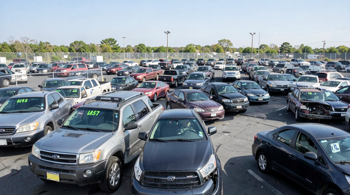
Police impound auctions are government-organized sales events where seized, abandoned, or unclaimed vehicles are transferred to the highest bidder. 1 These vehicles are typically impounded due to traffic violations, DUI arrests, unpaid fines, criminal investigations, or abandonment. Law enforcement agencies periodically auction these cars to clear space in impound lots and recover costs associated with storage and handling. 2 The resulting inventory is broad, spanning everyday sedans and SUVs to trucks, motorcycles, and occasionally boats or heavy equipment.
A vehicle taken into police custody follows a defined legal holding period. During that window, the original owner may reclaim the vehicle by paying fines, providing documentation, and in some jurisdictions obtaining clearance from a court. 3 Once that period expires without a claim, the vehicle becomes eligible for public auction. Ownership formally transfers to the state or the auctioning agency, which then organizes the sale. The condition of vehicles at that point varies enormously, ranging from operable late-model cars to heavily damaged units suitable only for parts.
Active Auction Formats and Documented Examples
The Kansas City Police Tow Lot, located at 7750 E Front St, Kansas City, MO, operates on a bi-weekly schedule managed through OAI Auctions. Documented auction dates from the 2025-2026 period include sales in January, February, March, April, and July 2026, as well as November 2025. 4 The January 20, 2026 auction alone catalogued 305 vehicle lots, including 163 cars, 69 SUVs, 33 trucks, 23 vans, and 7 motorcycles and recreational vehicles. 5 The February 3, 2026 auction listed 160 vehicle lots. The March 3, 2026 sale listed 198 vehicle lots across cars, SUVs, trucks, vans, and trailers. 6
Columbus, Ohio offers another well-documented example. The Columbus Division of Police hosted a June 6, 2026 auction at its impound lot at 2700 Impound Lot Road, offering approximately 120 vehicles. 7 That event was the third of six scheduled impound lot auctions the division planned for 2026. Vehicles in the Columbus auction included units forfeited, abandoned, or connected to crashes or crimes. In Massachusetts, the Global Auction Guide documented an Auto Impound Solutions auction in the Woburn/Barre/Wilmington area with bidding closing June 25, 2026, featuring vehicles ranging from a 2000 Mercury Grand Marquis to a 2011 Ford E150 Van and a 2006 Toyota Tundra. 8
Fee Structures and Financial Requirements
Buyers entering police impound auctions face a layered cost structure that extends well beyond the winning bid. At the Kansas City Tow Lot, all sales carry a $25 per lot Administrative Fee and a 10 percent Buyer's Premium on top of the hammer price. 9 Beginning in March 2026, a $300 deposit became required at registration to participate. Unpaid lots result in forfeiture of that deposit and a permanent ban from future auctions. 10 Late pickups incur a $30-per-day storage fee, and all purchased vehicles must be removed by the Saturday following each sale.
In the United Kingdom, the statutory fee framework is codified differently. Police pounds charge a £192 release fee, with storage running at £26 per day per part-day from noon the day after seizure. On Day 1, the total charge is approximately £218; by Day 7, it reaches roughly £374; and by Day 14, approximately £556. 11 After Day 14, the disposal process begins and ownership may be permanently lost. In addition to pound fees, UK owners must obtain specialist 30-day impound insurance, which starts at around £360, as standard car insurance policies do not satisfy police compound release requirements. 12 Registration and bidder fees across U.S. platforms typically range from $50 to $200 per auction, and these are generally non-refundable even when a bidder does not win any lot. 13
Title, Condition, and Documentation Risks
The as-is sale condition is the single most consequential factor for buyers at police impound auctions. Kansas City Tow Lot auction terms explicitly state that most vehicles do not have keys, and buyers will not know whether a vehicle runs and drives until after purchase. 14 Bids may not be retracted for any reason, and no warranties, expressed or implied, attach to any sold vehicle. The Columbus Division of Police confirms that most vehicles at its auctions are sold with salvage titles. 15 Title transfers typically take 30 to 60 days after purchase, and some vehicles may carry outstanding liens or be subject to state-specific forfeiture regulations. 16
Vehicle condition depreciation at impound lots follows patterns influenced by age, mileage, maintenance history, and the circumstances of seizure. Premium brands tend to hold value better than economy models, while vehicles involved in accidents or with mechanical failures depreciate more rapidly. 17 Buyers considering a vehicle primarily for parts rather than transport face fewer title complications in many states, but should verify local regulations before bidding. Requesting a vehicle history report, where available, is a standard preparatory step recommended across multiple auction platforms.
How to Locate and Research Police Impound Auctions
Several national platforms aggregate police impound and government vehicle listings. GovDeals lists surplus and impounded vehicles from government agencies nationwide, with online bidding open to the public. 18 Copart serves as a primary platform for law enforcement and government agencies to process and sell impounded assets, with both live and timed online bidding formats. 19 IAA (Insurance Auto Auctions) partners with law enforcement agencies to manage the remarketing of recovered and impounded vehicles, offering inspection and online bidding options. 20 Many municipal police departments also maintain dedicated sections on their official websites to announce public auctions, including the NYPD and Los Angeles City tow auction portal at tow.lacity.gov. 21
State and local law enforcement agencies are generally required to publicly advertise impound auctions 10 to 14 days in advance through local newspapers or online portals. 22 Prospective buyers are typically permitted to inspect vehicles physically on-site during designated viewing hours before bidding opens. At the Kansas City Tow Lot, in-person viewing runs from 8 a.m. to 4 p.m. on auction day. 23 At the Columbus June 6 auction, public vehicle viewing was permitted from 8 to 10 a.m. before the 10 a.m. auction start. 24 Regional auction firms specializing in government vehicle sales can also be identified through directories such as the Global Auction Guide.
Buyer Eligibility, Payment, and Compliance Considerations
Most police impound auctions in the United States require all bidders to be at least 18 years old and to present valid government-issued identification at registration. 25 Payment methods are generally restricted to cash, cashier's checks, certified checks, money orders, or wire transfers. The Columbus Police auction accepts cash as the preferred method, but permits personal checks accompanied by a signed bank letter confirming sufficient funds, with full payment due by 1 p.m. on auction day. 26 The Kansas City Tow Lot accepts cash at the window by 5 p.m. the day after auction close, or wire transfers before 2 p.m. on that same day. Late and partial payments are not accepted.
The National Association of Certified Auto Auctioneers (NACAA) maintains professional standards for police impound auctions across the United States, providing a benchmark for ethical conduct and procedural compliance. 27 In 2026, many auction formats have shifted toward hybrid models combining online bidding with limited in-person preview days. 28 Whether bidding is open to the general public or restricted to licensed dealers varies by jurisdiction, and buyers should verify eligibility requirements with each specific agency or auction operator before submitting a deposit or registration application. Setting a realistic budget that accounts for the buyer's premium, administrative fees, potential repair costs, insurance, registration, and transport is a critical preparatory step that experienced auction participants consistently emphasize.
Sources
- wondermapped.com - Understanding Police Impound Vehicle Auctions: Pricing And Bidding Process
- daily-stuff.com - Police Impound Car Sales: What You Need to Know
- shunauto.com - Understanding Police Impound Cars: What They Are And How They Work
- woolseyauction.com - Kansas City Police Tow Lot Auction (July 2026)
- bids.oaikc.com - Kansas City Police Auction January 20 2026
- bids.oaikc.com - Kansas City Police Auction March 03 2026
- dispatch.com - Columbus police hosting auction of about 120 impounded vehicles June 6
- globalauctionguide.com - Auto Impound Solutions-MA #47738
- bids.oaikc.com - Kansas City Police Auction February 03 2026
- auctions.oaikc.com - Kansas City Police Tow Lot Auction Terms and Conditions (Updated January 2026)
- cleangreencars.co.uk - Impound Insurance: Compare Quotes and Save
- simplyquote.co.uk - Impound Car Insurance: 30-Day Vehicle Release Cover
- LLM General Research - Registration and bidder fees at U.S. auction platforms
- woolseyauction.com - KC Police Impound Tow Lot Auction Terms: Condition of Vehicles (January 2026)
- dispatch.com - Columbus Division of Police auction salvage title disclosure
- LLM General Research - Title transfer timelines and lien considerations
- otopartshop.com - Understanding Depreciation of Police Impound Vehicles
- govdeals.com - Government surplus and impounded vehicle listings
- copart.com - Copart platform for law enforcement and government vehicle sales
- iaai.com - IAA: Insurance Auto Auctions for impounded and recovered vehicles
- nyc.gov / tow.lacity.gov - Municipal police department public auction announcements
- LLM General Research - Legal advertising requirements for impound auctions (10-14 days)
- bids.oaikc.com - Kansas City Tow Lot in-person viewing hours
- dispatch.com - Columbus June 6, 2026 auction public viewing schedule
- dispatch.com - Columbus Division of Police bidder age and ID requirements
- dispatch.com - Columbus Division of Police payment terms and deadline
- LLM General Research - National Association of Certified Auto Auctioneers (NACAA)
- upstreamread.com - 2026 Seized Vehicle Information: Hybrid auction formats