Best US Ports for Northern Lights Cruise Vacations
The search for the best US ports for northern lights cruise vacations is more complex than a simple port ranking. Unlike standard Caribbean or Mediterranean departures, aurora-focused itineraries depend on high-latitude positioning, seasonal darkness, and solar activity. No single American homeport guarantees a northern lights sighting, but several US gateways provide meaningful access to routes that cross aurora-favorable latitudes during the right calendar windows.
Why US Port Selection Matters for Aurora Cruises
The aurora borealis forms when charged particles from the sun collide with Earth's atmosphere, producing waves of green, purple, and red light that move across the night sky. 1 Visibility requires dark, clear skies and positioning beneath what scientists call the auroral oval, a zone of concentrated geomagnetic activity that sits at high latitudes in the Northern Hemisphere. 2 Because most mainstream Alaska cruise seasons run from May through September, there is only a brief overlap with the northern lights season of late August to mid-April, meaning timing and port selection are inseparable planning factors. 3
NOAA confirms that aurora visibility is most reliable during dark, clear sky conditions, which supports why winter-timed voyages departing from higher-latitude ports carry a structural advantage. 4 Cruises departing from East Coast US ports such as New York or Boston typically sail toward Canada or New England waters, which generally sit too far south for consistent aurora activity unless the itinerary routes northward toward Greenland or the Canadian Arctic. 5
Seattle and Pacific Northwest Ports: The Alaska Gateway
Seattle is the most established US departure point for Alaska-bound cruises, offering direct access to the Inside Passage and ports including Juneau, Skagway, Ketchikan, and Glacier Bay. Cruises leaving Seattle enter the Inside Passage quickly, positioning guests into fjord-lined corridors with glacier scenery almost immediately after departure. 6 Norwegian Cruise Line, Holland America Line, and Princess Cruises all operate itineraries from Seattle, with September departures carrying a measurable strategic advantage for aurora seekers because the autumnal equinox is known to boost geomagnetic activity, increasing the likelihood of aurora appearances while still allowing for relatively accessible weather. 7
Juneau stands out among Alaska cruise ports for its combination of northern latitude, frequent clear-sky windows, and proximity to dark-sky corridors away from urban light pollution. 8 Ketchikan and Skagway are common itinerary stops but carry lower aurora odds due to their more southerly positioning and susceptibility to cloud cover. Anchorage, accessed via the nearby ports of Seward and Whittier, serves as a primary US embarkation hub for northern-latitude sailings, though most of those operate during summer months when daylight hours are too long for aurora visibility. 9
East Coast Ports: Boston, New York, and Transatlantic Routing
Boston and New York represent the primary East Coast US departure options for travelers interested in aurora-adjacent voyages. Expedition-style cruises originating from these ports can route northward toward Newfoundland, Greenland, or the Canadian Arctic, where aurora spotting becomes possible in late autumn. 10 Boston, with its established cruise infrastructure and proximity to major East Coast population centers, serves as a practical starting point for voyages targeting regions where aurora borealis is more frequently observed, including Greenland and Iceland depending on the specific itinerary. 11
New York, operating primarily from the Brooklyn Cruise Terminal and Manhattan's Pier 88, offers transatlantic repositioning options through lines such as Royal Caribbean, which lists departure itineraries that include transatlantic routes reaching Arctic-area ports within broader high-latitude cruising contexts. 12 These transatlantic sailings, typically scheduled in fall or early winter, are among the few US-departing options that realistically position passengers within aurora-range latitudes during the optimal viewing window.
The Role of Itinerary Design Over Port Location
Industry analysis from U.S. News and World Report confirms that itinerary design matters more than homeport alone when evaluating aurora cruise potential. 13 The most effective northern lights itineraries combine scenic coastal sailing with inland stops in regions known for consistent aurora activity, such as Fairbanks and Denali in Alaska's interior. These interior areas provide dark, open skies far removed from city light interference. Fairbanks sits close to the auroral oval and has built an entire winter activity culture around sky watching, with local forecasts from the University of Alaska Fairbanks helping visitors calibrate expectations. 14
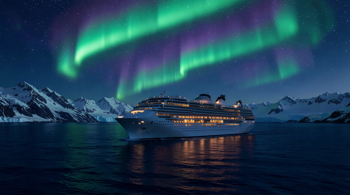
Holland America Line's Classic Denali Tour, a nine-day cruisetour built around Fairbanks, includes a dedicated four-hour northern lights excursion outside the city and runs from late August through mid-September, aligning closely with the autumnal equinox window. 15 Cruises that include overnight port stays in Juneau, Ketchikan, or Skagway increase the probability of clear-sky aurora sightings compared to daytime-only port calls. Princess Cruises and Norwegian Cruise Line both offer extended itineraries that accommodate these overnight windows during the fall season.
Practical Viewing Conditions and Realistic Expectations
Aurora visibility is never guaranteed on any cruise itinerary regardless of departure port. Cloud cover, lunar brightness, and solar activity cycles all influence outcomes. Peak aurora visibility generally occurs between midnight and 4 a.m., which means passengers must be prepared for late-night deck vigils in cold conditions. 1 Temperatures in aurora-viewing regions can drop well below freezing, and Fairbanks in winter has recorded windchill values as low as negative 50 degrees Fahrenheit. 16 Thermal layers, insulated outerwear, and red-light flashlights to preserve night vision are standard preparation recommendations.
Cruise ships carry a structural advantage over land-based aurora tours because captains can reposition to avoid heavy cloud cover and chase clearer skies. Onboard experts tracking solar activity in real time add further value, and some operators offer wake-up calls when aurora activity is detected. 17 Apps such as My Aurora Forecast and Aurora Alerts allow passengers to monitor real-time geomagnetic conditions and cloud cover independently, supplementing onboard briefings.
Comparing Key US Departure Ports at a Glance
The table below summarizes the primary US ports associated with northern lights cruise routing, their geographic context, and their general aurora-season alignment based on available itinerary data.
| US Departure Port | Primary Route Direction | Aurora-Season Alignment | Notable Cruise Lines |
|---|---|---|---|
| Seattle, WA | Alaska Inside Passage | September window; late August to mid-April for fall extensions | Holland America, Princess, Norwegian, MSC |
| Seward / Whittier, AK | Alaska coastal and interior extensions | Late August to mid-April; summer season misaligned | Holland America, Princess |
| Boston, MA | North Atlantic toward Greenland, Newfoundland | Late September to late March | Expedition-style operators |
| New York, NY | Transatlantic toward Arctic-adjacent regions | Fall and early winter repositioning sailings | Royal Caribbean and transatlantic operators |
Travelers who prioritize the highest probability of aurora sightings are frequently advised by travel industry sources to fly from US cities to established European hub ports such as Tromso in Norway or Reykjavik in Iceland, where dedicated northern lights cruise infrastructure is more developed. 18 For those committed to a US departure, September sailings from Seattle combining land-based Fairbanks extensions represent the most consistently cited combination in current itinerary offerings.
Key Risks and Limitations to Understand Before Booking
Several structural constraints apply to US-departing aurora cruises that travelers should evaluate carefully. Most mainstream Alaska cruise seasons end in September, leaving only a narrow overlap with the northern lights visibility window. Solar Cycle 25, while generating strong aurora conditions through its recent peak, is entering a decline phase, meaning geomagnetic storm frequency may decrease gradually, though significant events remain possible. 19 Expedition-style Arctic sailings from US ports that venture into Greenland or high-Arctic waters require ice-strengthened vessels and command significantly higher per-person rates than standard Alaska sailings.
Juneau has implemented new port capacity limits that affect cruise scheduling and the availability of overnight stays that benefit aurora viewing. 20 Weather variability in Southeast Alaska, particularly cloud cover and precipitation, remains the single largest unpredictable factor influencing any specific sailing's aurora outcome. Travelers should approach northern lights cruise planning with flexibility in scheduling, realistic expectations about sighting probability, and a genuine appreciation for the broader Alaskan wilderness experience that these itineraries provide regardless of sky conditions.
Sources
- Quartz / U.S. News and World Report - qz.com/best-cruises-northern-lights-alaska-usnews
- CruiseLine.com - cruiseline.com/advice/how-to-book/choose-a-destination/best-cruise-options-to-see-the-northern-lights
- Celebrity Cruises Blog - celebritycruises.com/blog/northern-lights-alaska-cruise
- NOAA (National Oceanic and Atmospheric Administration) - noaa.gov
- LLM General Research - US East Coast port aurora limitations
- Travelweek - travelweek.ca/news/cruise/why-seattle-is-the-place-to-sail-from-this-summer
- Undiscovered America TV - undiscoveredamerica.tv/northern-lights-alaska-cruise-2026-aurora-viewing-guide
- Cruise Solutioner - cruisesolutioner.com/best-cruise-port-to-see-the-northern-lights-in-alaska
- LLM General Research - Anchorage/Seward/Whittier seasonal alignment
- Conde Nast Traveler - cntraveler.com
- Power Traveller / Fear Travels - powertraveller.co.uk/en/northern-lights-cruise-boston.html
- Royal Caribbean International - royalcaribbean.com/guides/northern-lights-alaska
- Quartz / U.S. News - qz.com/best-cruises-northern-lights-alaska-usnews
- Idyllic Pursuit - idyllicpursuit.com/10-best-u-s-spots-to-see-the-northern-lights-in-2026
- Quartz / U.S. News (Holland America Classic Denali Tour) - qz.com/best-cruises-northern-lights-alaska-usnews
- Passport Inspiration - passportinspiration.com/p/the-best-place-in-the-u-s-to-see-the-northern-lights
- AAA Trip Canvas - aaa.com/tripcanvas/article/northern-lights-cruises-our-guide-for-where-and-when-to-go-CM1714
- LLM General Research - Travel and Leisure / Royal Caribbean hub port recommendations
- My Extraordinary Adventures - myextraordinaryadventures.com/celestial-northern-lights-cruises-2026
- Travel and Tour World - travelandtourworld.com/news/article/s4wonx1dni2x