Police Impound Cars: Buying Guide - What Every Bidder Should Know Before the Auction
How Police Impound Car Auctions Operate
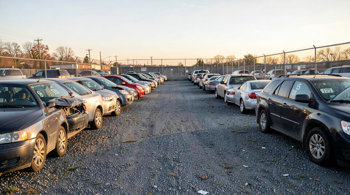
Police impound auctions are structured sales events organized by municipalities, law enforcement agencies, or contracted third parties to liquidate vehicles that have been lawfully seized, abandoned, or left unclaimed. 1 Once a vehicle enters impound custody, the original owner typically receives a legal notice and a window of 30 to 90 days to reclaim the car by paying outstanding fines and storage fees. 2 If no claim is filed within that holding period, the agency clears the vehicle for public disposal, most often through a scheduled auction. The primary objective of the sale is to recover administrative and storage costs, not to generate profit, which structurally positions these events differently from dealership or private-party transactions.
Auctions may be held in person at a physical impound lot, entirely online through platforms such as GovDeals, Copart, or IAAI, or through a hybrid model that combines online bidding with limited in-person preview days. 3 Many departments now partner with third-party auction platforms to manage listings, payment processing, and documentation. 4 Local newspapers, municipal government websites, and county sheriff office pages commonly publish auction schedules, and some platforms allow buyers to register for email notifications when new inventory from a specific jurisdiction becomes available.
Types of Vehicles Found at Impound Sales
The inventory at police impound auctions is broader than many first-time buyers anticipate. Vehicles enter the system through several distinct legal pathways: unpaid parking tickets, traffic violations, expired registrations, criminal investigations, civil asset forfeiture, and simple abandonment on public property. 5 Federal agencies including the U.S. Marshals Service and the DEA also hold forfeiture auctions, which can include a wider range of vehicle types alongside standard municipal lots. The result is a rotating inventory that spans compact sedans, pickup trucks, SUVs, vans, and occasionally luxury or specialty models that were caught in legal proceedings.
Government fleet vehicles represent a separate but related category. Agencies typically cycle retired patrol cars, administrative sedans, and utility trucks out of service on a set schedule, often at 80,000 to 120,000 miles. 6 Common models include the Ford Taurus, Dodge Charger, Chevrolet Impala, Ford Explorer, Chevrolet Tahoe, Ford F-150, and Ford F-250. These vehicles are generally well-maintained on a documented service schedule but carry the added complexity of heavy idle hours, which measure engine wear more accurately than odometer readings alone. 7 A patrol vehicle with 100,000 miles but several thousand idle hours has experienced significantly more engine stress than the odometer suggests.
Finding and Registering for Auctions
Locating a police impound auction begins with municipal and county law enforcement websites, which often publish upcoming dates, registration requirements, and preview schedules. 8 Third-party platforms such as GovDeals, PublicSurplus, Copart, and IAAI aggregate listings from government agencies and law enforcement departments across the country, providing broader access to inventory that would otherwise require jurisdiction-by-jurisdiction searches. 9 Local in-person auctions frequently carry lower competition and smaller administrative fee structures compared to nationally marketed online events, which can affect final bid prices.
Buyers must register before bidding, which typically requires a valid government-issued ID and agreement to the platform's or agency's auction terms. Some auctions are open to the general public, while others restrict participation to licensed dealers. 10 Verifying eligibility before investing time in inspection or research is a practical first step. Registration deadlines are often set several days before the auction date, and late registrations are commonly rejected without exception.
Inspection Protocols and Condition Risks
Every vehicle sold through a police impound auction is offered on an as-is, where-is basis, meaning no warranties, no return options, and no guarantees regarding mechanical condition, title clarity, or road readiness. 11 Most auctions permit buyers to visually inspect vehicles during a designated preview window, and some allow engine start checks, but test drives are almost universally prohibited. Running a VIN-based vehicle history report through services such as Carfax or AutoCheck before bidding is a standard due-diligence step that can surface accident records, salvage designations, prior liens, and odometer discrepancies. 12 The National Highway Traffic Safety Administration's public recall database also allows buyers to check whether an open safety recall applies to a specific VIN.
Pre-purchase inspections by a qualified independent mechanic are recommended wherever feasible. An OBD-II scanner can retrieve stored diagnostic trouble codes during a preview, providing a low-cost signal of potential mechanical issues before a bid is placed. 13 Buyers should also examine tire wear patterns for signs of alignment or suspension problems, inspect for frame damage or inconsistent panel gaps, and look for evidence of water intrusion. The Better Business Bureau has noted that common post-purchase complaints from impound buyers center on hidden mechanical deficiencies, unclear title status, and fee structures that were not fully reviewed before bidding. 14
Understanding the Full Cost Structure
The winning bid price at a police impound auction is rarely the only cost involved. Buyer's premiums, which typically range from 10 to 15 percent of the hammer price, are added by the auction platform or contracted auctioneer on top of the winning amount. 15 Documentation fees, title transfer fees, towing or transport charges, and applicable sales tax further increase the total acquisition cost. Because vehicles may have accumulated towing and storage fees prior to the auction, some jurisdictions pass a portion of those charges to the buyer, though this varies by agency and state law.
Payment terms at most impound auctions are strict. Winning bidders are typically required to complete full payment within 24 to 48 hours of the sale closing. 16 Accepted payment formats commonly include cash, certified check, or wire transfer. Some online platforms accept credit cards for a portion of the transaction, while payment plan options remain rare. Financing through traditional auto lenders is generally not available for as-is impound purchases, so buyers should arrive with pre-arranged funds that account for the bid ceiling plus all anticipated fees. Failing to pay within the required window can result in forfeiture of any deposit and potential suspension from future auctions on that platform.
Title, Registration, and Legal Considerations
Title documentation is one of the most consequential variables in any impound vehicle purchase. Some vehicles clear the process with a clean, transferable title, while others may carry salvage designations, bonded title requirements, or may be issued only a bill of sale if the original title cannot be located. 17 State-level rules determine what documentation is sufficient for registration and insurance, and these rules vary significantly. Vehicles sold under a Standard Form 97 (SF-97), the federal certificate used for government fleet disposals, are straightforward in some states but can trigger extended scrutiny or incorrect salvage branding at DMV offices in states less familiar with the document, including California, New York, New Jersey, Illinois, and Massachusetts. 18
Before bidding, buyers should verify that the selling agency can convey clear ownership and that any outstanding liens have been resolved as part of the impound process. 19 Running a lien search using the VIN and confirming the title status with the auction host reduces the risk of acquiring a vehicle that cannot be legally registered. Consumer Reports advises that buyers fully review all auction terms, verify fee structures, and confirm title conditions before committing to a bid, treating the legal and paperwork due diligence as equally important as the mechanical inspection. 20
Key Risks and Buyer Responsibilities
Police impound auctions distribute risk heavily toward the buyer. Because maintenance histories are often incomplete or unavailable, and because inspection windows are time-limited and no-drive, the margin for error is narrower than in a standard used-car purchase. 21 Vehicles involved in criminal cases may have had modifications, damage, or alterations that are not immediately visible. Former patrol cars carry high idle-hour counts that can affect engine longevity in ways the odometer does not reflect. Abandoned vehicles may have sat exposed to weather for extended periods, accelerating corrosion and fluid degradation.
Budget planning should incorporate a realistic contingency for post-purchase repairs. Establishing a firm maximum bid before arriving at an auction, and factoring all fees into that ceiling rather than the bid price alone, is a practical discipline that prevents overpaying relative to market value. Comparing the anticipated all-in cost against comparable vehicles on standard used-car platforms provides a reference point for evaluating whether a specific lot represents genuine value or simply a lower visible price that evaporates under the full cost structure.
Sources
- revvbid.com – Ultimate Guide to Buying Impounded Vehicles
- revvbid.com – Ultimate Guide to Buying Impounded Vehicles
- upstreamread.com – 2026 Seized Vehicle Information
- reasonthread.com – Buy Seized Cars: Complete Police Impound Auction Guide
- wondermapped.com – Seized Cars Guide
- govauctions.app – How to Buy a Government Surplus Vehicle (2026)
- eathealthy365.com – The Process of Buying a Decommissioned Police Car
- search.jpost.com – A Guide to Buying SUVs From Police Impound Auctions
- govdeals.com – GovDeals Buyer Information
- wondermapped.com – Tips for Buying Impounded Cars
- wondermapped.com – Discover How Seized Cars Are Auctioned
- carfax.com – Vehicle History Reports
- eathealthy365.com – Finding a Local Impound Car Auction Near You
- bbb.org – Better Business Bureau Consumer Advice
- conspical.com – Understanding Police Impound Vehicles: What to Consider Before Purchasing
- eathealthy365.com – How to Buy a Car at an NYPD Auction
- wondermapped.com – Seized Cars Guide (a66874)
- 0taxtags.com – Government Surplus Vehicle Buying Guide: Ex-Police and SF-97 Fix
- notedsparks.com – What Buyers Should Know About Impound Car Sales
- consumerreports.org – Consumer Reports Car Buying Guidance
- wondermapped.com – What Is Worth Knowing About Seized Vehicles Guide