Confiscated utility task vehicles at police auction: A Professional Guide to Acquisition Procedures and Regulatory Frameworks
The utilization of off-road utility task vehicles (UTVs) across agricultural and municipal operations has increased, leading to higher volumes of these machines entering municipal custody. When law enforcement agencies confiscate, impound, or seize off-road machinery, statutory rules require liquidation through structured public sales. This analysis reviews the administrative protocols, financial frameworks, and logistical realities of acquiring confiscated utility task vehicles at police auction.
Municipal and State Sourcing of Confiscated Off-Road Assets
Utility task vehicles enter law enforcement custody through several legal pathways, including asset forfeitures, drug task force seizures, and conservation enforcement actions. For example, the 12th Judicial District Drug Task Force in Arkansas regularly processes seized personal property, including off-road machinery, through local liquidation channels 1. Similarly, the Minnesota Department of Natural Resources (DNR) routinely conducts public auctions of confiscated outdoor equipment through professional third-party auction houses 2.
State surplus disposal systems also facilitate the liquidation of off-road machinery. The State of Maine Bureau of Central Services, for instance, manages the disposal of surplus and seized vehicles, which has historically included listing utility vehicles such as a 2018 CF Moto Z-Force 800 EX on designated online platforms 3. These items are processed under strict state and local municipal codes before being cleared for public bidding.
Structural Mechanics of Police Seizure Auctions
The liquidation of confiscated utility task vehicles is executed through both localized physical auctions and online portals. Local police departments frequently collaborate with regional auction firms to manage these events. In Knoxville, Tennessee, Powell Auction and Realty conducts police seizure auctions featuring municipal assets, ATVs, and UTVs 4. These online-only auctions typically employ a soft-close bidding structure, where late-stage bids on a specific vehicle lot automatically extend the closing time to ensure fair public participation.
For larger metropolitan jurisdictions, dedicated municipal tow lots are utilized to manage and clear impounded off-road inventory. The Kansas City Police Impound Tow Lot coordinates bi-weekly online auctions directly from their front street facilities 5. In contrast, the Saint Paul Police Department in Minnesota hosts structured in-person auctions directly on their municipal impound grounds, requiring attendees to register and purchase physical bidding credentials prior to entering the secure yard 6.
Financial Considerations, Premiums, and Administrative Fees
Acquiring a vehicle at a police auction requires an understanding of the auxiliary fees that accumulate beyond the final bid price. Municipalities and auction houses utilize buyer premiums, administrative fees, and tax requirements to offset operational costs. For instance, high-security auctions, such as those held by the Broward Sheriff's Office and Palm Beach County Sheriff's Office, require bidders to submit a certified refundable deposit of $1,000 just to register and inspect the vehicles 7. Other municipal facilities, like the Kansas City Tow Lot, enforce a standard deposit of $300 for active bidders 5.
The following table outlines the diverse financial terms and registration requirements found across various jurisdictions:
| Auction Venue / Jurisdiction | Buyer's Premium Rate | Administrative Fees & Deposits |
|---|---|---|
| Powell Auction & Realty (TN) 4 | 15% Premium | Standard Local Sales Tax Added |
| Kansas City Police Impound (MO) 8 | 10% Premium | $25 Admin Fee per Lot; $300 Deposit |
| Saint Paul Police Department (MN) 6 | No Premium Noted | $5 Bid Card Registration Fee |
Mechanical Risks and the Reality of 'As-Is' Purchases
Purchasing confiscated utility task vehicles presents distinct operational and mechanical risks. The overriding rule of police auctions is that all items are sold strictly in as-is, where-is condition, with no warranties or guarantees 5, 6. Many of the UTVs entering impound lots do not include ignition keys, requiring buyers to factor in the cost of locksmith services or ignition replacements. Furthermore, municipal staff are not authorized to perform mechanical diagnostics, leaving the operational status of the engine, transmission, and electrical systems completely unknown.
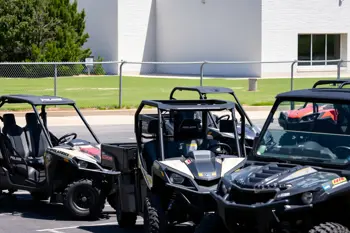
This lack of transparency makes pre-bid physical inspections crucial. Many organizations offer dedicated inspection windows, such as the pre-auction previews hosted by Powell Auction and Realty, which allow buyers to examine the mechanical wear and tire conditions before placing a bid 4. Similarly, the Minnesota DNR provides specific on-site inspection days at their contracted auction facilities, where prospective buyers can visually inspect the seized equipment 2.
Title Procurement and Judicial Forfeiture Guidelines
The legal status of a confiscated UTV can vary depending on how the asset was acquired by the state. Buyers must navigate specific administrative pathways to secure a clean, legal title for their purchased machinery. In many cases, successful bidders receive a formal bill of sale from the city, which can then be submitted to the state's department of motor vehicles to obtain a new title 6. However, processing times for these titles can take from 10 to 14 days following the completion of the sale 10.
Furthermore, some vehicles sold through these platforms are subject to ongoing judicial forfeiture proceedings. In jurisdictions like Tehama County, California, seized utility vehicles must go through structured court actions before they can be legally forfeited and sold 11. Anyone claiming an interest in a seized asset must file a verified claim within 30 days of the last public notice, or the property is officially forfeited 11.
Logistics, Asset Removal, and Transport Responsibilities
Once the bidding concludes and payment is settled, the buyer assumes total responsibility for the physical retrieval of the UTV. Due to liability restrictions, municipal tow lots and police facilities strictly prohibit buyers from operating auction vehicles on-site. For example, the Dallas Police Auto Pound requires all acquired vehicles to be towed directly from the facility by a licensed wrecker 9. Similarly, municipal guidelines in Brick Township, New Jersey, dictate that retired surplus and confiscated vehicles must be towed off the lot immediately upon transfer 12.
Additionally, buyers must adhere to rigid removal windows to avoid accumulating steep penalties. In Kansas City, won assets must be removed by the Saturday following the sale, with late pickups subject to a $30 per day storage fee 8. Given that standard utility task vehicles cannot legally be driven on public roads in many jurisdictions, arranging proper hauling trailers and transport logistics is a mandatory operational cost that every buyer must calculate before participating.
Sources
- Looper Auction & Realty
- The Mighty 790 KFGO
- Starbridge
- Powell Auction & Realty
- Woolsey Auction & Realty
- Saint Paul Minnesota Police Department
- NoticeRegistry Florida
- OAI Auctions Kansas City
- Dallas Police Auto Pound
- Powell Auction December Seizure
- NoticeRegistry California
- Global Auction Guide