Government seized SUVs available at police auctions: A Public Sector Market Report
The availability of government seized SUVs available at police auctions represents a regulated pipeline of public asset liquidation managed by local, state, and federal law enforcement agencies. Municipal impound yards, county sheriff departments, and federal entities regularly utilize public bidding to dispose of confiscated, abandoned, and surplus vehicles. These events operate under strict statutory frameworks, transferring ownership of fleet-retired and forfeited civilian vehicles directly to the public through structured municipal proceedings.
The Legal Framework and Acquisition of Seized SUVs
Forfeited and impounded utility vehicles enter the public market through specific legal mechanisms, including civil asset forfeiture, criminal investigations, and the recovery of abandoned property. When local police departments or sheriff offices seize a vehicle, a designated legal notice period must elapse, allowing registered owners to settle outstanding fines or address legal claims. If the vehicle remains unclaimed after this statutory grace period, the municipality moves forward with clearing the legal title to prepare the asset for public liquidation.
This clearing process involves a thorough title history search to identify outstanding bank liens or private lending claims. For example, federal agencies and local municipal tow lots coordinate with judicial bodies to secure clean title documentation before releasing vehicles for bidding. The resulting inventory features a mix of civilian SUVs confiscated during investigations and retired law enforcement fleet vehicles, each representing distinct previous usage profiles.
Registration Procedures and Deposit Frameworks
Participating in a police vehicle auction requires strict registration and financial verification protocols. Bidders must establish verified online accounts or register in person, providing valid government-issued identification. Many public sector auctions mandate upfront refundable deposits to prevent default bidding and ensure serious participation from attendees.
Specific municipal programs illustrate the varying financial entry barriers utilized to secure auction compliance. For instance, the joint vehicle procurement auction conducted by the Broward Sheriff's Office, Palm Beach County Sheriff's Office, City of Margate, and City of Boca Raton in Davie, Florida, requires a certified refundable deposit of $1,000 prior to viewing or bidding on any active lots 1. Similarly, the Kansas City Police Tow Lot Auction implemented a mandatory $300 registration deposit for its bi-weekly sales 2, with the deposit automatically applied to winning bids or refunded to unsuccessful participants within ten business days 3.
Evaluating Vehicle Conditions and the As-Is Mandate
One of the primary realities of purchasing government seized SUVs is the absolute "as-is, where-is" condition of every sale. Municipalities explicitly state that no warranties accompany the vehicles, and all sales are final. Many vehicles at impound lots are abandoned, meaning buyers bid without knowing if the engine starts, if keys are available, or if major mechanical issues exist.
In-person viewing periods are typically offered prior to bidding, providing a brief window for physical inspection. At the Orange County Sheriff's Office auction in Zephyrhills, Florida, public viewing is scheduled prior to sale mornings, allowing bidders to inspect the exterior of forfeited property 4. However, physical inspections are limited to visual assessments; starting the engine or conducting test drives is prohibited at municipal impound yards, such as the Kansas City Front Street facility, where most vehicles lack keys 2 5.
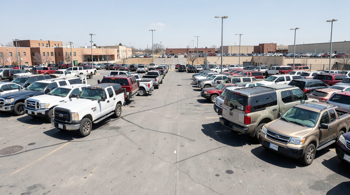
Analysis of Recent and Upcoming Police Auctions
To understand the composition and terms of these public liquidations, it is valuable to examine specific scheduled events across various jurisdictions. Municipalities frequently cluster multiple vehicle classes, including retired patrol units, civilian sedans, and seized utility models, into bidding cycles. The table below provides a comparative overview of public sector auctions, demonstrating locations, registration requirements, and listings:
| Auction Agency / Location | Required Deposit | Notable SUV / Fleet Models | Auction Specifics |
|---|---|---|---|
| Broward & Palm Beach Sheriff (Davie, FL) 1 | $1,000 Certified Deposit | Seized Municipal Assets | In-person registration, bids due July 28, 2026 |
| Kansas City Police Tow Lot (Kansas City, MO) 2 5 | $300 Deposit | 50 to 69 SUVs per auction cycle | Bi-weekly online auctions, in-person preview |
| Kenner Police Department (Kenner, LA) 6 | Varies by terms | Chevrolet Tahoe, Ford Crown Victoria | Retired patrol fleets and court-awarded assets |
| Rhea County Sheriff's Department (Dayton, TN) 7 | No Deposit Required | Chevy Equinox, Ford Escape | As-is public training center auction |
| Orange County Sheriff (Zephyrhills, FL) 4 | Cash / Register Online | Fleet Decommissioned Vehicles | Conducted at Royal Auction Group, age 18+ to bid |
Standard Fees, Premiums, and Financial Realities
Beyond the final bid amount, successful buyers must account for administrative fees, buyer premiums, and potential secondary costs. Most auction companies acting on behalf of police departments charge a percentage-based buyer's premium added directly to the hammer price. Additionally, local sales taxes are calculated based on the combined total of the winning bid and the applicable premiums.
For example, the Kansas City Police Tow Lot auctions apply a 10% buyer's premium and an administrative fee of $25 per lot 5. Furthermore, strict post-auction removal windows are enforced. At the Kansas City municipal lot, vehicles must be removed by the Saturday following the sale, or they become subject to a storage fee of $30 per day 5 3. Similarly, third-party towing is required, as municipal laws prohibit driving unregistered vehicles directly off the lot 8.
Key Government Platforms for Finding Seized Assets
For citizens tracking down seized utility vehicles, several digital directories host official liquidations. While local sheriff offices occasionally coordinate in-person events, the vast majority of assets have transitioned to regional and national online platforms.
- GSA Auctions: The official portal for federal agencies, listing surplus and seized SUVs decommissioned from federal fleets 9.
- GovDeals: A widely used online marketplace where local law enforcement agencies list impounded, abandoned, and surplus vehicles 10.
- Public Surplus: A specialized platform for municipal asset liquidation, offering real-time public access to police department inventory 11.
- National Auction Houses: Platforms like Copart and Insurance Auto Auctions (IAAI) frequently host contracts for state police departments and regional tow yards.
Sources
- NoticeRegistry Broward County Bid Notice
- Woolsey Auction Kansas City Police Tow Lot Details
- OAI Auctions Kansas City March Tow Lot Auction Details
- NoticeRegistry Zephyrhills Orange County Sheriff Bid Notice
- OAI Auctions Kansas City January Tow Lot Auction Listings
- Yahoo News Kenner Police Surplus Auction Report
- Local 3 News Rhea County Sheriff Public Auction Announcement
- Global Auction Guide Township of Brick PD Chevy Tahoe Details
- GSA Auctions Official Federal Marketplace
- GovDeals State and Local Government Surplus Portal
- Public Surplus Municipal Auction Platform