Protein Powder for Weight Loss with Daily Use Instructions: A Research-Backed Consumer Guide
Questions about using protein powder for weight loss with daily use instructions appear across every corner of consumer health research, and the volume of interest reflects a genuine gap between supplement marketing and practical nutritional guidance. This article consolidates data from peer-reviewed reviews, clinical observations, and nutritional science to deliver an objective, evidence-grounded overview of how protein powder functions within a fat-loss strategy, what realistic daily protocols look like, and what limitations users must understand before relying on supplementation.
How Protein Supports Fat Loss: The Physiological Mechanisms
Weight loss is fundamentally a matter of sustaining a calorie deficit, but protein changes both the experience and the outcome of that deficit. Three distinct physiological mechanisms explain why higher protein intake consistently outperforms lower-protein approaches in controlled human trials. First, protein is the most satiating macronutrient, blunting hunger hormones such as ghrelin and increasing fullness signals, which reduces overall calorie intake between meals. 1 Second, protein carries a significantly higher thermic effect of food than carbohydrates or fats: the body burns approximately 20 to 30 percent of protein's own calories during digestion, compared to 5 to 10 percent for carbohydrates and 0 to 3 percent for fats. 2
Third, and critically for body composition, adequate protein intake during a calorie deficit preserves skeletal muscle mass. A 2026 systematic review published in the journal Nutrients examined whey protein supplementation in patients with obesity and confirmed that weight loss interventions are frequently associated with unintended loss of skeletal muscle, increasing the risk of sarcopenic obesity. Higher protein intake was identified as a key mitigation strategy. 3 Research cited by the American Journal of Clinical Nutrition further indicates that individuals consuming adequate protein during caloric restriction preserve approximately 38 percent more lean mass compared to those with inadequate intake. 4
Daily Protein Targets: What the Evidence Recommends
The basic RDA for protein in healthy sedentary adults is 0.8 grams per kilogram of body weight per day. However, that figure is considered a floor, not an optimal target for people actively trying to lose fat. Modern reviews published between 2020 and 2024 recommend a range of 1.2 to 2.0 grams of protein per kilogram of body weight per day for active adults in a calorie deficit. 5 For practical daily reference, a 70-kilogram adult would target between 112 and 154 grams of protein daily under the evidence-based range of 1.6 to 2.2 grams per kilogram. 6
Protein distribution across meals also matters independent of total daily intake. Spreading consumption across eating occasions of roughly 20 to 40 grams per meal creates multiple opportunities for muscle protein synthesis and reduces muscle loss compared to skewed distribution patterns where protein is concentrated in a single large meal. 7 For older adults, where functional preservation is the primary concern, the recommended range narrows to approximately 1.0 to 1.3 grams per kilogram per day. Individuals with minimal physical activity are generally advised to target 1.0 gram per kilogram, those with moderate activity 1.3 grams, and those with intense activity levels up to 1.6 grams. 8
Protein Powder Types: Comparing the Main Options
Not all protein powders carry the same nutritional profile for a fat-loss context. The following table summarizes the most widely studied options based on protein density, digestion speed, and caloric efficiency.
| Type | Protein Content | Absorption Speed | Best Use Case |
|---|---|---|---|
| Whey Isolate | 90%+ | Fast | Post-workout, calorie-restricted diets |
| Whey Concentrate | 70-80% | Moderate | General daily use, less cost-sensitive |
| Casein | 70-80% | Slow | Evening consumption, overnight satiety |
| Soy Isolate | ~90% | Moderate | Plant-based, complete amino acid profile |
| Pea + Rice Blend | 70-85% | Moderate | Non-soy plant-based alternative |
Whey isolate is frequently identified in research literature as the most calorie-efficient single-source option due to its high leucine content, rapid absorption, and minimal carbohydrate load. Leucine directly signals muscle protein synthesis, making it particularly relevant during a calorie deficit. 9 For users on plant-based diets, soy isolate is the closest structural equivalent, while pea-plus-rice blends offer a non-soy alternative with a reasonably complete amino acid profile. Casein protein, because of its slow digestion rate, is commonly recommended for evening use to provide a sustained amino acid release that can help manage overnight hunger. 10
Daily Use Instructions: Timing, Dosing, and Preparation
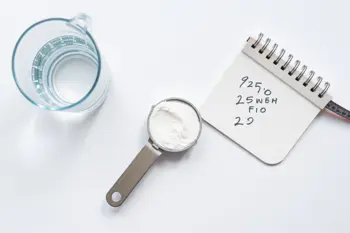
A standard single serving of most protein powders provides 20 to 30 grams of protein per scoop. When mixed with water, this equates to approximately 120 to 150 calories per serving. When mixed with milk, the caloric content rises to roughly 180 to 220 calories depending on the milk type used. 11 Most nutritional authorities and manufacturer guidance recommend one to two servings per day, with additional servings suggesting that whole-food protein intake is insufficient rather than indicating a need for more powder. 12
Timing guidance from sports nutrition research suggests consuming a protein shake within 30 to 60 minutes following resistance exercise to maximize muscle protein synthesis and recovery. 13 On non-training days, shakes can function effectively as mid-morning or mid-afternoon nutritional support to prevent excessive hunger before the next whole-food meal. Protein powder is accurately described as a gap-filler and convenience tool, not an automatic meal replacement, unless a product is specifically formulated and labeled for that purpose. Whole food sources including chicken breast, eggs, Greek yogurt, canned tuna, cottage cheese, and lean beef remain the nutritional foundation, with powder supplementing where daily targets are otherwise unachievable. 14
Label Criteria and What to Examine Before Purchasing
When evaluating a protein powder for daily use during weight loss, the nutritional label provides the most objective data. A serving providing at least 20 grams of protein with no more than 5 grams of added sugar per serving avoids the excess caloric load that frequently undermines fat-loss goals. 15 Total calorie count per serving, the ratio of protein calories to total calories, and the presence of artificial fillers or heavy processing markers are secondary but relevant data points. Third-party certifications such as NSF Certified for Sport or Informed Sport reduce the risk of contaminants or mislabeled ingredients, which is a documented concern within the supplement category.
Ingredient lists should be reviewed for added carbohydrate sources, flavoring agents that carry caloric value, and thickeners that may cause digestive discomfort. Users with lactose sensitivity should note that whey concentrate contains moderate lactose levels, while whey isolate undergoes additional processing that significantly reduces lactose content. Plant-based powders eliminate dairy-related concerns entirely but may require a blend of protein sources to achieve a complete essential amino acid profile equivalent to animal-derived options.
Risks, Limitations, and Practical Cautions
Protein powder is not a weight-loss product in isolation. It functions as a tool to help users meet daily protein targets more conveniently, and its effectiveness depends entirely on the broader dietary and activity context in which it is used. Consuming protein shakes without a calorie deficit will not produce fat loss. Additionally, excessive daily protein powder consumption above approximately 50 grams from powder sources per day, without adequate hydration and whole-food balance, has been associated with bloating and digestive discomfort. 16
Individuals with pre-existing kidney conditions should consult a physician before significantly increasing protein intake, as high-protein diets impose additional metabolic load on renal function. People taking GLP-1 receptor agonist medications such as semaglutide or tirzepatide face a specific secondary challenge: these medications slow digestion and substantially reduce appetite, which makes meeting daily protein targets from whole foods alone considerably harder. In those contexts, protein shakes are often recommended by clinical dietitians as a practical bridge, provided the formulation is tolerable given the altered digestive environment. 17 Protein powder should never be used as the sole dietary staple and should not replace medical supervision in clinical weight management contexts.
Sources
- Soluxe Nutrition - Protein Powder for Weight Loss: Benefits, Timing and How to Use It (soluxeshop.com)
- NordVital Wellness - How Much Protein for Fat Loss? Real 2026 Targets (nordvitalwellness.com)
- PMC / Nutrients Journal - Effectiveness of Whey Protein Supplementation in Weight Loss Interventions for Patients with Obesity: A Systematic Review, 2026 (pmc.ncbi.nlm.nih.gov)
- S&J Sports Nutrition - Best Protein Powder for Weight Loss on a Calorie Deficit (sandj.co)
- Tonum - Best Protein Powder for Fat Loss: Practical, Evidence-Backed Guide (tonum.com)
- NordVital Wellness - How Much Protein for Fat Loss? Real 2026 Targets (nordvitalwellness.com)
- Tonum - Should I Take Protein Powder If I Am Trying to Lose Weight? (tonum.com)
- VPA Australia - How to Use Protein Powder: A Beginners Guide (vpa.com.au)
- Protein Calculator for Weight Loss - Best Protein Powder for Weight Loss: Whey vs Plant vs Casein Compared (proteincalculatorforweightloss.cc)
- Clean Eatz Kitchen - Is Protein Powder Good for Weight Loss? What to Know (cleaneatzkitchen.com)
- Verywell Fit - How to Use Protein Powder (verywellfit.com)
- Nutrition Reviews / The Protein Works - How to Use Protein Powder: Benefits, Dosage and Daily Use (theproteinworks.com)
- American College of Sports Medicine - Protein Supplementation and Muscle Mass (acsm.org)
- Cleveland Clinic - Is Protein Powder Good for You? (health.clevelandclinic.org)
- WebMD - Protein Powder for Weight Loss (webmd.com)
- Cleveland Clinic - Protein Powder Benefits and Risks (health.clevelandclinic.org)
- Medicspot - Protein Powders on GLP-1s: When and How to Use Them Safely (medicspot.co.uk)