Police Auction Dirt Bikes on Sale: Market Trends, Regulatory Rules, and Acquisition Processes
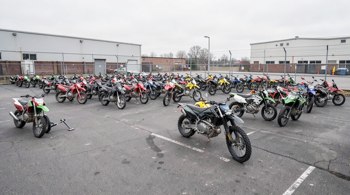
Exploring the inventory of police auction dirt bikes on sale provides a distinct avenue for sourcing off-road motorcycles and recreational machinery through municipal liquidations. Across the United States, law enforcement agencies routinely clear out their impound yards by transferring seized, abandoned, and surplus vehicles to public bidding events. Navigating these public events requires an understanding of auction parameters, bidding requirements, and the mechanical risks associated with acquired property. This report examines the administrative structures, historical auction data, and regional regulations that define the municipal vehicle disposal market.
1. Overview of Law Enforcement Vehicle Disposal Methods
Law enforcement agencies manage a continuous influx of vehicles through criminal seizures, traffic impounds, and abandoned property collections. Historically, police departments stored these assets indefinitely, but modern administrative constraints have prompted a transition toward digital liquidation. Platforms such as GovDeals and PropertyRoom serve as major channels where federal, state, and local entities list surplus and seized equipment 15 16. These liquidations allow municipalities to clear space, generate local revenue, and return abandoned property to the private sector through structured public bidding.
The transition from physical auctions to digital terminals has expanded the geographical reach of these events. Buyers can now evaluate listings across multiple municipal jurisdictions without requiring immediate physical presence. However, despite the convenience of online bidding, the governing terms remain grounded in local municipal policies. Every local department establishes unique compliance timelines for physical vehicle inspection, financial settlement, and physical removal from the storage lot.
2. Municipal Impound Auctions and Lot Inventory Trends
Municipal impound auctions fluctuate in volume based on local enforcement initiatives and towing activity. For instance, the Louisville Metro Police Department routinely coordinates digital sales to clear unclaimed inventory from municipal storage yards 1. During these scheduled events, approximately 100 unclaimed vehicles are made available to the public, with manufacturing years reaching as late as 2020 1. Similar recurring cycles are observed at the Kansas City Tow Lot, where hundreds of vehicles are auctioned monthly, spanning passenger cars, utility trucks, and recreational motorcycles 2.
Below is a summary of historical and scheduled municipal auctions reflecting typical inventory distributions and administrative locations:
| Auction Jurisdiction | Location / Platform | Typical Inventory Scale | Key Administrative Features |
|---|---|---|---|
| Louisville Metro Police 1 | Online Digital Portal | 100+ Vehicles | Strict pickup deadlines, including late-model sedans and motorcycles |
| Kansas City Tow Lot 2 | 7750 E Front St, KC | 150 to 500+ Vehicles | Monthly recurring events with online bidding and in-person previews |
| Norfolk Police Auction 4 | 1188-A Lance Rd, Norfolk | 85+ Vehicles | Coordinated via third-party auctioneers with online registration |
| Suffolk County Police 6 | Westhampton, NY | 100+ Lots | Minimum bid starting points, including sportbikes and heavy equipment |
3. The Operational Condition of Seized Off-Road Vehicles
A fundamental characteristic of police-seized dirt bikes and motorcycles is their unknown mechanical status. Because these vehicles are sourced from impoundments, abandoned lots, or criminal cases, they are strictly sold under as-is, where-is conditions with no implied warranties. Many units do not possess ignition keys, and buyers are unable to perform test drives or engine start tests prior to the close of bidding 2. This operational uncertainty requires buyers to factor potential repair costs into their acquisition models.
Specific inventory listings from historical public sales illustrate the variety of conditions encountered. For example, a 2008 Kawasaki KX125 dirt bike sold at a Saskatchewan municipal auction was explicitly designated as an inoperable non-runner 11. Conversely, other estate and police-consigned listings, such as a 2000 Honda XR50R dirt bike in Kansas, have been documented as running and riding as intended after receiving routine maintenance prior to the sale 10. Physical inspections during pre-scheduled viewing windows remain the primary method for mitigating these mechanical risks.
4. Bidding Requirements, Fees, and Administrative Compliance
Participating in law enforcement vehicle auctions involves navigating several layers of financial and regulatory compliance. Most municipal auctions mandate that prospective bidders pre-register and submit substantial deposits to secure bidding privileges. For example, the Kansas City Tow Lot implemented a mandatory $300 deposit requirement starting in early 2026 to verify bidder eligibility 3. In more high-value seizure scenarios, such as multi-agency liquidations in Davie, Florida, involving the Broward Sheriff\'s Office, registered buyers must present a $1,000 certified refundable deposit to participate 7.
Beyond the hammer price, buyers must anticipate mandatory administrative fees. These typically include a fixed document fee, such as the $25 administrative charge applied per lot in Kansas City, alongside a standard percentage-based buyer\'s premium, which ranges between 10% and 15% depending on the auction house 2 5. Sales tax is also calculated and added to the final invoice, and failure to settle payments within the designated timeframes, often within 24 to 48 hours of auction closure, results in immediate forfeiture of the lot 2 5.
5. State-Level Forfeiture and Extreme Policy Exceptions
While many municipalities liquidate seized dirt bikes to generate operational funds, other jurisdictions apply alternative policies to address off-road vehicles. In New Haven, Connecticut, local and state officials enacted strict legislation allowing police to destroy confiscated street-illegal dirt bikes and ATVs rather than selling them back to the public 13. In late 2025, municipal leaders utilized a hydraulic press to crush approximately 120 confiscated recreational vehicles as part of a public safety initiative to deter reckless urban riding 13.
In other regions, regulatory oversight extends to civil forfeiture procedures targeting youth-operated equipment. In British Columbia, the Kelowna RCMP initiated actions through the provincial Civil Forfeiture Office to permanently seize electric dirt bikes involved in dangerous riding and stunting offenses 14. Under these statutes, vehicles utilized as instruments of unlawful activity can be forfeited without immediate recourse, leaving families to navigate complex legal channels to contest the actions 14. These varied regional policies illustrate that off-road vehicle acquisitions are heavily influenced by local legislative environments.
6. Administrative Paperwork and Post-Sale Registration Procedures
Successfully winning a bid on an off-road motorcycle represents only the initial phase of the acquisition process. Establishing legal ownership and obtaining title documentation requires navigating rigorous state registration procedures. When purchasing a vehicle through a law enforcement auction, buyers do not receive a standard title immediately. Instead, agencies typically issue official transition documents, such as a Law Enforcement Auction Sales Receipt (Form VTR-71-1) in Texas, which buyers must present to their local tax assessor-collector to register the vehicle and obtain a clean title 12.
For out-of-state buyers, this process presents additional administrative hurdles. Non-residents who purchase vehicles at municipal sales may receive a sales receipt but might be ineligible to secure a standard title in the state of purchase 12. In these circumstances, it is the sole responsibility of the buyer to consult their home state\'s Department of Motor Vehicles to determine the exact requirements for securing a bonded title 12. Additionally, because most lots require purchased vehicles to be towed rather than driven away, buyers must coordinate immediate transport logistics to avoid mounting daily storage fees 1 2.
Sources
- Fox56 News - Louisville Metro Police Auction
- KC Tow Lot Auction Information
- KC Tow Lot - Bidding Deposit Terms
- Auction757 - Norfolk Police Auction Schedule
- Powell Auction & Realty - Police Seizure Terms
- Stamford Daily Voice - Suffolk County Police Auction
- NoticeRegistry - Broward County Bid Notice
- Herald Journal - Winsted Lester Prairie Police Auction
- Jackson Township - Police & Fire GovDeals
- Global Auction Guide - Wellington Off-Road Inventory
- Global Auction Guide - Pilot Butte Non-Runner Listings
- Global Auction Guide - Freer Police Title Forms
- New Haven Register - Confiscated Vehicle Disposal Policy
- iNwheels - Civil Forfeiture and e-Dirt Bike Enforcement
- GovDeals official website
- PropertyRoom official website