Market Analysis and Procurement Guidelines: Surplus agricultural harvesters available at government auction
Public Sector Asset Liquidation Frameworks
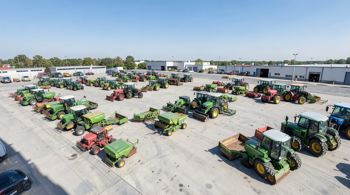
When state and county entities downsize or update active fleets, surplus agricultural harvesters available at government auction present a structured pathway for municipal asset recovery 1. These public auctions facilitate a highly transparent transaction environment where municipal, state, and federal agencies liquidate retired machinery directly to public and private sector buyers 2. Portals such as GovDeals work alongside federal portals like the General Services Administration to manage the volume of machinery cycled out of active service 3.
The underlying economic benefit of this model lies in the return of capital to public treasuries while providing secondary markets with specialized municipal-grade agricultural assets 1. Instead of allowing functional machinery to depreciate in storage, government entities rely on competitive public bidding to match heavy harvesting machinery with local farm operators 2. This ensures that equipment purchased with public funds continues to provide industrial utility throughout its remaining mechanical life cycle 3.
Municipal and Regional Inventory Sourcing
At the state and county level, the inventory of surplus harvesting machinery is highly diverse, reflecting the localized operational needs of each specific region. For example, county judges and local municipalities across the state of Arkansas utilize specialized liquidators to process seasonal municipal equipment, managing public fleet reductions through dedicated regional bidding networks 4. Similarly, in Floyd County, Georgia, public entities downsize municipal development fleets, liquidating specialized grading and heavy transport equipment to optimize operational budgets 5.
In high-volume regions like Florida, surplus inventory is managed continuously, enabling state agencies to cycle through various specialized vehicles and marine crafts 6. Because public institutions must manage inventory under strict statutory guidelines, these sales are held under rigorous administrative oversight to prevent waste. The structured disposal of these assets ensures that regional farms can monitor state-level catalogs for highly specific machinery that is not readily available through commercial dealerships 6.
Mechanical Classifications and Combine Specifications
The range of harvesting machinery appearing in public auctions encompasses standard grain combines, specialized forage units, and municipal-scale mowing equipment. Historical auction transactions show a volume of classic grain combines, such as the 1993 John Deere 9500 Combine, which features a reliable separator configuration 7. Bidders frequently seek these legacy combines alongside compatible harvesting heads, such as the John Deere 925 Flex Head, which are typically sold during complete retirement liquidations 8.
For larger agricultural enterprises, newer-generation machinery such as the 2008 John Deere 9570 STS Combine is occasionally liquidated through regional online estate and municipal auctions 9. This specific model is powered by a 265-horsepower, 6.8-liter 6-cylinder diesel engine and utilizes a 3-speed hydrostatic transmission to manage high-throughput operations 9. Specialized harvesting assets are also regularly cycled through public inventories to accommodate municipal vegetation management and state-owned agricultural research facilities 10.
Specialized Forestry and Forage Harvester Analysis
Beyond standard grain harvesters, public auctions periodically feature highly specialized forestry and forage harvesting machinery. Forestry harvesters, including the John Deere 1170 E model, are equipped with heavy-duty boom mechanisms and specialized harvesting heads to handle demanding timberland tasks 11. These industrial units operate with substantial horsepower ratings to drive complex hydraulic systems, allowing operators to fell and process logs in a single continuous movement. These units are often sold after logging contracts expire.
Similarly, heavy-duty industrial harvesters like the Komatsu XH901-5 and the Ponsse Ergo represent highly specialized categories that occasionally enter public bidding circles 12 13. These multi-wheeled and tracked machines are built to navigate difficult terrain under harsh seasonal conditions, utilizing computerized measuring systems and high-output diesel powerplants 12. Due to the extreme operational demands placed on forestry equipment, buyers analyze these listings with close attention to recorded engine hours and hydraulic pump conditions 13.
Data Comparison of Harvesting and Support Assets
To assist prospective bidders in evaluating historical market trends, the following table summarizes the specific mechanical and operational metrics for several prominent models of harvesting and support equipment liquidated through recent public and regional auctions. This comparative overview highlights the diversity in horsepower, operating history, and mechanical configuration found across various municipal and estate liquidation platforms, demonstrating the range of equipment that regularly enters the secondary market 7 9 11 12.
| Equipment Model | Horsepower | Engine Hours | Primary Application |
|---|---|---|---|
| JD 9570 STS Combine | 265 HP | 2,801 Hours | Grain Harvesting |
| JD 9500 Combine | Noted Vintage | 3,776 Hours | Grain and Corn |
| JD 1170 E Harvester | 197 HP | 21,530 Hours | Forestry Operations |
| Komatsu XH901-5 | 190 HP | 133,463 Hours | Heavy Forestry |
Risk Management and Procurement Guidelines
One of the most critical aspects of purchasing surplus agricultural harvesters through public auctions is the absolute as-is, where-is nature of the transaction 4. Unlike commercial dealerships that offer certified pre-owned warranties or operational guarantees, public agencies explicitly state that there is no warranty, expressed or implied, on any bidding lot 4. Bidders assume full legal and financial responsibility for inspecting the items in person to verify key specifications and operational status prior to bidding 4.
Furthermore, some municipalities place strict limits on the mechanical age and operating history of the equipment they acquire, requiring units to have fewer than 1,200 operating hours 14. However, when purchasing surplus equipment, buyers often encounter older models, such as vintage tractors and loaders that carry lower initial minimum bids but require substantial maintenance capital 15. Because administrative staffs cannot guarantee details like model years or precise mileage, conducting independent physical inspections is the only reliable way to mitigate risk 4 16.
Sources
- kineticharbor.com
- govdeals.com
- gsaauctions.gov
- witcherauctions.com
- dempseyauction.com
- blog.govdeals.com
- richardaolson.com
- local.wctrib.com
- globalauctionguide.com
- rtiauctions.com
- agroline.info
- agroline.co.in
- agroline.co.in
- cleat.ai
- americasbiz.net
- gsaauctions.gov