Impounded heavy-duty excavators for sale in the United States
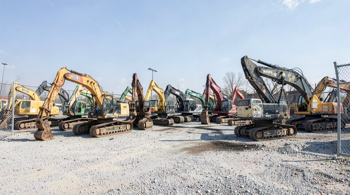
Impounded heavy-duty excavators for sale in the United States enter the market through a variety of legal and financial channels, including tax delinquency seizures, criminal asset forfeiture, bankruptcy liquidation, and collateral enforcement by lenders. Auction listings across the country regularly feature machines from brands such as Caterpillar, Komatsu, John Deere, JCB, and Kubota, spanning model years from the early 2000s through 2025, and condition profiles that range from minor cosmetic damage to serious mechanical impairment. Understanding how these units are sourced, valued, and legally transferred is essential for any buyer evaluating this market.
How Excavators Become Impounded or Auctioned Assets
Heavy-duty excavators enter the impound and surplus auction pipeline through multiple distinct legal pathways. Federal agencies including the GSA, DEA, and ATF dispose of seized or surplus construction machinery through regulated public auctions. 1 State and local governments similarly liquidate equipment abandoned on public land, confiscated during criminal investigations, or surrendered through court-ordered asset recovery. In one documented case, a Sirdaryo regional enforcement bureau seized two Volvo-brand excavators that had been pledged as collateral against a loan debt of 1 billion 812 million soum, placing them in an impound lot pending auction following non-voluntary debt settlement. 2
Beyond government seizure, lien enforcement by private lenders and insurance-related salvage channels also feed the market. A 2017 Caterpillar 320F, for example, appeared in auction records as a theft-recovery unit: it was stolen in December 2019 and not recovered until February 2026, with the exact circumstances during the missing period listed as unknown. 3 Similarly, damaged units involved in accidents, fires, or mechanical incidents are frequently processed through specialized auction houses under as-is, where-is terms. Construction equipment platforms such as Central Auction Group, IronPlanet, and GovDeals aggregate these listings nationwide. 4
Representative Units Found in the Current Auction Pipeline
Recent auction data from Central Auction Group illustrates the diversity of impounded and distressed heavy equipment available across U.S. states. A 2025 JCB 370X with an estimated 916 hours was listed from Tennessee, flagged as damaged after DEF fluid was accidentally introduced into the hydraulic system. 3 A 2024 Caterpillar 313 with approximately 500 estimated hours was offered from Minnesota following a trailer rollover incident that deposited the unit onto its side. A 2023 Komatsu PC210LC-11 located in North Carolina carried fire damage with unknown hours. 3
The table below summarizes several documented units from the active auction pipeline to illustrate the range of models, years, conditions, and U.S. locations involved.
| Year | Make/Model | Estimated Hours | Condition/Incident | State |
|---|---|---|---|---|
| 2025 | JCB 370X | 916 | DEF in hydraulic system | Tennessee |
| 2024 | Caterpillar 313 | 500 | Trailer rollover | Minnesota |
| 2023 | Komatsu PC210LC-11 | Unknown | Fire damage | North Carolina |
| 2021 | John Deere 60G | 2,454 | Tree fell on unit | Connecticut |
| 2019 | John Deere 85G | 1,350 | Fire damage | Indiana |
| 2017 | Caterpillar 320F | 3,731 | Theft recovery | Texas |
| 2023 | Kubota KX057-5 | 300 | Fire damage | Oklahoma |
| 2001 | John Deere 330LC | Unknown | Tipped onto its side | Iowa |
Primary Auction Platforms and How They Operate
Several major platforms serve as the principal access points for impounded and surplus heavy equipment in the United States. GSA Auctions, administered by the General Services Administration, enables members of the public to submit electronic bids on federal surplus and seized assets, with payment accepted via wire transfer, government checks, and major credit cards up to a maximum of $24,999.99 per card transaction. 5 GovDeals hosts listings from local, state, and federal agencies and maintains a searchable excavator category. IronPlanet and Ritchie Bros. Auctioneers conduct both online and on-site auctions where consigned, lien-recovered, and seized heavy equipment appears regularly. 4
Copart and IAA (Insurance Auto Auctions) represent two of the largest online platforms specifically handling salvage and impounded heavy machinery, including construction excavators, across nationwide yards. 4 Specialized regional houses such as Central Auction Group and Dempsey Auction Company conduct localized events, such as a Floyd County, Georgia, surplus reduction auction that featured grading, excavating, and paving equipment from an active site development operation. 6 Marketplace-E and AuctionZip aggregate additional listings from smaller regional auctioneers, broadening geographic coverage for prospective buyers.
Pricing Expectations and Market Value Context
Impounded construction equipment typically carries a wide price range reflecting the significant variance in age, hours, brand, and extent of damage. General market data indicates that auctioned or impounded excavators can range from approximately $5,000 for older, heavily damaged units to $100,000 or more for recent-model machines with low hours and restorable mechanical conditions. 4 For context, a retail-channel 2022 Komatsu PC138USLC-11 with 780 hours was listed by a conventional used equipment dealer at $139,900, while a 2025 Takeuchi TB370 compact unit with 55 hours carried a price of $105,595. 7 Impounded or damaged equivalents in the auction stream typically resolve at substantially lower figures relative to comparable retail offerings, though final hammer prices depend heavily on competitive bidding and disclosed damage severity.
Hours-on-machine represent a critical valuation input. A 2021 John Deere 60G with 2,454 hours and tree-fall damage occupies a fundamentally different value tier than a 2023 Kubota KX057-5 with 300 hours and fire damage. 3 Theft-recovery units like the 2017 Caterpillar 320F present a unique challenge: with roughly six years of undocumented usage history, buyers face compounded uncertainty about wear, modifications, or unauthorized repairs made during the period the machine was missing. Bidders are generally advised to treat hours figures on auction listings as estimates, since odometer-style meters can be inaccurate, reset, or absent.
Due Diligence, Title Verification, and Legal Considerations
Every as-is auction sale involves substantial buyer responsibility for pre-purchase research. Title status verification is the most critical step: impounded equipment may carry liens, unpaid registration fees, or contested ownership claims that survive the auction transaction if not properly cleared by the selling agency. 4 Buyers should request documentation confirming that the seizing authority has clear legal standing to transfer title, and should independently confirm through state databases that no outstanding encumbrances remain on the equipment identification number or serial number.
Physical inspection is strongly recommended before bidding, although not all auction formats permit in-person access. Standard seller disclaimers on auction platforms explicitly disclaim all warranties of condition, merchantability, and fitness for purpose, and limit seller liability to the purchase price paid. 3 Buyers must submit written claims for defects or discrepancies within specified windows, typically ten days after receipt of the equipment, or forfeit the right to pursue such claims. Financing for impounded equipment is often restricted; most platforms require cash payment or pre-arranged financing secured before the auction closes, with credit card transactions frequently capped below $25,000. 5
Transport, Logistics, and Post-Purchase Realities
Winning an auction bid on an impounded excavator triggers immediate logistical obligations. Equipment is sold at its current storage location, which may be a state impound yard, a salvage facility, or a private storage lot in any of the contiguous states. Buyers are responsible for arranging and financing transport from the listed site. Heavy excavators classified as oversize loads require state-level oversize transport permits, and multi-state hauls require individual permits from each state traversed. 8 Loads exceeding 80,000 pounds gross vehicle weight, 8 feet 6 inches in width, or 13 feet 6 inches in height on interstate highways legally require oversize permits, with some configurations also mandating pilot car escorts.
Repair and restoration costs must be factored into any acquisition analysis. A unit that sustained hydraulic system contamination, such as a DEF fluid introduction into the hydraulic circuit, may require complete hydraulic system flushing, component replacement, and testing before the machine is operational. Fire-damaged units frequently present electrical system destruction, melted hydraulic hoses, and structural metal fatigue that may render the equipment viable only for parts recovery rather than operational restoration. The as-is legal framework means all such costs fall entirely on the buyer following purchase. 3
Risks, Regulatory Oversight, and Buyer Protections
The impounded heavy equipment auction segment operates within a limited regulatory framework from a buyer-protection standpoint. Unlike consumer goods transactions, heavy equipment auctions at the federal and state surplus level are governed by the U.S. Government Standard Form 114C General Sale Terms and Conditions, which buyers are obligated to review before participating. 5 Private auction houses maintain their own terms, which universally exclude implied warranties. Buyers should treat all representations of hours, condition descriptions, and specification summaries as approximations rather than guarantees, a position explicitly stated in seller terms encountered across multiple active auction platforms. 3
Additional risks include unknown usage history in theft-recovery cases, unverifiable maintenance records on units from seized estates or criminal forfeitures, and potential environmental liability if the equipment was used in regulated excavation or remediation contexts. Buyers who intend to operate purchased units commercially should verify that the machine meets applicable EPA Tier emissions standards for their intended deployment region, since older units may not comply with current state-level air quality regulations. Consulting an independent heavy equipment inspector and a legal professional familiar with surplus asset acquisitions before placing any significant bid is a standard risk-mitigation practice in this market segment. 4
Sources
- GovDeals - govdeals.com
- Zamin.uz - zamin.uz
- Central Auction Group - centralauctiongroup.com
- LLM General Research: IronPlanet, Copart, IAA, GovDeals, Ritchie Bros., AuctionZip
- U.S. General Services Administration (GSA) - gsa.gov
- Dempsey Auction Company - dempseyauction.com
- PCI Heavy Equipment / Luby Equipment - pciheavyequipment.com, lubyequipment.com
- Skidsteers.com Excavator Transport Guide - skidsteers.com