Innovative Front Yard Planter Ideas for Enhancing Curb Appeal
Enhancing the exterior of a residence often begins with thoughtful landscaping choices. Exploring front yard planter ideas is a highly effective way to add texture, color, and architectural interest to an entrance. Whether the goal is a complete exterior overhaul or simple home improvement ideas, container gardening offers exceptional flexibility for any property layout.
Choosing the Right Planter Materials
The foundation of any successful container garden is the vessel itself. Selecting the right material dictates not only the aesthetic appeal but also the longevity of the arrangement. Terracotta pots offer a classic, earthy look that ages beautifully, but they are porous and require more frequent watering. Alternatively, wooden boxes provide a rustic charm that blends seamlessly with traditional architecture, though they need regular sealing to prevent rot.
For those seeking durability and minimal upkeep, modern synthetic options have become increasingly popular. Fiberglass and high-density resin containers mimic the look of stone or heavy ceramic without the cumbersome weight. These materials are highly resistant to cracking during freezing temperatures, making them ideal for year-round front yard planter ideas in varying climates.
Sizing and Placement Strategies
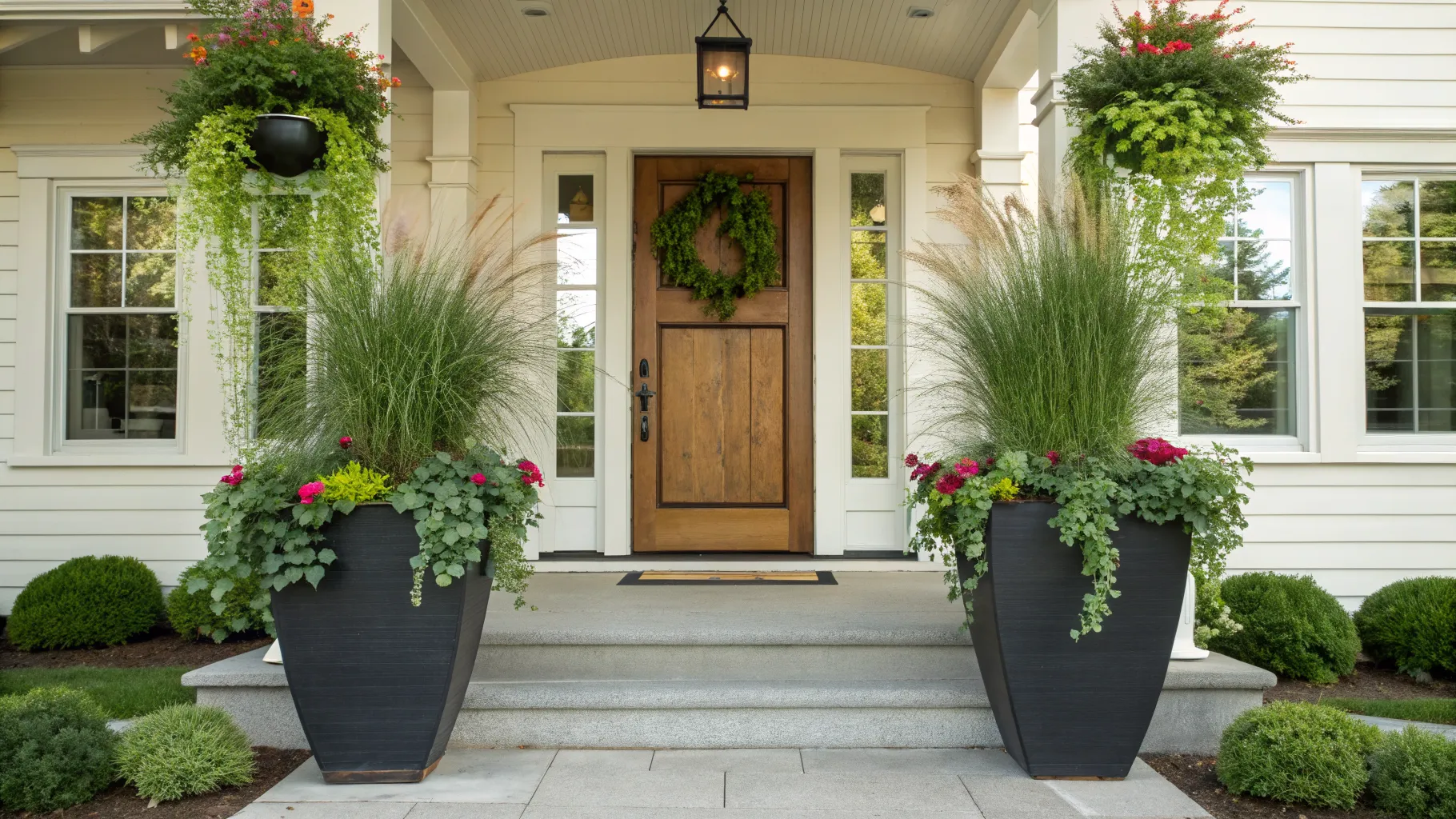
Scale and proportion play a critical role in exterior design. A common mistake in front yard landscaping is choosing planters that are too small for the space, which can make the entrance look cluttered rather than curated. Large, statement-making containers often provide a more cohesive and visually striking impact. When flanking a front door, tall planters can visually extend the height of the entrance, creating a grander welcoming point.
Placement should also account for the functional use of the space. Planters must never obstruct walkways or impede the swing of a door. Grouping pots in odd numbers, such as clusters of three varying heights, creates an aesthetically pleasing focal point on wide porches or at the base of exterior stairs. Careful consideration of sunlight exposure in these specific spots will ultimately dictate which plants thrive.
Seasonal Planting Concepts
A comprehensive front yard planter ideas guide must address the changing seasons. Rotating the botanical contents of exterior containers keeps the home looking vibrant and well-cared for throughout the year. Rather than completely emptying pots every few months, many gardeners maintain an evergreen shrub or dwarf tree as a permanent anchor, swapping out the surrounding smaller plants as temperatures shift.
- Spring: Incorporate cool-weather blooms like pansies, tulips, and daffodils to welcome warmer days.
- Summer: Transition to heat-tolerant varieties such as petunias, geraniums, and trailing vines that thrive in full sun.
- Autumn: Introduce rich textures with ornamental cabbages, chrysanthemums, and rustic grasses.
- Winter: Utilize hardy evergreens, birch branches, and holly to maintain structure and visual interest during dormant months.
Incorporating Height and Structure
Creating a visually appealing container involves balancing different plant shapes and growing habits. The most successful front yard planters often utilize the popular thriller, filler, and spiller design technique. The thriller is a tall, striking plant placed in the center or back of the pot, such as ornamental grass, a spiky agave, or a slender evergreen. This element establishes the vertical structure of the arrangement.
Surrounding the central focal point are the fillers and spillers. Filler plants are medium-height, mounding varieties that add mass and color to the middle section of the container. Spiller plants are trailing vines or cascading flowers that tumble over the edge of the pot, softening the harsh lines of the container and grounding the entire composition into the surrounding porch or walkway space.
Low Maintenance Planter Options
Not every homeowner has the time to dedicate to daily watering and pruning. For those seeking convenient home care tips, low-maintenance front yard planters offer beauty without the constant upkeep. Succulents and cacti are excellent choices for hot, arid climates, requiring minimal water and providing striking geometric shapes. Alternatively, planting a single, structural shrub like a boxwood creates a modern, minimalist aesthetic that requires only occasional trimming.
Technology also aids in reducing maintenance requirements. Self-watering planters feature built-in reservoirs that provide a steady supply of moisture to the roots, significantly extending the time between manual waterings. Using high-quality potting soil mixed with water-retaining crystals can further reduce the frequency of watering, ensuring plants remain healthy even during unexpected dry spells or busy weeks.
Cleaning and Maintenance Tips
Maintaining the visual appeal of exterior containers requires occasional upkeep beyond just tending to the plants. General cleaning tips for planters include wiping down the exteriors with a mild soap solution to remove dirt, pollen, and hard water stains. Wooden planters may need to be lightly sanded and re-oiled annually to maintain their color and weather resistance. Keeping the containers clean prevents the buildup of mold and mildew, which can degrade the materials over time.
Proper soil management is another crucial aspect of long-term planter care. Potting soil loses its nutrients and can become compacted after a single growing season. It is advisable to refresh the top few inches of soil annually and perform a complete soil replacement every two to three years. Ensuring drainage holes remain unblocked is also essential, as waterlogged soil will quickly lead to root rot and damage both the plants and the container itself.