Best Professional Microneedling Therapies for Uneven Skin Tone: A Guide to Collagen Induction
Facts:
- Professional microneedling targets skin texture concerns.
- Demand for non-invasive skin rejuvenation for all skin types.
Unveiling the Power of Professional Microneedling for Uneven Skin Tone
Achieving a smooth, uniform complexion is a common skincare goal, yet many individuals struggle with issues such as discoloration, sun spots, and post-inflammatory hyperpigmentation. These concerns contribute to what is broadly termed **uneven skin tone**. Fortunately, advancements in aesthetic dermatology offer effective solutions, with **professional microneedling treatments** emerging as a highly sought-after method for rejuvenation. This procedure, also known as **collagen induction therapy**, harnesses the body's natural healing processes to transform the skin, leading to remarkable improvements in texture and color.
Understanding Microneedling and Its Benefits for Skin Texture
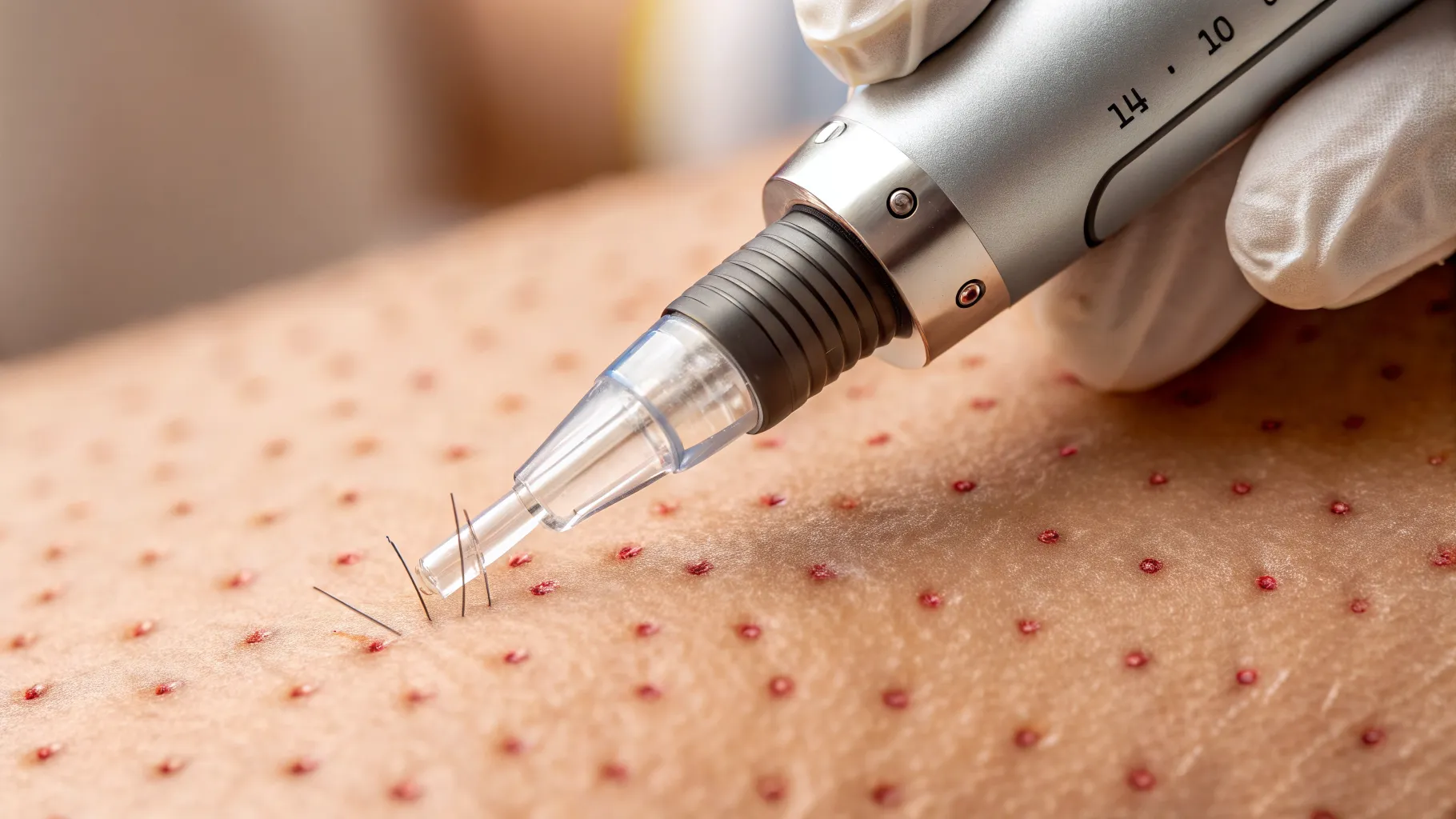
**Professional microneedling treatments** involve the use of a specialized device containing numerous fine needles that create microscopic punctures in the skin's surface. These controlled micro-injuries trigger the body's natural wound healing response, which includes the production of new collagen and elastin fibers. This process, known as **collagen induction therapy**, is fundamental to improving **skin texture improvement** and addressing various cosmetic concerns. The newly formed collagen helps to plump up the skin, reduce the appearance of fine lines, wrinkles, and scars, and create a smoother, more resilient surface. Over time, consistent stimulation of collagen leads to a firmer and more youthful appearance, making it a powerful tool in aesthetic practices.
How Microneedling Addresses Hyperpigmentation and Scars
Beyond its prowess in general **skin texture improvement**, microneedling is particularly effective for targeting hyperpigmentation, including sunspots, age spots, and the residual marks from acne. The micro-channels created by the needles facilitate enhanced absorption of topical serums, such as vitamin C, hyaluronic acid, and growth factors, which are often applied during or immediately after the procedure. This deep penetration amplifies the serums' efficacy in breaking down melanin and promoting cell turnover. Furthermore, the regenerative process stimulated by **collagen induction therapy** aids in replacing damaged, hyperpigmented skin cells with fresh, evenly toned cells. This makes it a leading **hyperpigmentation treatment** for those seeking to diminish discoloration and achieve a more uniform complexion, visibly reducing the prominence of dark spots and old acne scars.
Types of Professional Microneedling Devices and Techniques
In a clinical setting, **professional microneedling treatments** utilize advanced devices that offer precision and controlled results. Unlike at-home rollers, professional tools, such as automated microneedling pens or sophisticated RF microneedling systems, allow practitioners to adjust needle depth according to the specific area and skin concern. This customization is crucial for effectively addressing **uneven skin tone** and ensuring optimal safety and efficacy. These devices minimize epidermal damage while maximizing the stimulation of the dermis, where collagen production occurs. The technology ensures that the micro-injuries are consistent and uniform, leading to predictable and superior outcomes compared to less advanced methods.
Traditional Microneedling with Serums
The standard approach to **professional microneedling treatments** often involves combining the procedure with the application of high-quality topical serums. These serums are chosen based on the client's specific needs, whether it's for hydration, brightening, or anti-aging. For those focusing on **uneven skin tone**, serums rich in antioxidants, peptides, or growth factors are frequently used. The micro-channels created by the microneedling device act as direct conduits, allowing these powerful ingredients to penetrate deeper into the skin than surface application alone. This enhanced delivery system significantly boosts the skin's regenerative capacity and maximizes the benefits of **collagen induction therapy**, leading to faster and more pronounced improvements in skin clarity and texture.
Radiofrequency (RF) Microneedling for Enhanced Results
For individuals seeking even more dramatic **skin texture improvement** and skin tightening, radiofrequency (RF) microneedling is an advanced option. This technique combines traditional microneedling with the delivery of RF energy into the deeper layers of the skin. The microneedles create the micro-channels, while simultaneously, the tips of the needles emit controlled heat energy. This thermal energy further stimulates collagen and elastin production, leading to more intensive **collagen induction therapy** and significant tightening of the skin. RF microneedling is particularly effective for treating deeper wrinkles, more severe acne scars, and pronounced **uneven skin tone**, offering superior results in skin remodeling and rejuvenation compared to microneedling alone.
Preparing for Your Professional Microneedling Session
Proper preparation is key to ensuring the safety and effectiveness of **microneedling for uneven skin tone**. Before your appointment, it is crucial to consult with a qualified dermatologist or licensed aesthetician. They will assess your skin, discuss your concerns, and determine if you are a suitable candidate. Typically, patients are advised to avoid direct sun exposure and tanning beds for at least two weeks prior to the treatment. Discontinue the use of retinoids, strong exfoliants, and certain topical medications for a few days to a week before the procedure to prevent adverse reactions. Inform your practitioner about any medications you are taking, especially blood thinners, and any history of cold sores, as prophylactic medication may be prescribed. Adhering to these pre-treatment guidelines helps optimize results and minimize potential side effects associated with **professional microneedling treatments**.
What to Expect During and After Professional Microneedling
During a **professional microneedling treatment**, a topical numbing cream is applied to the skin to ensure comfort. Once the skin is numb, the practitioner will use the microneedling device to systematically treat the target areas. The procedure usually takes 30-60 minutes, depending on the size of the treatment area. Immediately after the session, your skin will likely appear red, similar to a moderate sunburn, and may feel warm or tight. Mild swelling and sensitivity are also common. These immediate effects typically subside within 24-48 hours. Post-treatment care is vital for proper healing and maximizing **skin texture improvement**. You will be advised to keep your skin clean, moisturized with gentle products, and to strictly avoid direct sun exposure. Using a broad-spectrum SPF is non-negotiable. Over the following days and weeks, you will gradually notice improvements in your **uneven skin tone** as new collagen is generated, with optimal results appearing after a series of sessions.
Comparison: Professional vs. At-Home Microneedling
While at-home microneedling devices are readily available, there is a significant difference in safety, efficacy, and results when compared to **professional microneedling treatments**. Professional procedures are performed in a sterile environment by trained practitioners who use medical-grade devices with adjustable needle depths. This allows for precise, controlled micro-injuries that effectively stimulate **collagen induction therapy** without causing undue damage or infection. The needles used in professional settings are often much finer and longer, reaching the dermal layers necessary for significant **skin texture improvement** and addressing deep-seated **uneven skin tone** and **hyperpigmentation treatment**. At-home devices, typically derma-rollers with shorter, less precise needles, offer minimal penetration and can pose risks of infection, scarring, and irritation if not used correctly. The risk of cross-contamination and inadequate sterilization is also higher with at-home use, making **professional microneedling treatments** the safer and far more effective choice for achieving significant and lasting skin rejuvenation.
Actionable Advice: Choosing the Right Clinic for Your Microneedling Therapy
- Research Provider Credentials: Look for licensed dermatologists or certified aestheticians with specific training in **collagen induction therapy**. Verify their experience and patient reviews.
- Examine Clinic Hygiene Standards: Ensure the clinic maintains strict sterilization protocols for devices and a clean environment to prevent infection, crucial for **professional microneedling treatments**.
- Request a Thorough Consultation: A reputable clinic will offer a detailed consultation to assess your skin type, concerns (e.g., **uneven skin tone**), and discuss realistic outcomes and potential side effects.
- Understand Post-Care Instructions: Confirm that clear and comprehensive post-treatment care instructions are provided, emphasizing proper healing and maximizing **skin texture improvement**.
- Inquire About Device Technology: Ask about the specific microneedling devices used and their features, ensuring they are medical-grade and appropriate for addressing your **hyperpigmentation treatment** goals.
Frequently Asked Questions
Is professional microneedling painful for uneven skin tone?
Professional microneedling typically involves the application of a topical numbing cream prior to the procedure to minimize discomfort. Patients usually report feeling mild pressure or a vibrating sensation, rather than pain. The level of discomfort can vary based on individual sensitivity and the depth of the needles used, but practitioners prioritize patient comfort during these **professional microneedling treatments**.
How many sessions of collagen induction therapy are needed for noticeable skin texture improvement?
The number of **collagen induction therapy** sessions required for significant **skin texture improvement** and to address **uneven skin tone** varies depending on the severity of the skin concerns and individual response. Typically, a series of 3-6 sessions, spaced 4-6 weeks apart, is recommended. Visible results often begin to appear after 2-3 sessions, with continued improvement over several months as new collagen forms.
What are the common side effects of professional microneedling treatments?
Common side effects of **professional microneedling treatments** include redness and mild swelling, similar to a sunburn, which usually subside within 24-48 hours. Some individuals may experience minor bruising, dryness, or flaking as the skin heals. It is crucial to follow post-care instructions meticulously to minimize risks and ensure optimal results for **microneedling for uneven skin tone**.
Can microneedling effectively treat all types of hyperpigmentation?
While **microneedling for uneven skin tone** is highly effective for various forms of hyperpigmentation, such as sunspots and post-inflammatory hyperpigmentation, its efficacy can vary for conditions like melasma. For melasma, a multi-faceted approach often combining microneedling with specific topical agents or other treatments is usually recommended. A thorough consultation is essential to determine if **hyperpigmentation treatment** with microneedling is suitable for your specific type of discoloration.
References
- American Academy of Dermatology Association. Microneedling.
- Journal of Clinical and Aesthetic Dermatology. Evidence-Based Clinical Review of Microneedling.
- Dermatologic Surgery. Fractional Resurfacing and Microneedling.
- Plastic and Reconstructive Surgery – Global Open. Microneedling: A Review.