A Guide to Killing Weeds Naturally
Maintaining a beautiful garden or yard often involves a battle against persistent weeds. While chemical herbicides are a common solution, many people prefer natural alternatives to protect the environment, pets, and their families. Fortunately, there are numerous effective and organic methods for controlling weeds without resorting to harsh chemicals. These techniques range from simple manual labor to using household staples to create a healthier, more sustainable outdoor space.
Why Choose Natural Weed Control?
Opting for natural weed control methods offers several significant advantages over traditional chemical herbicides. The primary benefit is environmental safety. Natural solutions do not introduce potentially harmful synthetic chemicals into the soil and water systems, which helps protect local wildlife, beneficial insects like bees and butterflies, and aquatic life. This approach helps maintain the delicate balance of your local ecosystem.
Furthermore, natural methods are generally safer for people and pets who enjoy spending time in the yard. There is a reduced risk of accidental exposure to toxic substances. Natural weed management also promotes better soil health. Many organic techniques, such as mulching, actually improve soil structure and fertility over time, whereas some chemical herbicides can strip the soil of essential microorganisms, leaving it less healthy in the long run.
Manual Removal: The Oldest Method
One of the most straightforward and effective ways to deal with weeds is to remove them by hand. Hand-pulling is particularly effective for shallow-rooted annual weeds. The best time to do this is after a good rain, when the soil is soft and moist, allowing the entire root system to be extracted easily. If you leave parts of the root behind, especially with perennial weeds like dandelions, they can regenerate.
For larger areas or more stubborn weeds, several tools can make the job easier. A garden hoe can be used to slice off weeds at the soil line, which is effective for annuals. For deep-rooted perennials, a garden fork or a specialized weeding tool can help you leverage them out of the ground with the entire root intact. While it requires physical effort, manual removal is precise and has no negative impact on the surrounding soil or plants.
Boiling Water as a Quick Fix
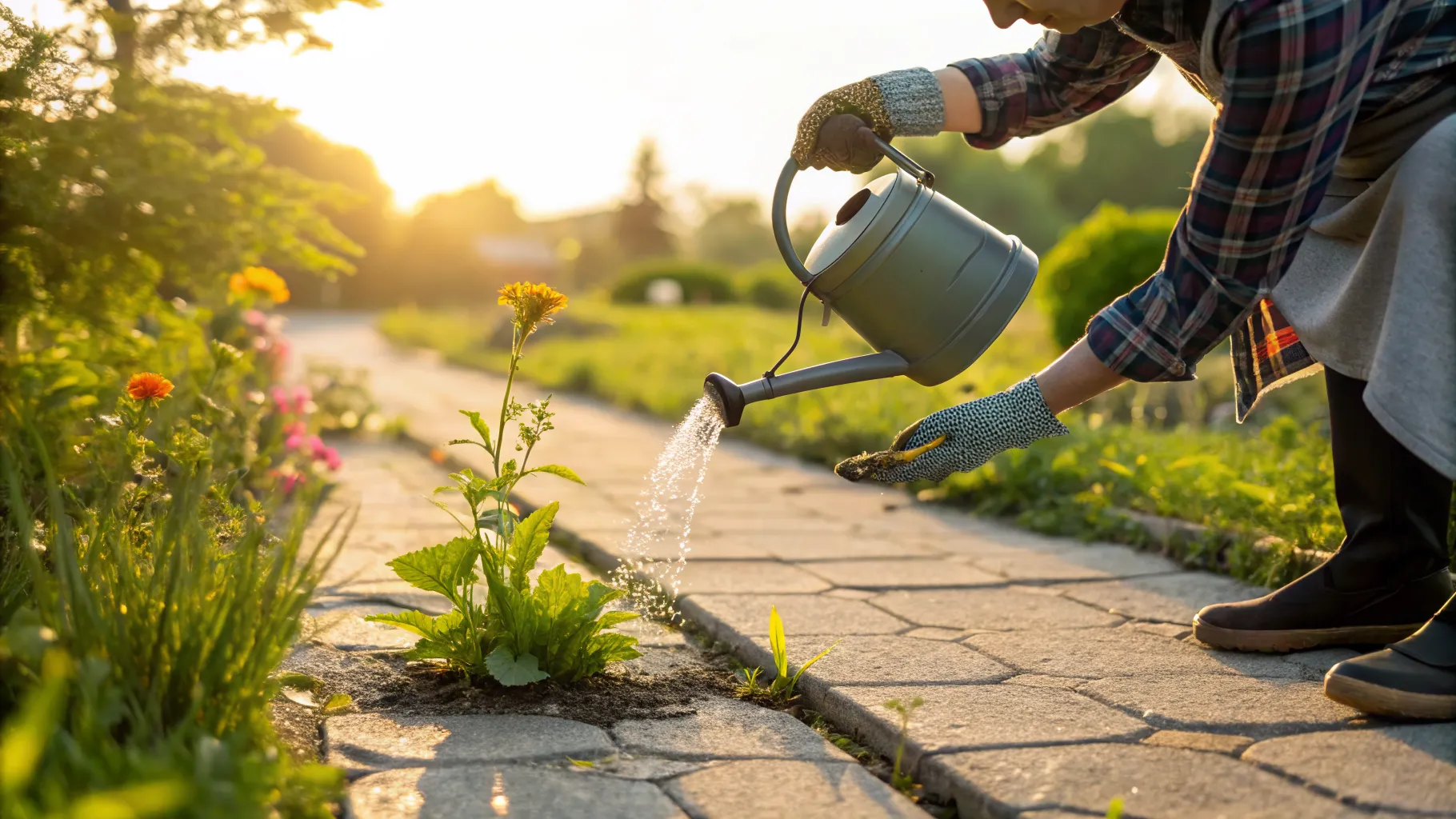
A simple kettle of boiling water can be a surprisingly potent weed killer. This method is incredibly easy and works by scalding the plant, causing its cells to burst and the plant to wither and die within a day or two. It is most effective on young, annual weeds and is an excellent choice for managing weeds that pop up in cracks in your driveway, sidewalks, and patios, where there are no other plants to worry about.
The main thing to remember about this technique is that it is non-selective, meaning it will kill any plant it comes in contact with. Therefore, you must be very careful when using it in garden beds or on your lawn to avoid damaging your desired flowers or grass. It is not very effective on deep-rooted perennial weeds, as it only kills the top growth, but repeated applications can eventually exhaust the plant's energy reserves.
Using Vinegar Solutions Effectively
Vinegar, specifically its acetic acid, can act as a natural contact herbicide. It works by drawing moisture out of the plant's leaves, causing them to dry up and die. Standard household white vinegar, which typically contains 5% acetic acid, can be effective on small, young weeds. For more robust and established weeds, you might seek out horticultural vinegar, which contains a higher concentration of acetic acid (up to 20-30%) and is much more potent.
When using vinegar, it is important to apply it carefully and directly to the weeds. Like boiling water, it is non-selective and can harm your other plants. Here are a few tips for using vinegar safely and effectively:
- Apply it on a warm, sunny day with little to no wind to prevent it from drifting onto other plants.
- Spray the leaves of the weed thoroughly until they are completely coated.
- Consider adding a small amount of liquid dish soap to the vinegar solution to help it stick to the weed's leaves.
- Be aware that vinegar is a contact killer and may not eliminate the roots of perennial weeds, so you might need to reapply it several times.
Smothering Weeds with Mulch and Barriers
Another highly effective, long-term strategy for weed control is smothering. This method works by blocking sunlight, which weeds need to photosynthesize and grow. You can achieve this by laying down a barrier and then covering it with a layer of organic mulch. This is often referred to as sheet mulching and is a great way to prepare a new garden bed.
To start, you can lay down layers of cardboard or newspaper directly over the weedy area. Make sure to overlap the edges so no light can get through. Then, cover this barrier with a thick layer of mulch, such as wood chips, straw, shredded leaves, or grass clippings. Over time, the barrier will decompose, adding organic matter to the soil, while the mulch helps retain moisture and continues to suppress new weed growth.
Preventative Strategies for Long-Term Success
The best way to control weeds is to prevent them from growing in the first place. A healthy, dense garden or lawn is the best defense, as it leaves little room for weeds to establish themselves. Try to plant your desired flowers and shrubs close enough together so that once they mature, their leaves will shade the soil and inhibit weed seed germination. This practice is often called dense planting.
Another excellent preventative measure is the use of cover crops in vegetable gardens during the off-season. Plants like clover or vetch can be sown in the fall to cover bare soil, preventing weeds from taking hold over the winter. When you are ready to plant in the spring, you can till these crops into the ground, where they will add valuable nutrients. Finally, try to disturb the soil as little as possible. Deep tilling can bring dormant weed seeds to the surface where they can sprout.