A Complete Guide to Florist Classes and Courses
Floral design is an art form that combines boundless creativity with precise technical skill. Whether someone is looking to pick up a calming new hobby or considering a vibrant career change, exploring florist classes and courses can open the door to a world of botanical artistry. These educational programs offer structured environments where individuals can learn the fundamentals of arranging flowers, caring for live plants, and designing stunning centerpieces from scratch.
Understanding the World of Floral Design
Taking the first step into floral design often begins with understanding the sheer variety of educational resources available today. A comprehensive florist classes and courses guide will typically highlight programs ranging from casual weekend gatherings to intensive certification tracks. This variety ensures that anyone, regardless of their prior experience, can find a starting point that matches their personal goals and available time.
Learning about floral design goes beyond simply placing stems in a vase. It involves grasping the scientific aspects of plant care alongside the artistic principles of color, movement, and texture. Students in these programs discover how different blooms interact with one another and how environmental factors affect the lifespan of a cut flower once it leaves the cooler.
Types of Floristry Educational Programs
When researching options, prospective students will encounter several distinct categories of floral education. Beginner classes focus heavily on foundational knowledge, allowing students to familiarize themselves with basic tools, common flower varieties, and simple arrangement structures. These entry-level sessions are usually short, low-pressure environments designed to foster creativity and build confidence in a newcomer.
For those seeking a less formal experience, creative workshops provide a relaxed atmosphere where the primary goal is enjoyment and self-expression. Alternatively, vocational or certification courses are tailored for individuals who intend to pursue floristry professionally. These intensive learning programs dive deep into business management, large-scale event planning, and advanced wiring techniques required for intricate installations.
What to Expect in a Beginner Florist Course
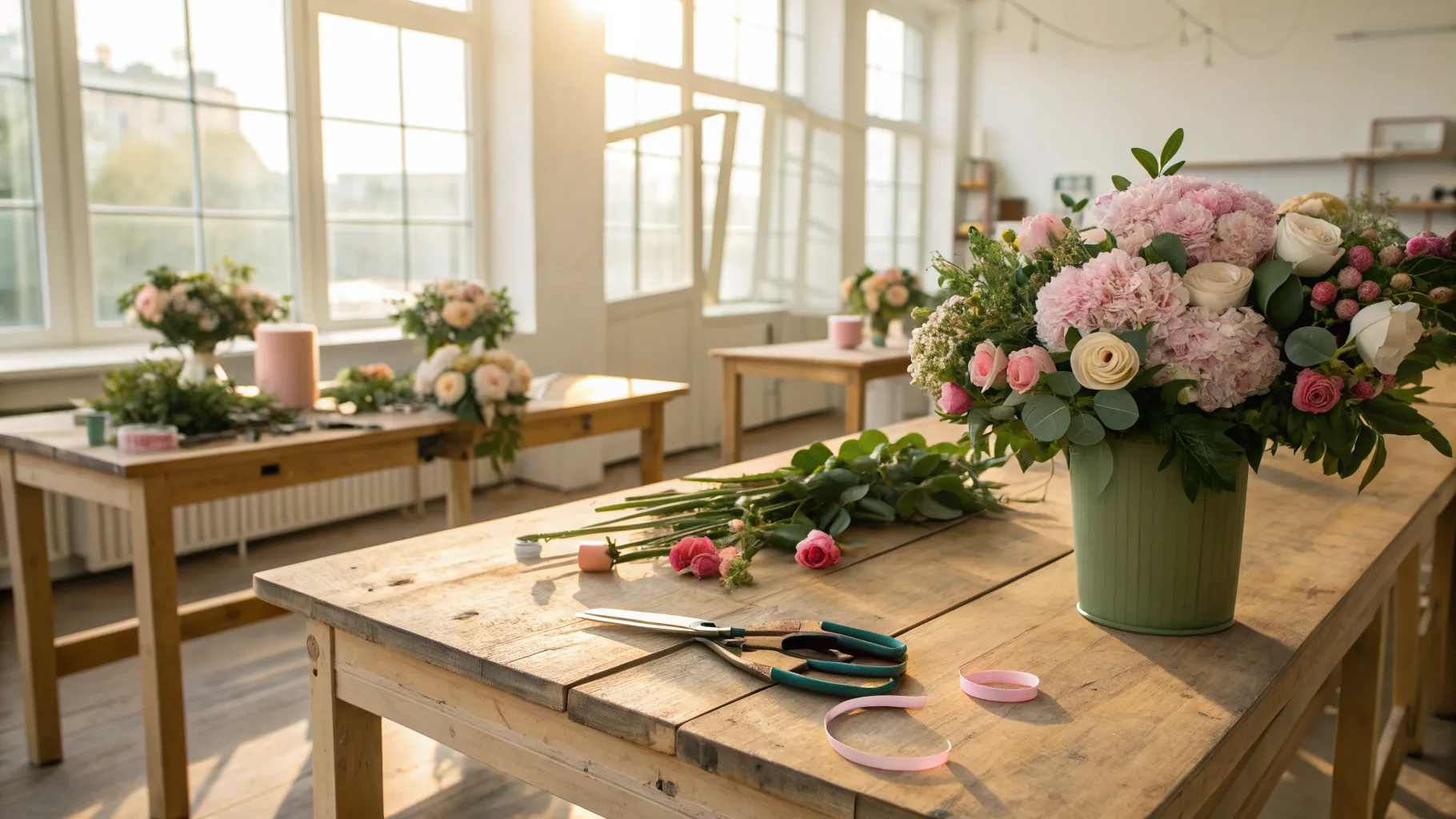
Walking into a beginner class for the first time is an exciting experience filled with sensory delights. The room is usually filled with buckets of fresh blooms, fragrant foliage, and an array of specialized tools. Instructors typically start by introducing the essential equipment, such as floral shears, floral tape, wire, and various types of mechanics used to hold stems in place without relying on traditional floral foams.
- Learning proper stem-cutting techniques to maximize water absorption and extend vase life.
- Understanding how to clean and prep flowers to prevent bacterial growth in the water.
- Practicing the spiral technique for creating sturdy, hand-tied bouquets.
- Creating balanced and symmetrical centerpieces in low, wide vessels.
Choosing Between Online and In-Person Workshops
The rise of digital education has made learning floral design more accessible than ever before. Online florist classes and courses offer incredible flexibility, allowing students to watch tutorials at their own pace and practice in the comfort of their own homes. Many of these digital learning guides include detailed supply lists so students can source their own materials locally before beginning a project.
On the other hand, in-person classes provide the distinct advantage of immediate feedback from an experienced instructor. Being in a physical classroom allows students to handle unfamiliar flowers, observe techniques from multiple angles, and collaborate with fellow floral enthusiasts. The choice between the two formats largely depends on a student's learning style, budget, and geographic location.
Essential Skills Taught in Floristry Learning Guides
A high-quality floristry curriculum will cover a broad spectrum of skills necessary for creating successful arrangements. Color theory is a major component of this education. Instructors teach students how to pair complementary colors, work with monochromatic palettes, and use contrasting hues to create striking visual interest. Understanding color helps designers evoke specific moods and match their arrangements to the aesthetic of an event or space.
Structural design and mechanics form another critical pillar of floral education. Students learn how to build a strong foundation for their designs using techniques like chicken wire armatures or tape grids. Mastering these hidden mechanics ensures that tall stems remain upright, heavy blooms are fully supported, and the overall shape of the arrangement remains perfectly intact during transportation.
How to Find the Right Creative Workshop for You
Selecting the ideal floral program requires a bit of research and self-reflection. Prospective students should start by identifying what they truly hope to achieve. Someone looking for a fun afternoon activity with friends will have very different needs than a person preparing to launch a wedding floral business. Reading through a comprehensive learning guide or checking reviews from past participants can provide valuable insight into an instructor's teaching style and the overall atmosphere of the class.
It is also highly important to consider the logistical details of the workshop before signing up. Pay close attention to what is actually included in the registration fee. Some classes provide all the necessary flowers, vessels, and tools for students to take home, while others may require students to bring their own supplies. By clarifying these details upfront, individuals can ensure they choose a program that fits their budget and sets them up for a deeply rewarding educational experience.