The 6 Skin Conditions Linked to Ulcerative Colitis & IBD Skin Problems Explained
Facts:
- Up to 25% of IBD patients experience skin manifestations.
- A key trend for managing ibd skin problems is integrated care between gastroenterologists and dermatologists.
Understanding the Skin-Gut Connection in Ulcerative Colitis
Ulcerative Colitis (UC) is primarily known as an inflammatory bowel disease (IBD) that affects the large intestine. However, its impact isn't confined to the digestive tract. Many individuals experience extraintestinal manifestations, with skin complications being among the most common. These uc skin issues arise because the chronic inflammation and immune system dysregulation that drive UC can trigger reactions in other parts of the body, including the largest organ: the skin. Understanding these skin symptoms ulcerative colitis patients face is the first step toward effective management and improved quality of life. It's crucial to recognize that these are not just simple rashes; they are often signs of an underlying autoimmune skin disease ibd connection that requires specialized medical attention.
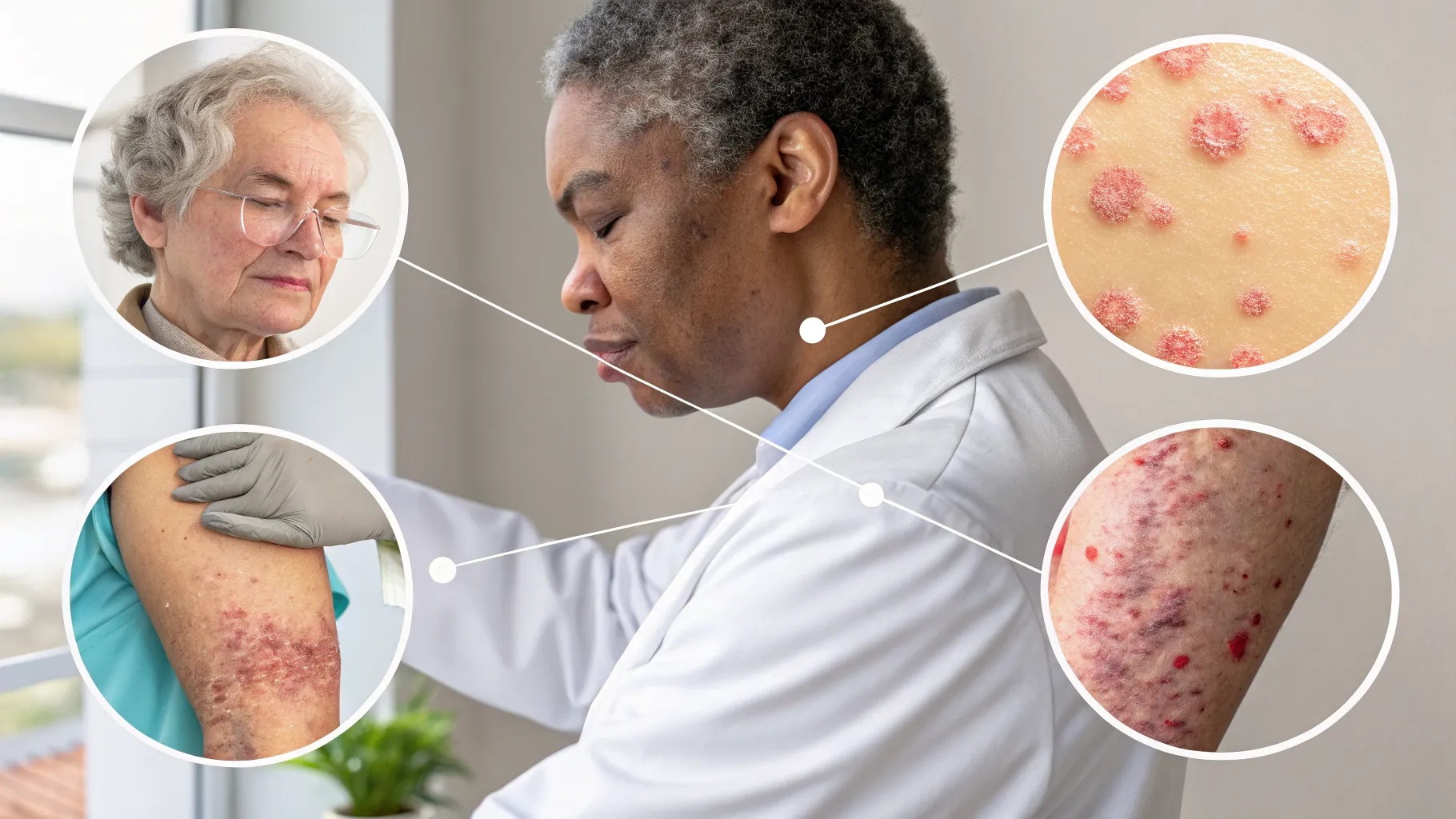
The 6 Ulcerative Colitis Skin Conditions You Should Know
When dealing with UC, being aware of potential complications is vital. The skin can often serve as a window to the inflammatory activity happening inside the body. Below are the 6 ulcerative colitis skin conditions that patients and healthcare providers should monitor closely. These conditions vary in severity and presentation but are all linked to the underlying inflammatory processes of IBD.
1. Erythema Nodosum
Erythema Nodosum is the most common skin manifestation associated with Ulcerative Colitis. It presents as painful, red or violet-colored nodules, typically found on the shins, ankles, and sometimes the arms. These bumps are tender to the touch and are caused by inflammation of the fat cells under the skin (panniculitis). The appearance of Erythema Nodosum often mirrors the activity of the bowel disease, meaning flare-ups of these ibd skin problems can coincide with a UC flare. Management usually involves controlling the underlying UC, which often leads to the resolution of the skin lesions.
2. Pyoderma Gangrenosum
Though less common than Erythema Nodosum, Pyoderma Gangrenosum (PG) is a more severe condition. It typically begins as a small pustule or red bump, which rapidly evolves into a deep, painful ulcer with a well-defined, purplish border. These ulcers can appear anywhere but are often found on the legs. PG is a challenging autoimmune skin disease ibd complication because it can be mistaken for an infection, but treatment with antibiotics is ineffective. In fact, debridement or surgery can worsen the ulcer. Treatment focuses on high-dose corticosteroids and other immunosuppressive agents to manage the inflammation.
3. Psoriasis
Psoriasis is a well-known autoimmune skin condition characterized by thick, red, scaly patches. There is a strong genetic link between IBD and psoriasis. Both conditions share common inflammatory pathways, which explains their frequent coexistence. The skin symptoms can range from mild to severe and may appear before or after the UC diagnosis. Managing this type of uc skin issues often requires a coordinated approach, as some biologic medications used for IBD, like TNF-alpha inhibitors, can be effective for both conditions, though paradoxically, they can sometimes trigger psoriasis in other patients.
4. Sweet's Syndrome
Sweet's Syndrome, or acute febrile neutrophilic dermatosis, is a rare skin condition that can be associated with UC. It is characterized by the abrupt onset of fever and painful skin lesions, which appear as red or bluish plaques and nodules. These lesions most commonly occur on the arms, neck, head, and trunk. A skin biopsy is typically required for diagnosis. Like other skin symptoms ulcerative colitis patients experience, Sweet's Syndrome often improves with treatment aimed at controlling the underlying bowel disease, primarily with systemic corticosteroids.
5. Vitiligo
Vitiligo is an autoimmune condition where the skin loses its pigment-producing cells (melanocytes), resulting in white patches on the skin. While the direct link is still being researched, there is an increased prevalence of Vitiligo in patients with autoimmune disorders like Ulcerative Colitis. This connection underscores the systemic nature of the immune dysregulation involved in ibd skin problems. The management of vitiligo is typically separate from UC treatment and may involve topical creams, light therapy, or other dermatological interventions.
6. Aphthous Stomatitis (Canker Sores)
While technically occurring inside the mouth, aphthous ulcers are often grouped with skin manifestations of IBD due to their mucosal nature. These are painful, small, shallow ulcers that develop on the soft tissues inside the mouth, such as the inside of the lips or on the gums. Their presence often correlates with UC disease activity. These can be one of the most frustrating uc skin issues, making eating and drinking painful. Treatment includes topical anesthetics and steroid pastes, but the key is managing the underlying UC flare.
Managing and Treating UC-Related Skin Issues
Effectively managing these skin conditions hinges on controlling the underlying Ulcerative Colitis. A collaborative approach between your gastroenterologist and a dermatologist is often the best strategy. Here are some actionable steps you can take:
- Prioritize UC Control: Adhering to your prescribed IBD treatment plan is the most critical step. When your UC is in remission, associated ibd skin problems are much less likely to flare up.
- Gentle Skin Care: Use mild, fragrance-free soaps and moisturizers to avoid irritating sensitive skin. Protect your skin from the sun, as some medications can increase sun sensitivity.
- Seek Prompt Dermatological Care: Do not dismiss a new rash or sore. Early diagnosis and treatment of conditions like Pyoderma Gangrenosum are crucial to prevent severe ulceration and scarring.
- Discuss Medication Side Effects: Be aware that some medications for UC can have dermatological side effects. Always discuss any new skin symptoms ulcerative colitis brings with your doctor to determine the cause.
- Lifestyle and Diet: While not a direct cure, maintaining a healthy lifestyle with a balanced diet, adequate hydration, and stress management can support overall immune health and may help reduce inflammatory responses.
Comparing Inflammatory Pathways: UC Skin vs. Common Rashes
It's important to distinguish between the 6 ulcerative colitis skin conditions and common, unrelated skin issues. While a simple rash might be caused by an external irritant, the skin problems linked to UC are endogenous, originating from the body's own inflammatory processes. These are not allergies but rather manifestations of a systemic autoimmune condition. The key difference lies in the underlying mechanism; for instance, the inflammation in Erythema Nodosum is driven by the same immune pathways causing colitis. This is why topical creams that might work for contact dermatitis are often ineffective for an autoimmune skin disease ibd, which requires systemic treatment to calm the overactive immune response at its source.
Frequently Asked Questions
Can I get skin problems from Ulcerative Colitis medication?
Yes, some medications used to treat UC, particularly biologics like anti-TNF agents, can paradoxically cause skin reactions, including psoriasis-like rashes. It is essential to report any new skin changes to your doctor to determine if they are related to the disease or the treatment.
Are these ulcerative colitis skin conditions contagious?
No, the 6 ulcerative colitis skin conditions are not contagious. They are manifestations of an internal autoimmune and inflammatory process and cannot be transmitted from person to person through contact.
Does diet affect these IBD skin problems?
While there is no specific diet to cure these skin conditions, managing your UC with a diet that reduces inflammation may indirectly help control skin flares. Keeping a food journal can help identify triggers for your UC, which may in turn reduce the frequency of associated uc skin issues.
References
- Extraintestinal Manifestations of Inflammatory Bowel Disease - World Journal of Gastroenterology
- Dermatologic Conditions Associated with Inflammatory Bowel Disease - Crohn's & Colitis Foundation
- Pyoderma Gangrenosum: A Review - American Journal of Clinical Dermatology
- Management of Cutaneous Manifestations of IBD - Clinical Gastroenterology and Hepatology